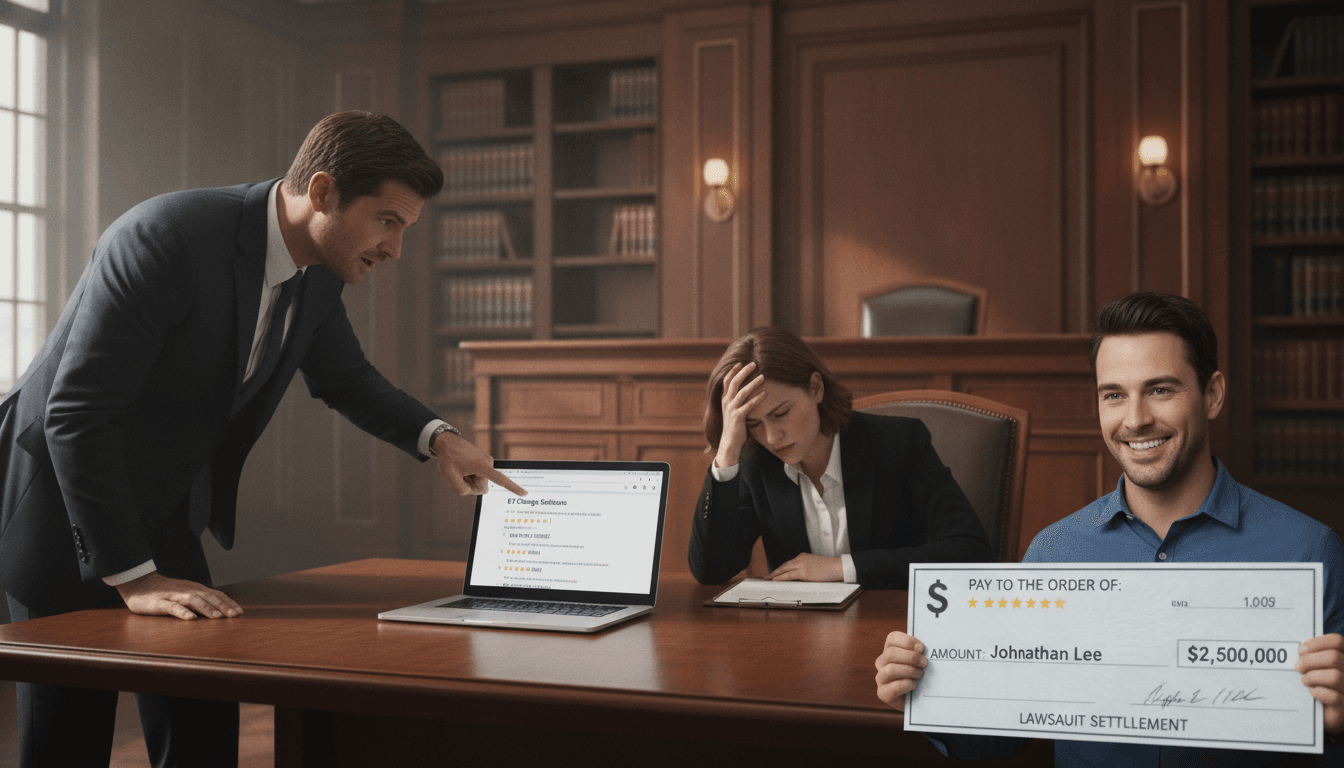
I tell all my sessions: a negative review is an opportunity, and here’s a great example! An unpleasant review is leverage to show that the listing and its rating are real, and your professionalism to solve problems. The Lille restaurant Les Tontons Afro recently demonstrated this: targeted by an openly racist Google comment, the manager printed out the review, posted it in the window and responded with humor. Here’s an excellent case study:
Context
In Vieux-Lille, the Afro-Caribbean restaurant Les Tontons Afro found itself, like many establishments in the world’s kitchens, the target of a racist Google review. Where most would have easily deleted the message by notifying Google moderation, the manager did the opposite: he used it and printed it large, displayed it in his window and accompanied it with an ironic response: “We’ve decided to make you envious with our worst Google rating.” This audacious choice is a perfect illustration of how an online attack, skilfully managed, can become a weapon of visibility and differentiation.

From hateful comment to slate strategy
-
A recurring problem: the menu on the slate didn’t really attract the attention of passers-by.
-
A particularly violent racist comment appears on Google, shocking but also offering… a powerful hook.
-
Action: the restaurateur prints out the notice, nails it up in front of the entrance and responds to it publicly, in a half-serious, half-serious tone.
-
Immediate resonance: passers-by stop, take photos, share on networks. The local media complete the snowball effect.
In just a few days, the sign became one of the most photographed spots in the neighborhood; new customers came to “see the slate”, taste the cuisine and often left, this time with real positive reviews.
Five benefits of returning the attack
| Benefits | Measurable impact |
|---|---|
| 1. Instant local visibility | The slate catches the eye of passers-by better than a traditional menu: immediate increase in foot traffic. |
| 2. Virality on social networks | The photos of the review and the humorous response are shared massively; the restaurant’s name reaches an audience far beyond Lille. |
| 3. Strengthening brand identity | By denouncing racism without aggression, the manager reaffirms his values: openness, humor, cultural pride. |
| 4. Proof of resilience and transparency | Showing the attack in the open inspires confidence; future customers know that nothing is hidden. |
| 5. SEO effect and long-term reputation | Influx of genuine positive reviews, higher click-through rate on the Google listing; overall rating improves for the long term. |
Reproduce this success yourself: instructions for use
-
Assume rather than hide : publish the negative review (blurred if insulting) and show that you’re not afraid of criticism.
-
Respond with personality: banish anger; opt for humor, self-mockery or pedagogy – choose what suits your identity.
-
Create a visual focal point: like the Tontons Afro slate, turn the negative into a strong graphic element: poster, window display, pinned story, Instagram reel.
-
Encourage the community to react: encourageyour loyal customers to share their own experience; the contrast between hate and reality will generate a flow of positive reviews.
-
Measure and capitalize: track traffic (online and on-site), mentions on networks and the number of post-operation reviews. Use this data in your next campaigns.
Of course, you can (and must) use a real, proven attack… Inventing a pseudo-attack (racist or otherwise) on social networks and Google My Business to create buzz could, on the contrary, damage you: everything is archived on the web!
Why does this method work?
-
Psychology of the unexpected: a negative message transformed into a poster intrigues; curiosity drives us to find out more.
-
Reversing the stigma: by exposing criticism, we take away the aggressor’s power to do harm in the shadows.
-
Participative storytelling: every Internet user who shares a photo relays a story about overcoming prejudice, creating organic word-of-mouth.
-
Unquestionable authenticity: unlike an advertising slogan, a negative review is real; its sincerity lends credibility to the response.
My expert opinion:
The case of Les Tontons Afro proves that a company can turn a hostile situation into a powerful marketing lever, provided it dares to be transparent and remains true to its values. Rather than endure attacks, turn them into opportunities: you’ll attract attention, consolidate your brand and create a strong emotional bond with your audience.
Ready to convert your reviews into growth? I have 17 scenarios (+3 in copywriting) to acquire more positive reviews… contact me!