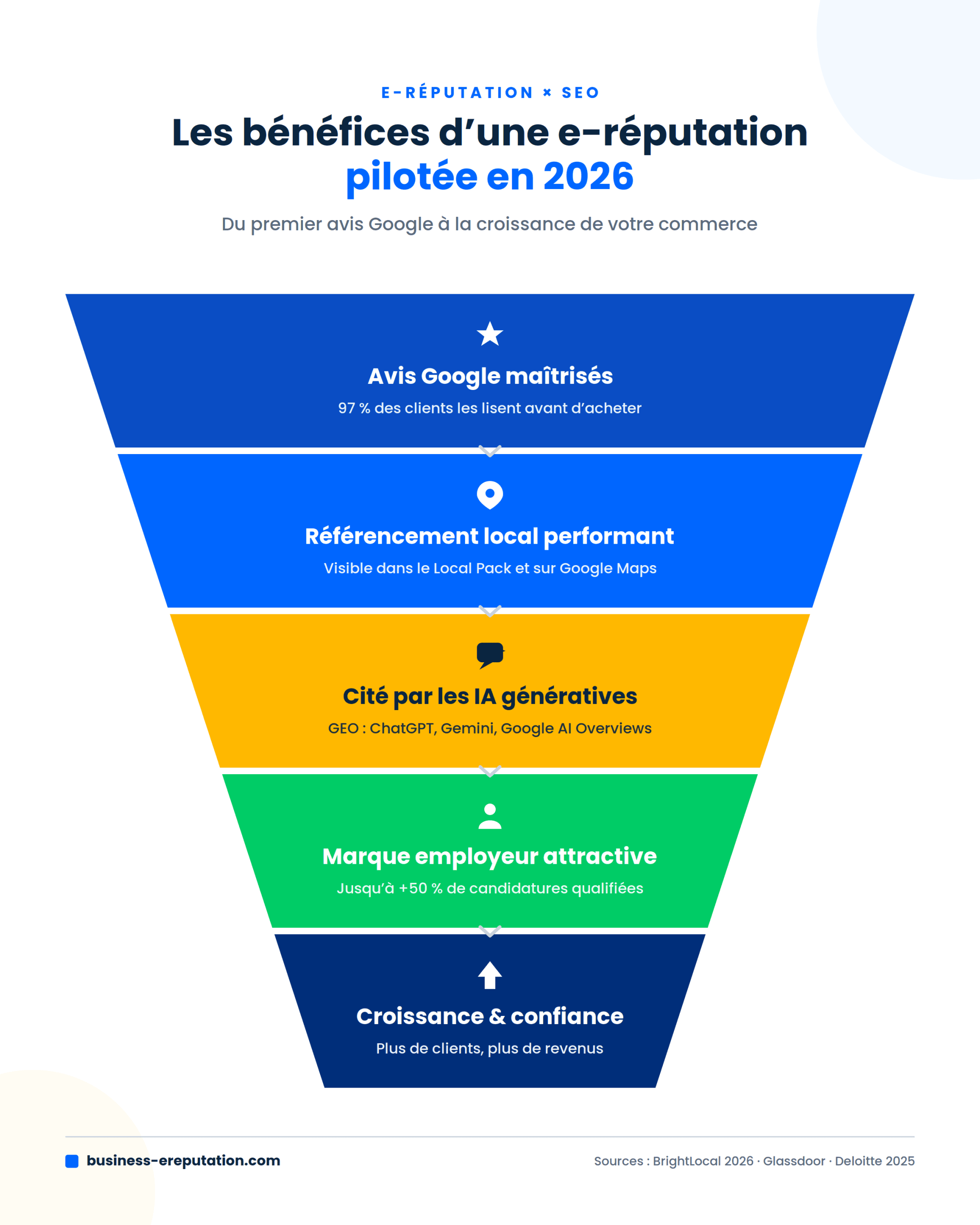
Your customers no longer walk into a store without checking its reputation. In 2026, 97% of consumers read online reviews before choosing a local business, and 41% check them systematically, up from 29% a year earlier (BrightLocal, Local Consumer Review Survey 2026). The recent shift extends to another area: the percentage of consumers who use AI to find a local business has risen from 6% in 2025 to 45% today (BrightLocal, 2026). Your visibility is no longer determined solely by your ranking on the first page of Google. It’s also shaped by the responses generated by ChatGPT, Gemini, or Google AI Overviews.
SEO is no longer just about Google rankings
For twenty years, search engine optimization (SEO) had a clear goal: to climb higher in search results to capture clicks. This dynamic is changing. Generative search engines synthesize information and provide direct answers, without always linking to a website. Data from Y Combinator predicts a 25% decline in traditional search volume by 2026, and a 50% decline by 2028, in favor of generative search engines (cited by AthenaHQ, 2026).
GEO, or Generative Engine Optimization, extends SEO into these new response spaces, building on the same organic foundation: content that ranks well on Google also feeds AI responses (Search Engine Land, 2026). Tool providers are reacting quickly. Ahrefs launched Brand Radar in March 2025 to track brand mentions across six AI indexes (Google AI Overviews, Google AI Mode, ChatGPT, Perplexity, Gemini, Microsoft Copilot). Adobe acquires Semrush for $1.9 billion in November 2025, focusing on brand visibility in the era of generative AI. The message sent to the market is crystal clear: brand mentions are becoming a metric to be managed just like keywords.
An agency that combines SEO and GEO
Managing SEO, GEO, and brand mention monitoring all at once is beyond the capabilities of a single business owner. An agency that specializes in both SEO and GEO knows how to integrate these strategies: optimizing your pages, structuring your content for AI, and ensuring your presence in generative search results. Botanik, a Paris-based SEO/GEO agency, specializes in these emerging areas, from content optimized for large language models (LLMs) to local SEO. Delegating this work to specialists frees up your time so you can focus on your core business and your clients.
Your Google reviews help shape AI responses
Your Google reviews now go beyond their original purpose. Generative AI systems draw on these contributions to evaluate a business: overall sentiment, recurring themes, and the quality of the manager’s responses. A business with a strong Google rating, professional responses, and a steady stream of authentic reviews significantly increases its chances of being featured favorably in a response from ChatGPT or Gemini.
This same foundation boosts your local SEO. Google prioritizes active listings in the Local Pack—the geolocated section at the top of search results. A bakery in Lyon that collects recent reviews every week ranks higher on Google Maps than a competitor that hasn’t updated its listing. We explain this process in detail in our guide to Google reviews.
Employer branding comes into play
Your online reputation no longer just determines your sales. It also affects your ability to recruit. 83% of candidates check reviews and ratings before applying (JobScore). 69% turn down a job offer if the company has a poor online reputation, even with an attractive salary (Glassdoor Economic Research 2024). A Deloitte study (Human Capital Trends 2025) quantifies the benefit: up to 50% more qualified applicants for companies with a positive image.
This issue reflects a reality in France: In 2025, 58% of HR decision-makers reported facing regular recruitment challenges (Deel/Odoxa, as reported by France Num). Your Google rating and employee reviews on platforms such as Glassdoor now speak with one voice to future talent. A company that maintains its Google Business Profile and responds to its customers sends the same message of reliability to a candidate as it does to a customer.
Customer relationships are becoming a measurable metric
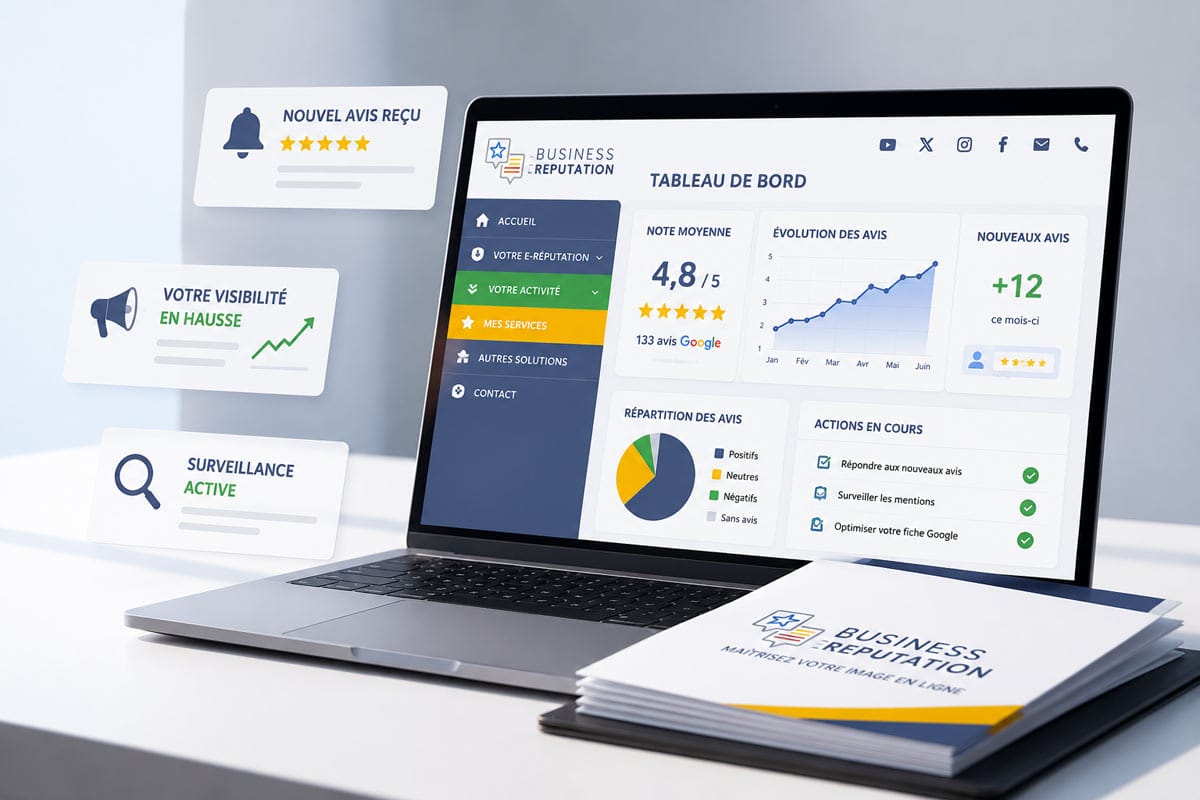
Customer relations are becoming a measurable indicator of reputation. Consumers expect a quick response: 19% hope to receive a reply to their review the same day—up from 6% a year earlier—and 81% are willing to wait a week at most (BrightLocal, 2026). A thoughtful response to a review—whether positive or negative—reassures the next reader and signals to Google that the business listing is active.
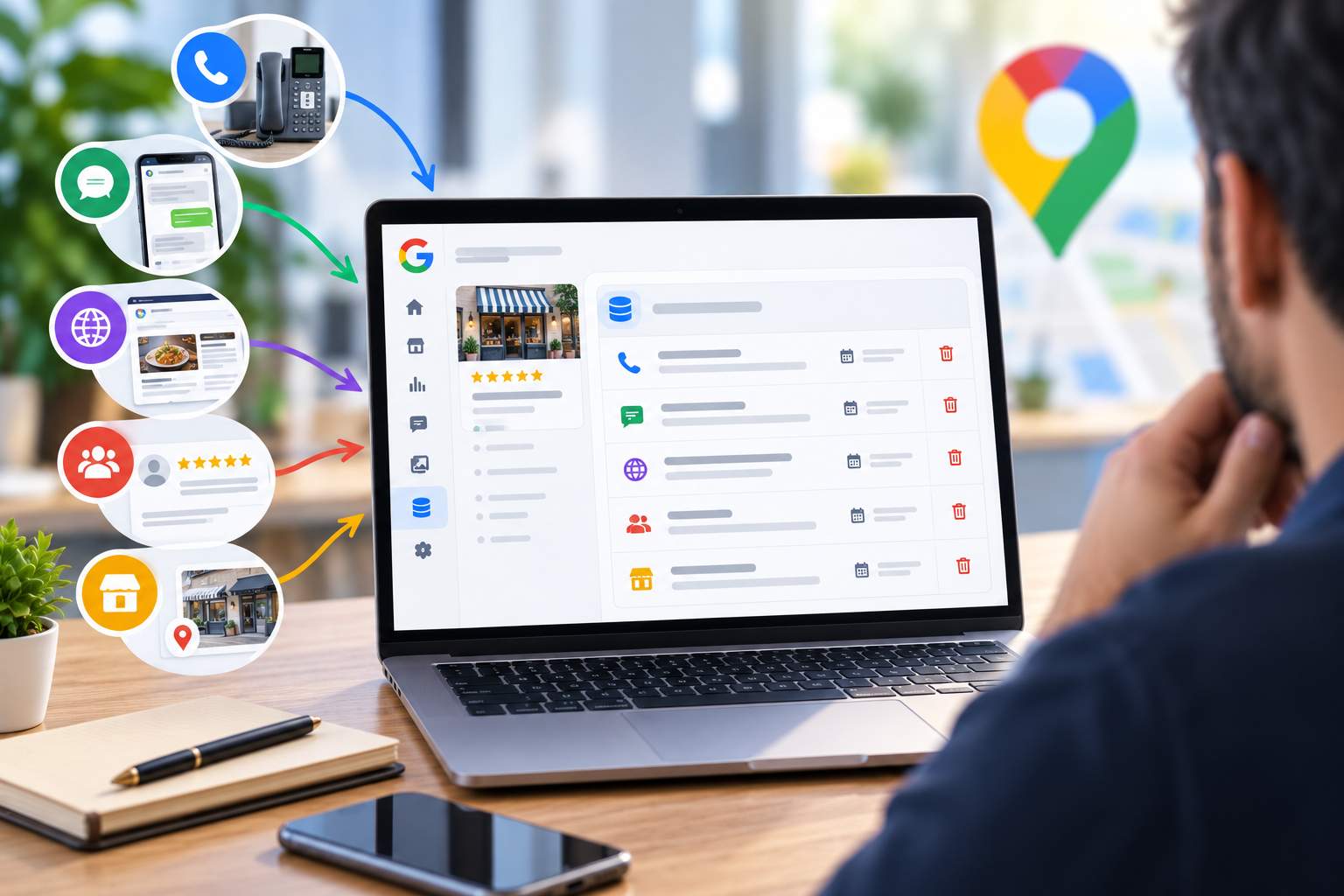
Fake Google reviews complicate the equation. A business mentioned in negative contexts risks having that tone carried over into AI responses. Documenting and archiving your reviews becomes a strategic precaution—an approach we describe in our method for exporting and leveraging your Google reviews. To effectively manage these efforts, you need to follow the right benchmarks: our guide to performance metrics for your Google Business Profile sets the stage. Structured data collection, at the right moment in the customer journey, transforms a successful experience into public proof.
Our Expert Perspective
I tell every entrepreneur I work with: Your reputation is built day by day, and it belongs to you. Agencies and platforms are helpful, as long as you retain control over your data and your Google accounts. By 2026, brand mentions will become a form of currency. The more your name appears in positive contexts—Google reviews, articles, and mentions—the more AI systems will, in turn, recommend you.
Start simple. Collect reviews systematically, respond to each one, and monitor what generative AI is saying about you. My ebook on optimizing your Google Business Profile details this process, so you can work at your own pace and on your own.