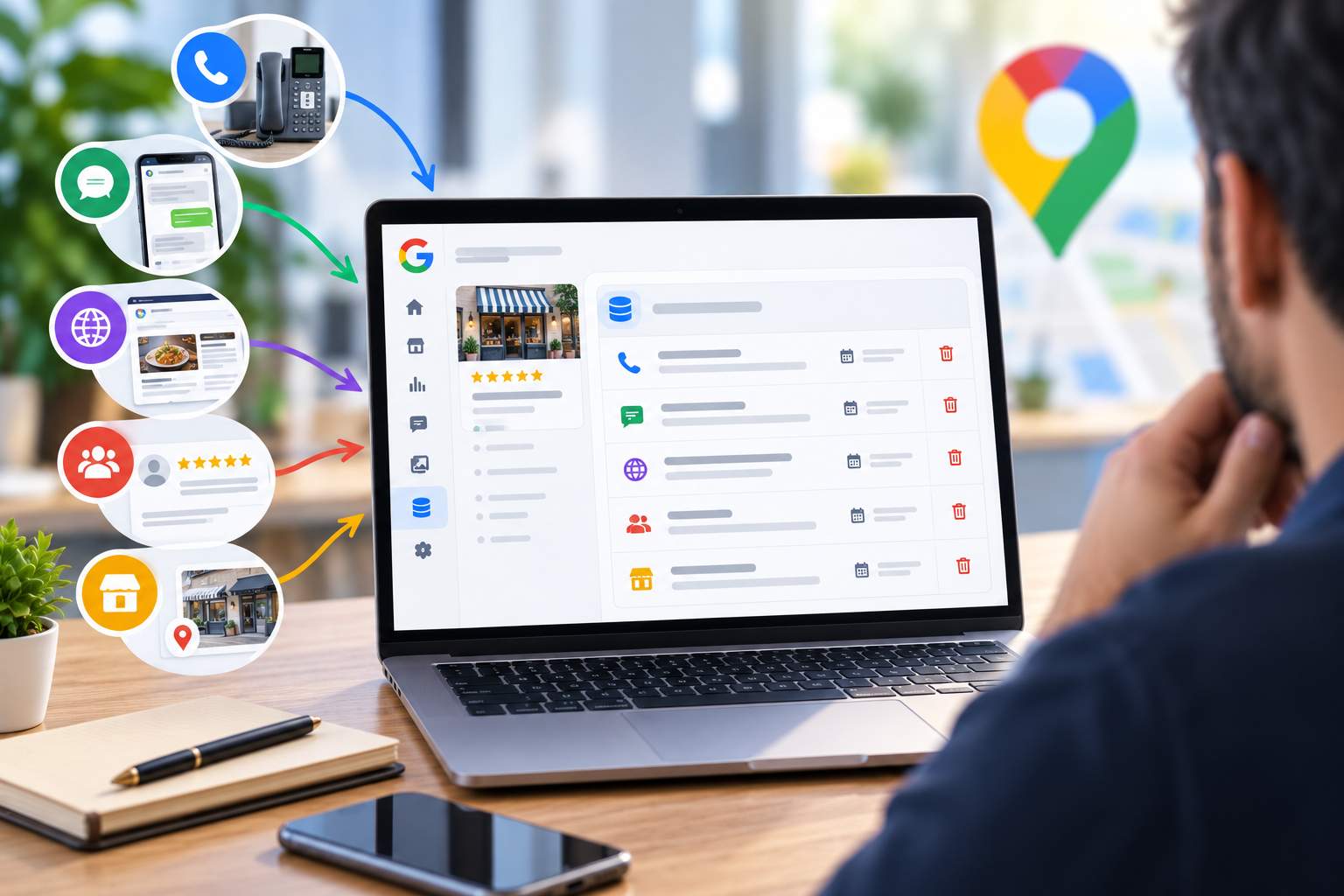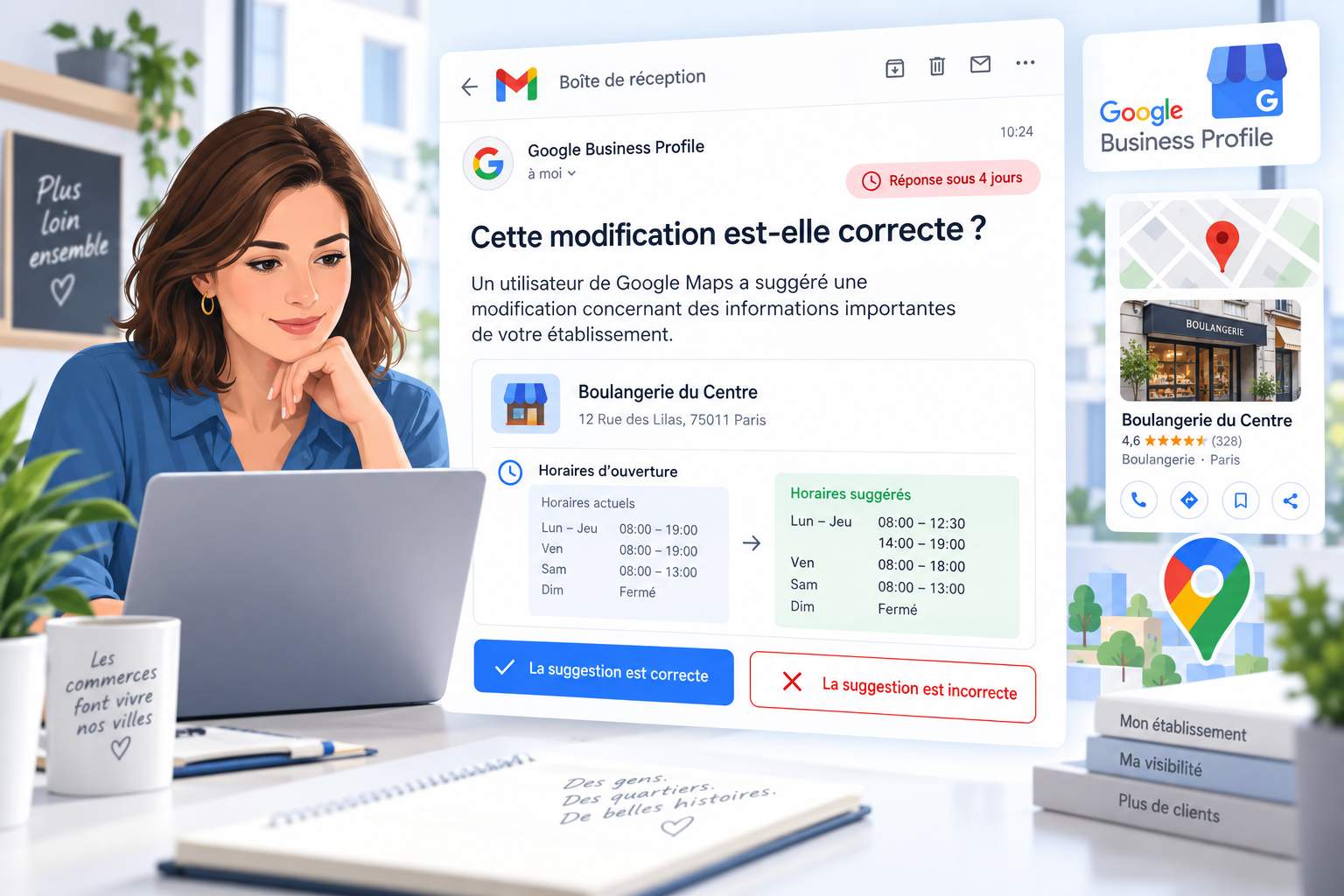
Semantic analysis of customer reviews lets you extract value from your last 50 reviews in just a few minutes—a task that would take hours to complete manually. According to Trustpilot, whose AI has analyzed more than 100 million reviews, this technique automatically identifies recurring themes and the prevailing sentiment. For a local business owner, this changes everything: your customers tell you exactly what keeps them coming back—and what drives them away. But you still need to know how to read between the lines. That’s exactly what this article will teach you, with actionable methods and real-world examples.
In short:
- Semantic analysis uncovers the meaning and emotion behind words, going far beyond simply counting terms.
- It only takes five steps: collect, clean, analyze, identify themes, and visualize trends.
- 44% of customers who complete an online survey provide usable verbatim comments (source: OGF, Secrets de DRC).
- In the age of GEO, AI systems recommend brands whose reviews tell a consistent story of positive experiences.
- Humans remain essential for validating irony, implied meanings, and local expressions.
Semantic Analysis of Customer Reviews: Understanding What Your Customers Are Really Saying
Semantic analysis involves interpreting the meaning of a text beyond the words themselves. When applied to customer reviews, it identifies the intentions, emotions, and underlying themes hidden in your comments. In practical terms, it transforms a collection of raw sentences into actionable insights to help you manage your business.
The difference between this and a simple lexical analysis is crucial. A lexical approach counts words: it will tell you that the term “delay” appears 120 times in your feedback. But that’s where it stops. A semantic analysis goes further: it understands that in 70% of cases, this “delay” refers to the delivery of a product, and that the associated emotion is clearly negative.
Let’s take a telling example. In a review, the phrase “not great” appears. A basic machine analyzes “not” as negative and “great” as positive, and ends up confused. Semantic analysis, on the other hand, reads the entire phrase and correctly classifies it as negative. This nuance makes all the difference when you’re processing dozens of comments every month.
The Difference Between the Word and the Meaning
Imagine Marc, the manager of a pizzeria in Toulouse. He receives 50 reviews on his Google Business Profile. At first glance, he sees ratings: 4 stars, 3 stars, 5 stars. But what do they really mean?
By combining automated text analysis with sentiment analysis, Marc discovers that his customers love his fresh pasta, but that the word “wait” carries a negative emotional connotation starting on Friday evening. The numbers alone would never have told him this story. Decoding the meaning behind the raw customer feedback gives him a clear picture of his pain points.
This method also accounts for variations in language. “Delivered late” and “delivery delay” both express the same frustration, despite being phrased differently. A thorough analysis groups them under a single theme, which prevents information from being scattered and ensures that a major issue isn’t overlooked.
Why Your Last 50 Reviews Are Worth Their Weight in Gold
Many retailers underestimate the value of their own customer feedback. Yet these comments represent a direct source of value, with no additional research costs. As Tiffany Sanfilippo of TER Grand Est put it, “Our customers’ glitches are our gold mines.”
The marketing potential is immense. Melika Venot, Quality Director at OGF, pointed out that 44% of customers include free-form comments on their online surveys. These comments contain ideas for new offerings, quality alerts, and early warning signs that your competitors have yet to notice.
Your latest reviews are, therefore, a real-time barometer of your reputation. Ignoring them is like driving with your eyes closed. And in a competitive local market, you can no longer afford to do that.
How to Perform a Semantic Analysis of Your Customer Reviews in 5 Steps
Conducting a semantic analysis involves five clear steps: collecting data, cleaning the text, running it through an intelligent analyzer, identifying themes and sentiments, and then visualizing trends. Each step refines your understanding of user feedback and leads to concrete actions.
The first step is to gather your text-based sources: Google reviews, social media comments, complaint emails, and call transcripts. The larger the volume and the longer the time period, the more reliable the trends you identify will be. Sébastien Passedouet of the Automobile Club de l’Ouest put it well: “You have to be willing to listen to everything the customer has to say, because that’s the only way to capture the essence of their expectations.”
Clean and then analyze customer data
Before analysis, the texts must be prepared. Emojis and special characters are removed, everything is converted to lowercase, and lemmatization is performed—that is, words are reduced to their root forms. “Reçus” becomes “recevoir.” We also remove stop words like “the” or “and” that don’t add any meaning.
Next comes the semantic analyzer. These tools combine natural language processing and machine learning to recognize user intent. Solutions such as SentiOne, Chattermill, and Keatext handle this task. For local businesses, specialized platforms offer sentiment analysis scored on a scale from 0 to 100, which makes the results much easier to interpret.
Textdata analysis relies on text mining, a process that automatically extracts relevant information from text. Suzana Cerqueira, at Saint-Gobain, describes its usefulness: “AI listens, but it also analyzes and suggests action plans to help identify the biggest pain points.”
Identify themes and view the results
At this stage, your tool maps out your key issues. You’ll identify recurring themes, dominant emotions, and your customers’ intentions: to complain, to offer praise, or to request a refund. This framework shows you where to focus your efforts first.
Visualization turns this data into decisions. Depending on the tool, you have several useful formats available:
- Word clouds to identify the main themes at a glance.
- Trend lines to track a rise in dissatisfaction regarding a specific issue.
- Heat maps by channel, to determine whether the problem is with the phone or the counter.
- Net Sentiment Score: the difference between positive and negative emotions associated with your brand.
Let’s go back to Marc and his pizzeria. His trend line shows a spike in dissatisfaction every Friday night, correlated with the word “wait.” He hires an extra employee on the weekends. Three months later, his Net Sentiment Score goes up. That’s how analyzing customer emotions translates into revenue.
Fake Google Reviews and Negative Sentiment: What AI Detects That You’re Missing
Semantic analysis identifies subtle signals invisible to the naked eye: a recurring issue that goes unnoticed, a shift in tone in your feedback, or a fake Google review with suspicious wording. Where a manager might read ten reviews and then forget about them, AI processes them all and keeps track of trends.
This feature changes the way you manage your online reputation. A rare but very low-rated review can hide a critical problem. Imagine a bakery in Lyon where only three reviews mention a “smell of gas.” Rare, but alarming. Without a severity score, this warning sign gets lost in the sea of praise for the croissants.
Combine qualitative data with your quantitative metrics
Semantic analysis becomes even more powerful when combined with quantitative data. Gather your KPIs: CSAT, NPS, ticket resolution time, and complaint volume by reason. Then compare them with the themes identified in your customer feedback.
Laurent Blanchet of Essilor sums up this approach: “We combine typical customer satisfaction metrics with the analysis of operational and sales data, such as customer churn. This allows us to take a rational approach to the customer experience. ” This cross-analysis prevents you from overinvesting in an issue that generates a lot of noise but is ultimately marginal.
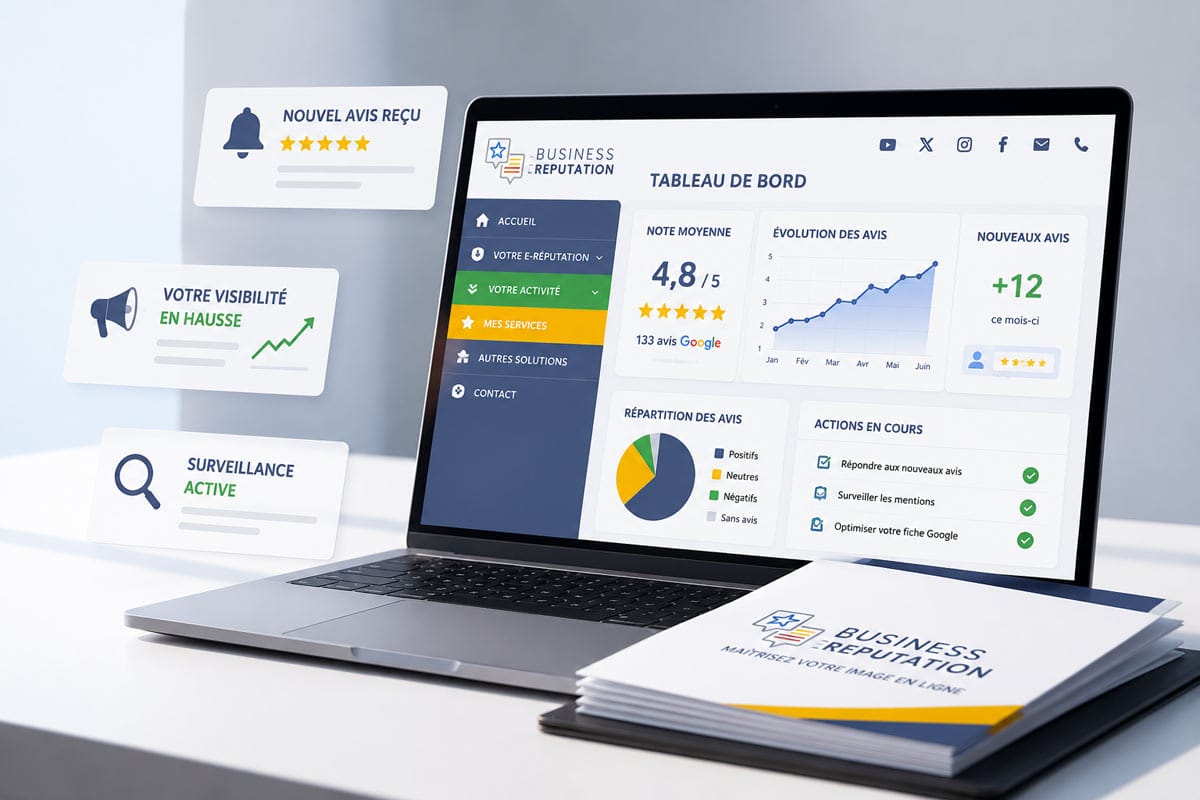
Also, remember to segment your audience. A new customer’s expectations differ from those of a regular. An email response doesn’t have the same tone as a spontaneous review left on Google. This level of detail helps you better understand the situation and personalize your responses. To organize this follow-up, a reputation dashboard with key metrics quickly becomes indispensable.
Keeping People in the Loop
AI is advancing rapidly, but it remains oblivious to irony and certain local expressions. A comment like “Well done—another forgotten order!” might sometimes be classified as positive by a machine. That’s why human validation remains non-negotiable.
Hanane Benhamed of Santiane confirms this: “AI can analyze 100% of calls, something a human could never do. However, to interpret this data and draw meaningful conclusions, it’s essential to have a human working with the tool.” So be sure to include a sampling phase where your teams review a portion of the data set.
This review also helps you tailor your models to your specific industry. A florist and a mechanic don’t use the same emotional vocabulary. Adapting your reference frameworks makes each subsequent analysis more accurate.
Reputation and GEO: Why Semantic Analysis Will Be Vital in 2026
In 2026, generative AI engines will prioritize recommending brands whose reviews tell a consistent story of positive experiences. Semantic analysis of your customer feedback is no longer just a tool for improvement—it determines your visibility in AI-generated responses.
The mechanism is straightforward. When a consumer asks an AI assistant, “What’s the best pizzeria in Toulouse?” the algorithm takes into account the sentiment of the reviews, not just the average rating. A listing with comments that express warm and consistent sentiment will be prioritized. Conversely, a brand with lukewarm feedback or reports of negative experiences will be demoted.
The content of your reviews feeds the AI
Chatbots read your reviews the way a human would read a recommendation from a friend. They analyze the sentiment, identify the main themes, and craft their response. A business that knows how to analyze its feedback can focus its data collection on the topics that really matter.
That’s the whole point of the Reputation First model, which involves building your offering around what customers write. Instead of simply accepting your reviews, you analyze them to adjust your service, and then you get even better feedback. It’s a virtuous cycle that speaks to both people and machines.
In practice, businesses that neglect this effort pay a heavy price. A construction contractor whose reviews repeatedly mention “vague quotes” will find that the AI is reluctant to recommend them. Meanwhile, their competitor—who has corrected this issue using semantic analysis—is capturing incoming requests.
Measuring Impact and Staying the Course
Like any serious project, semantic analysis is a long-term effort. Ask yourself the right questions: Is your first-contact resolution rate improving? Is your volume of complaints decreasing? Is your Google rating improving for the topics you’ve been working on?
Expectations change, and so does language. New expressions emerge, and your products evolve. Retrain your models regularly and update your corpora to ensure your analysis remains relevant. The transparency of content on Google Maps further underscores the need for up-to-date information.
Here is a comparison of the different approaches based on your level of maturity:
| Level | Method | Effort | Extracted value |
|---|---|---|---|
| Beginner | Manually view the last 50 reviews | High | Weak, biased by memory |
| Intermediate | Semantic Analyzer + Human Validation | Medium | Trustworthy Themes and Feelings |
| Advanced | Cross-Semantics with KPIs and Segmentation | Medium to high | Strategic Management and GEO Visibility |
Semantic analysis is a long-term endeavor. Equip yourself with the right tools, train your teams to use them, and your reviews will become a sustainable competitive advantage. Your customers are already talking to you. The only question that remains is: Are you really listening to them?