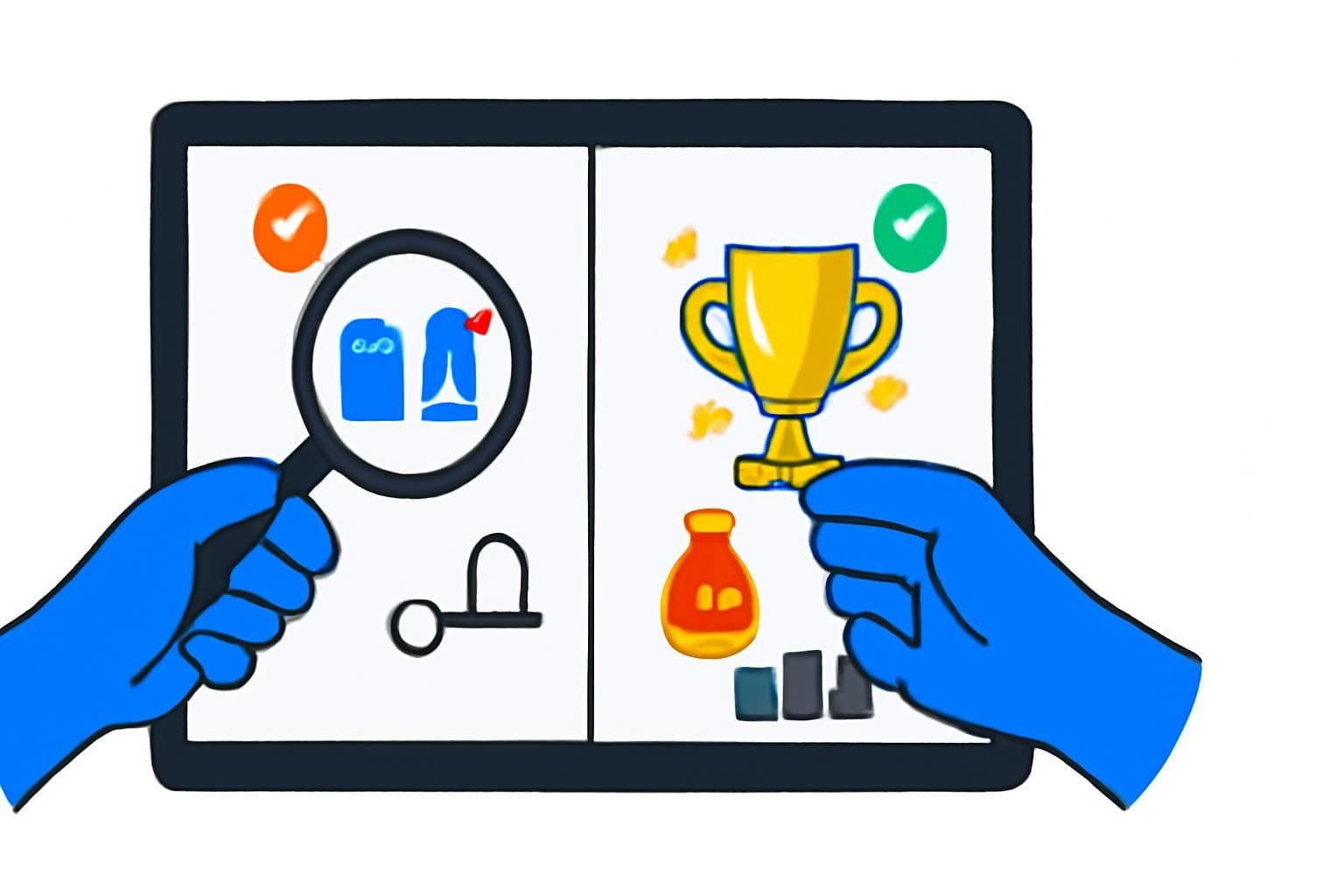
A salesperson who places their tablet on the table, opens their company’s Google listing, and lets the prospect read 87 reviews averaging 4.8 stars closes the deal twice as fast as a salesperson who recites a sales pitch. Online reputation has become a measurable driver of sales conversions. During sales meetings, your Google reviews act as a silent, trusted third party that validates every word you say. This article details practical methods for turning your Google rating into a conversion driver, with real-world examples from French retailers and artisans who have boosted their closing rates.
In short:
- Social proof shortens the sales cycle: a prospect who sees recent reviews naturally becomes less resistant.
- Showing your Google reviews during a meeting increases your closing rate without coming across as a pushy salesperson.
- Reviews are used to address objections regarding “price,” “turnaround time,” and “reliability” through the voices of real customers.
- In 2026, generative AI will prioritize recommending companies with strong brand recognition: neglecting your online reputation means disappearing from the suggestions.
- A structured review strategy supports both local SEO and face-to-face sales pitches.
Why Online Reputation Matters in Closing a Sale
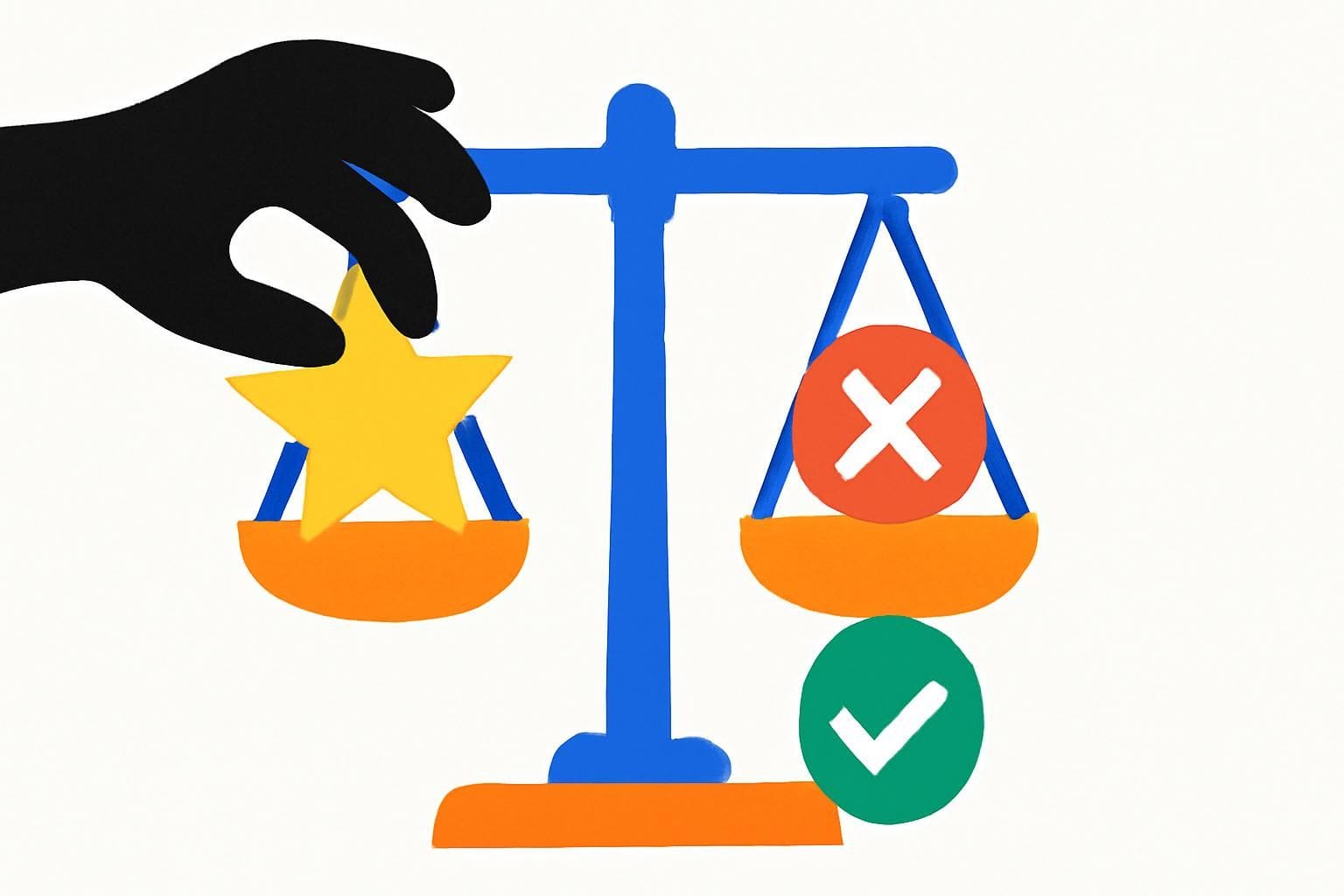
Online reputation directly influences the decision to make a purchase during a sales meeting because it reduces the risk perceived by the prospect. When a potential customer sees that others have had a positive experience, their brain is more quickly inclined to trust. This mechanism, known as social proof, transforms a subjective sales pitch into an objective demonstration.
Let’s imagine Sophie, the manager of a small carpentry business near Chambéry. Before each appointment, she would explain her expertise verbally. The result: one in three prospects signed a contract. The day she started showing her Google listing with its 62 detailed customer reviews, her conversion rate rose to one in two. The words “meticulous work” written by others carried more weight than her own promise.
A prospect’s brain looks for evidence, not promises
A seller who claims, “We’re a serious business,” triggers the listener’s natural skepticism. A Google review that says exactly the same thing, posted by a verified customer, dispels that skepticism. Customer trust is built on external cues, not on the seller’s self-assessment.
The numbers back this up. According to the BrightLocal Local Consumer Review Survey, more than 8 out of 10 consumers trust online reviews as much as they trust a recommendation from a friend or family member. In other words, your reviews speak for you, even when you’re sitting across from the customer.
Google reviews act as a screening tool even before the appointment
Many prospective customers look at your profile before meeting with you. A Lyon-based contractor with a 4.7 rating starts the appointment with a head start in building trust. The same contractor with a 3.4 rating will have to spend the first twenty minutes justifying himself instead of selling.
This reality is changing how businesses prepare for the market. Building your reputation is like laying the groundwork before you even walk into the room. To explore this approach to review management in the context of local SEO, this comprehensive guide to managing Google reviews details the cycle of monitoring, responding, collecting, and analyzing.
The lesson from the real world is simple: anyone who neglects their Google rating is at a disadvantage against a well-rated competitor.
How to Use Your Google Reviews in Sales Meetings
To use your Google reviews during sales meetings, bring them up when a prospect expresses a concern—never at the beginning of the conversation as a heavy-handed marketing pitch. The right approach is to let the customer read a review that directly addresses their current objection. This well-timed social proof does the persuading for you.
Let’s go back to Sophie, our carpenter from Savoie. When a prospective customer hesitates over the price, she shares a review in which a former customer explains that “the quote seemed more expensive, but the quality is worth every euro.” The objection disappears on its own. The prospective customer hears from a peer, not a salesperson.
Prepare a logbook of notices organized by objection
The most effective salespeople create a library of responses organized by the most common objections. Here’s how to structure this preparation:
- Price objection: Select two or three reviews that discuss value for money or perceived value in hindsight.
- Objection regarding deadlines: Keep on hand any notices confirming that commitments have been met and that deadlines have been met.
- Reliability objection: Highlight reviews that mention after-sales support and availability.
- New objection: Show recent reviews to prove that the business is thriving and well-liked today.
This notebook turns a simple conversation into a well-supported dialogue. A plumber from Grenoble reported that he doubled his conversion rate on large construction sites by consistently showing a testimonial from a customer who had experienced a similar emergency.
Show responses to negative reviews as proof of reliability
Counterintuitive but powerful: Showing how you respond to a negative review is more reassuring than a perfect profile. A skeptical prospect sees that, if a problem arises, you don’t run away. You acknowledge the issue, offer a solution, and remain professional.
A restaurant owner in Annecy understood this dynamic. When faced with a customer who was hesitant about booking a private event, he would present a mixed review followed by his calm and constructive response. The implicit message: “This is how I handle things when they get complicated.” The contract was signed right away.
This sales technique draws its strength from transparency. It demonstrates that your approach to managing reviews is an integral part of your professionalism.
Incorporate reviews into your marketing materials
Go beyond the raw Google listing—include screenshots of reviews in your quotes, presentations, and follow-up emails. A quote accompanied by three five-star reviews gets signed faster than a quote on its own. Digital marketing and sales closing aren’t at odds with each other—they feed off each other.
Customer influence reaches its peak when social proof accompanies the prospect at every stage of the decision-making process. Keep this principle in mind: a review seen at the right moment is worth a thousand arguments.
Collect and manage reviews to enhance your sales pitch
Collecting reviews on a regular basis ensures that your sales pitch is constantly backed by fresh, relevant evidence. A satisfied customer who is asked for feedback immediately after receiving a service will leave a review in most cases. This freshness carries just as much weight in face-to-face meetings as it does in Google’s algorithm.
Consistency matters more than sheer volume. A business that receives three reviews a month sends a signal of vitality that a page stuck at ten old reviews simply doesn’t convey. Google values this steady flow, and so do your prospects.
Automate the request for reviews without pestering the customer
An automated email with a direct link to your Google Business Profile triggers most positive reviews. The secret lies in timing: send the request while the positive emotion is still fresh. A dental clinic increased its number of reviews by 40% in three months simply by sending a link after each visit.
Sophie—her again—has added a QR code to her invoices. The customer scans it, leaves a review, and that’s it. This simplicity makes all the difference between intending to leave a review and actually posting one.
Compare fundraising strategies based on their effectiveness
Not all collection channels are created equal. The following table summarizes the approaches most commonly used by local retailers:
| Collection Method | Estimated return rate | Implementation Effort |
|---|---|---|
| Automated post-service email | High | Low |
| QR code on an invoice or in a store window | Medium to high | Very low |
| Verbal request at the end of the appointment | Medium | None |
| Text message with a direct link | High | Medium |
| Passive waiting without being asked | Very low | None |
The evidence is clear: a passive approach yields the worst results. Those who take a proactive approach build a reputation that can be leveraged in sales.
Respond to every review to strengthen your case
Every response you write becomes a future tool for persuasion. A personalized response to a negative review, posted within 48 hours, turns a critic into proof of your professionalism. A home service provider raised its rating from 3.8 to over 4.5 in just a few months thanks to this consistent approach.
To learn more about response techniques, this article on Google reputation management details the entire review management cycle. The golden rule: never leave a review unanswered, whether it’s positive or negative.
A well-handled review today becomes a selling point tomorrow.
Online Reputation and Generative AI: The Challenge of Closing Deals in 2026
In 2026, generative AI prioritizes recommending businesses with the best online reputations, making Google reviews a matter of business survival. When a consumer asks an AI assistant, “Which reliable carpenter is near Chambéry?”, the model prioritizes businesses with high visibility and good ratings. Neglecting your reputation is tantamount to becoming invisible even before the first appointment.
This shift is changing the nature of the sales closing process. The meeting no longer begins when you ring the doorbell, but when the AI has already shortlisted a handful of service providers. If you’re not on that list, you won’t make a sale—because you won’t even be part of the conversation.
AI also highlights negative customer experiences
Generative models don’t just recommend the best options. They also highlight recurring negative signals. A company with reviews mentioning repeated delays will see these criticisms highlighted in the summaries provided to prospective customers. AI transparency is becoming a permanent court of reputation.
A construction contractor with several reviews mentioning missed deadlines discovers that the AI spontaneously brings up this weakness. The prospect therefore arrives at the meeting with a pre-formed objection. That’s why proactively managing reviews is no longer just a nice-to-have.
Reputation is becoming a transferable and valuable asset
Online reputation extends beyond the sales meeting: it is an economic asset. When a small or medium-sized business is sold or acquired, the Google rating and review history factor into the valuation. A buyer assesses the strength of a company’s digital reputation just as they would its order book.
This aspect of business value is detailed in this analysis of due diligence and digital reputation prior to the acquisition of an SME. The takeaway: every review you collect today increases your company’s resale value tomorrow.
Get a head start while your competitors are sleeping
Most business owners haven’t yet realized that AI is changing the game when it comes to customer acquisition. Those who start organizing their review collection now are gaining a lead that will be hard to catch up to. Local SEO and AI-powered recommendations reinforce each other, and the gap is widening month after month.
To understand how these reviews relate to overall visibility, this guide on customer reviews and Google visibility provides practical guidance for small businesses and SMEs.
The question is no longer whether you should work on your reputation, but how many contracts you’re losing each month by not doing so.
The common thread running through this entire approach can be summed up in one sentence: whoever manages their Google reviews effectively manages their sales closing. Sophie the carpenter, the plumber from Grenoble, and the restaurant owner from Annecy all share the same observation from the field. Their customers sign on because other customers have already spoken on their behalf. Social proof won’t wait—and neither will your competitors.