Imagine Marc, a plumber in Bordeaux—excellent at his job but invisible on Google. A customer types in “plumber Bordeaux,” comes across a competitor with 87 reviews and a 4.7-star rating, and gives them a call. Marc, on the other hand, has two reviews and a neglected business listing. This scenario plays out thousands of times a day. The good news: setting up an online reputation starter kit for tradespeople takes less than two hours. By 2026, 81% of consumers will check reviews before choosing a professional, and a good Google rating can account for up to 40% of a local tradesperson’s new customers.
In short:
- An optimized Google Business Profile is the foundation of your local visibility—even more so than your website.
- The collection of customer reviews is triggered by a simple system (QR code, text message) that runs automatically.
- Responding to 100% of reviews—both positive and negative—triples the level of trust your prospects have in you.
- Social media and basic monitoring help protect your reputation from unpleasant surprises.
- With the advent of AI-powered recommendations, artisans who are inactive or have poor ratings become invisible to potential customers.
Optimize Your Google Business Profile in 30 Minutes
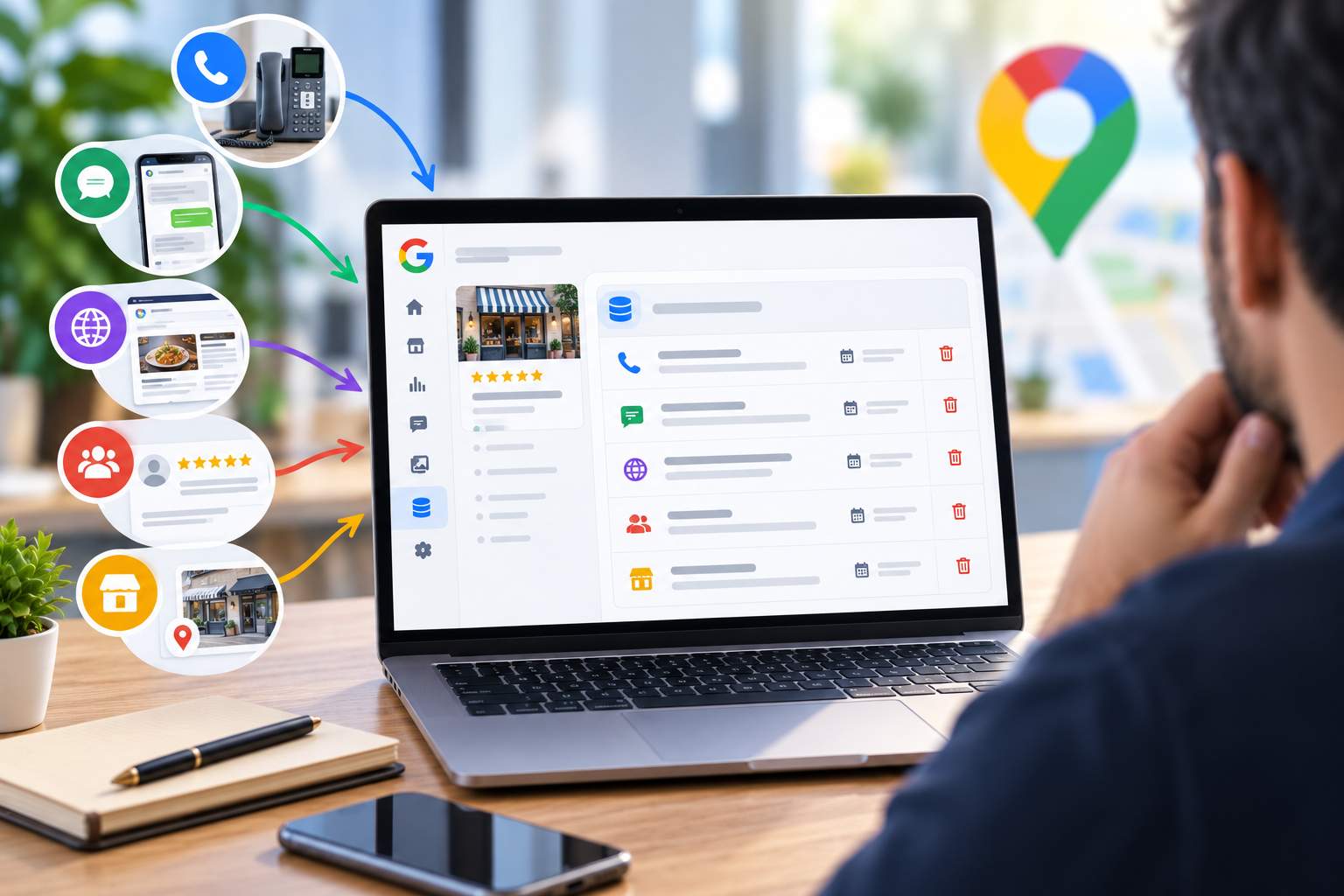
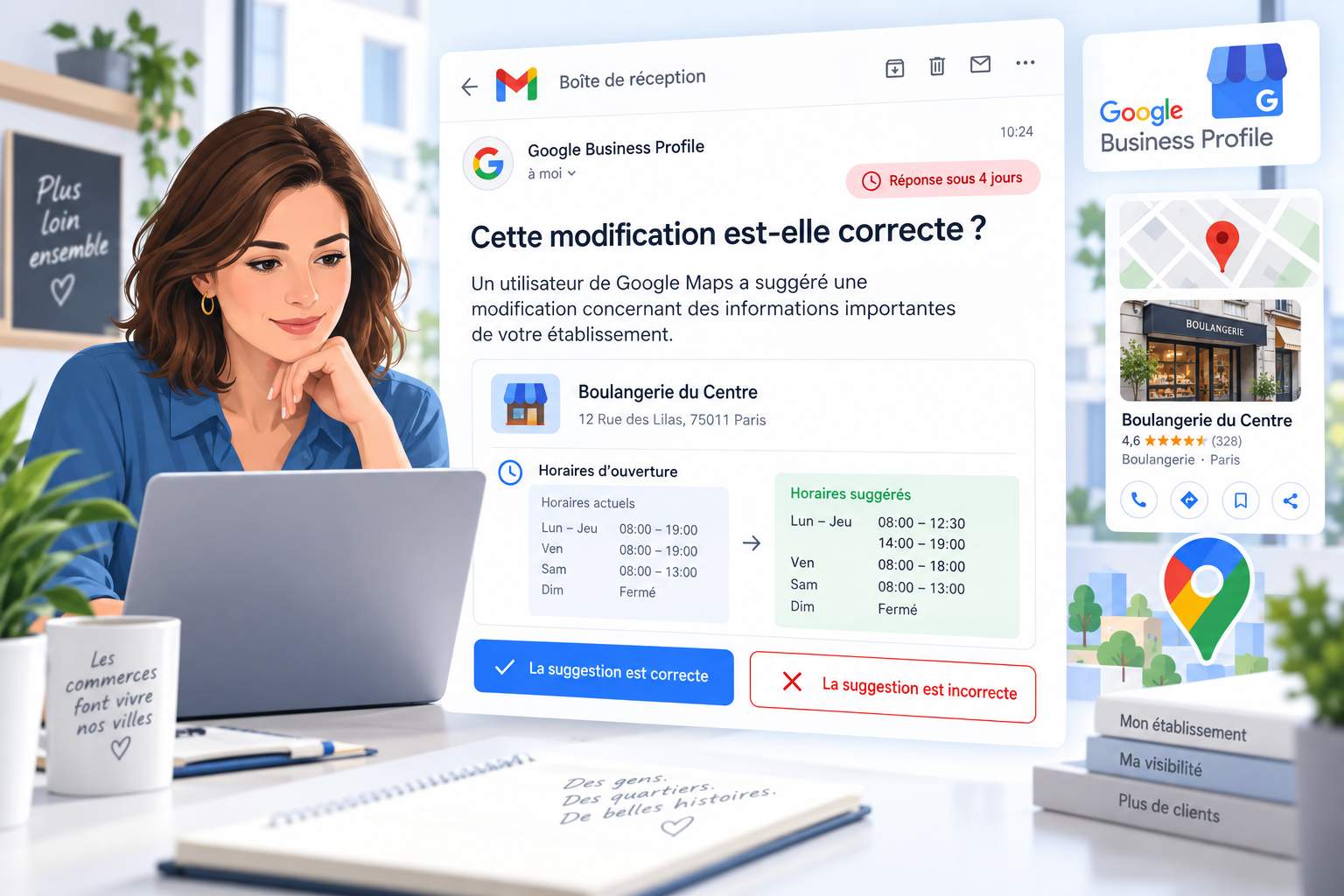
The first step in your starter kit is to claim and complete your Google Business Profile. This is what appears in the well-known “local pack” (the three results with a map) when a customer searches for a local tradesperson. Without it, you don’t exist for Google.
Let’s take Marc, our plumber from Bordeaux, as an example. In exactly thirty minutes, he claims his listing, enters his exact hours of operation and service area, and adds twelve photos of completed jobs. The results are immediate: Google loves active listings and ranks them higher.
The fields that really make a difference
Not all fields carry the same weight. The main category, the exact business name, and the address are the three elements that Google prioritizes when evaluating local search rankings. Choose the wrong category, and your listing will disappear from relevant search results.
Photos play an underestimated role. A BrightLocal study shows that listings with more than 100 photos receive more requests for directions and calls. For a tradesperson, before-and-after photos are worth a thousand sales pitches. Marc took photos of a remodeled bathroom: three prospective customers mentioned them on the phone.
Don’t forget to include a detailed description and list of services. List each service along with its natural keywords (emergency repairs, water heater installation, bathroom renovation). This precise online management directly boosts your visibility. A complete listing is already half the battle toward building a solid local reputation.
Set up a system for collecting customer reviews without spending your evenings on it
The second step turns your satisfied customers into brand advocates. Collectingcustomer reviews is based on a simple principle: ask at the right time, through the right channel. Most small business owners don’t dare to ask for reviews. This is precisely where the gap with competitors widens.
Marc decided to print a QR code on his invoices. Customers scan it, are taken to his Google listing, and leave a review in thirty seconds. In two months, he went from two to twenty-six reviews. His phone now rings more often than his competitor’s across the street.
Choosing the Right Time to Ask
Timing is everything. Asking for a review right after a successful service call, when the customer is still happy to have hot water again, greatly increases your chances. Wait a week, and that enthusiasm fades. The automated text message sent two hours after the service call remains your most powerful tool.
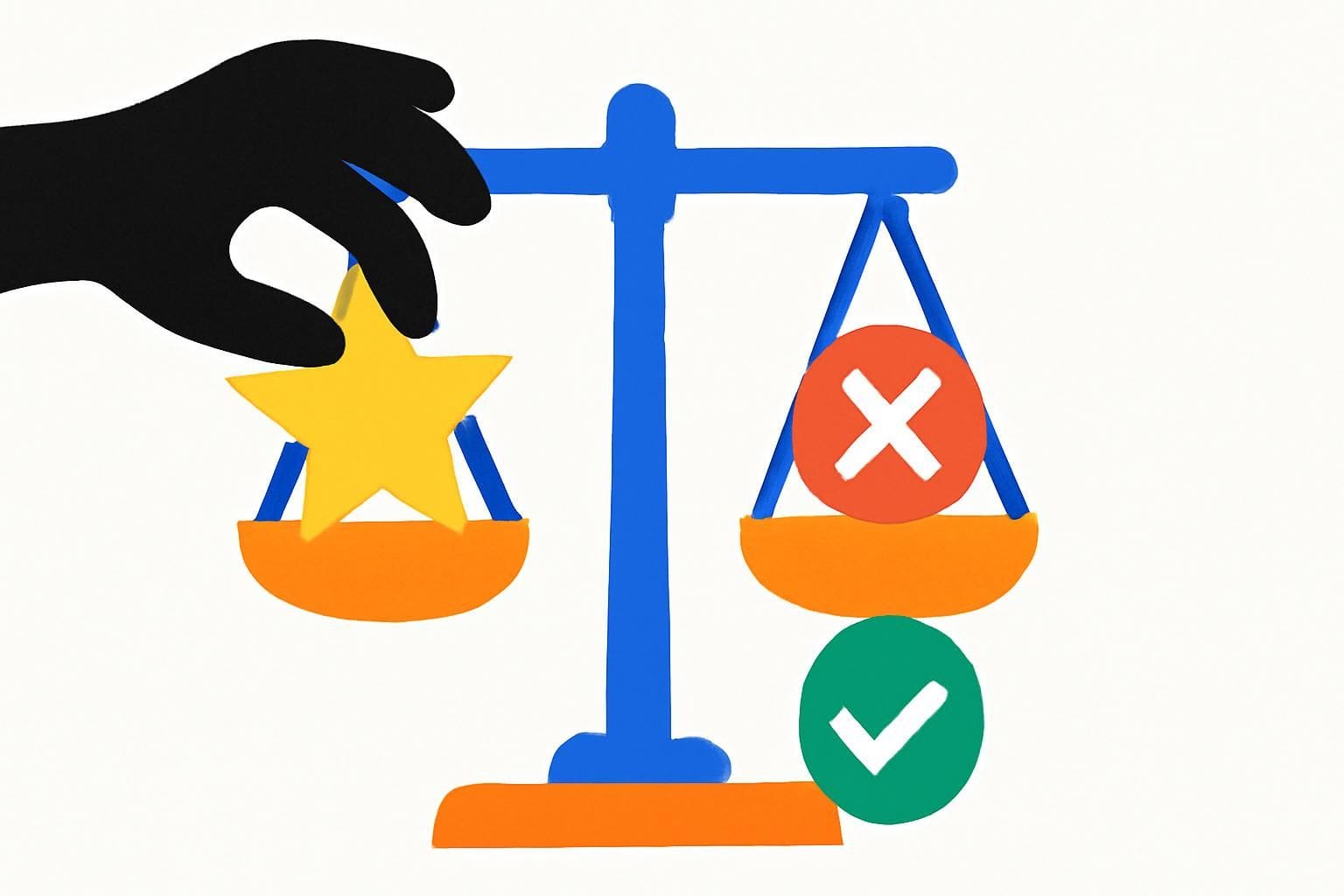
One ethical consideration is worth noting: never filter your requests to include only delighted customers. This practice creates a detectable bias, and negative reviews provide valuable feedback for improvement. A transparent approach—as emphasized in several guides on building an online reputation strategy—protects your credibility in the long run.
Which Channel for Which Tradesperson
Not all channels are equally effective depending on your line of work. Here’s a comparison to help you quickly figure out which ones are right for you.
| Collection channel | Average response rate | Ideal for |
|---|---|---|
| QR code on invoice | 15 to 25% | Tradespeople who have frequent physical contact |
| Automatic SMS | 30 to 40% | Emergency and Breakdown Services |
| Post-Service Email | 10 to 20% | Long-term projects with detailed estimates |
| Business card with a link | 5 à 10% | Initial contact, prospecting |
Text messages are by far the most popular choice for emergency services. A locksmith who makes a service call at 10 p.m. sends a message the next morning: the customer, relieved to have regained access to their home, is happy to reply. Well-timed digital communication turns every job into social proof.
Respond to reviews to turn every piece of criticism into an opportunity
The third step in your online reputation starter kit is to consistently respond to reviews. A personalized response triples the level of trust perceived by prospects who read your listing. Silence, on the other hand, sends the worst possible signal: that you don’t care about your customers.
Many artisans fear negative reviews. This is a mistake in perspective. A well-handled negative review is more reassuring than a string of perfect—and suspicious—five-star ratings. Prospective customers want to see how you respond when things go wrong.
The Procedure for a Negative Review
Three simple steps are all it takes. First, thank the customer for their feedback; acknowledge how they feel; then offer to resolve the issue offline by providing a phone number. Example: “Sorry for the inconvenience, Sophie. Please call us at 05 56 XX so we can resolve this quickly.”
There’s a golden rule for protecting your reputation: never respond in the heat of the moment. If a review upsets you, wait thirty minutes. Read your message aloud. If it sounds aggressive, rephrase it. The key to turning a negative review to your advantage lies entirely in maintaining this composure in public.
Don’t overlook the positive reviews
Responding to positive reviews is just as important as handling negative ones. A simple “Thanks, Pierre—glad to hear the boiler is working great. See you soon” makes your customer feel valued and encourages others to leave reviews. It adds a personal touch to your online presence and appeals to Google’s algorithm, which recognizes an active listing.
Avoid mindless copy-and-paste. A dozen identical responses immediately give away a lack of interest. Mention a specific detail from each review: the type of project, the first name, or a word from the customer. This attention to detail makes all the difference between a hands-on professional and a digital ghost.
Establish a social media presence tailored to your business
The fourth step expands your visibility beyond Google. You don’t need to be everywhere: a single well-maintained social media account is enough for a tradesperson. The goal is to showcase your expertise and stay top of mind with your past clients, who will then recommend you.
Marc chose a local Facebook page. He posts a photo from a construction site there once a week, responds to messages, and shares his projects. As a result, his clients tag him, and his posts spread throughout the neighborhood. Digital word of mouth works better than a flyer in the mailbox.
The Right Network for Your Customer Base
A roofer doesn’t communicate the same way a photographer does. For construction trades, Facebook and Instagram dominate thanks to their local, visual focus. B2B services find their audience on LinkedIn. The classic mistake is to spread yourself thin across five platforms and abandon them all after a month.
Consistency is more important than quantity. One post a week over the course of a year is better than ten posts in a single week followed by radio silence. These social media platforms also boost your search engine rankings, since Google interprets social activity as a sign of business vitality.
Turning an achievement into content
You don’t need to be a videographer. A before-and-after photo with a short caption is more than enough. “Leak repaired on an emergency basis this morning in Caudéran—customer relieved.” This type of content reassures customers, demonstrates your business’s activity, and supports your digital strategy without a budget.
Real-world experience shows a consistent pattern: craftsmen who document their projects receive more requests than those who don’t. As an industry expert points out in this interview on professional photography, showcasing your work builds immediate trust. Your projects are your best advertisement.
Set up a monitoring system to protect your reputation and anticipate crises
The fifth and final step is to secure your starter kit. The next step is to monitor what’s being said about you online so you can respond quickly. A review that goes unnoticed for two weeks can cause considerable damage before you even realize it.
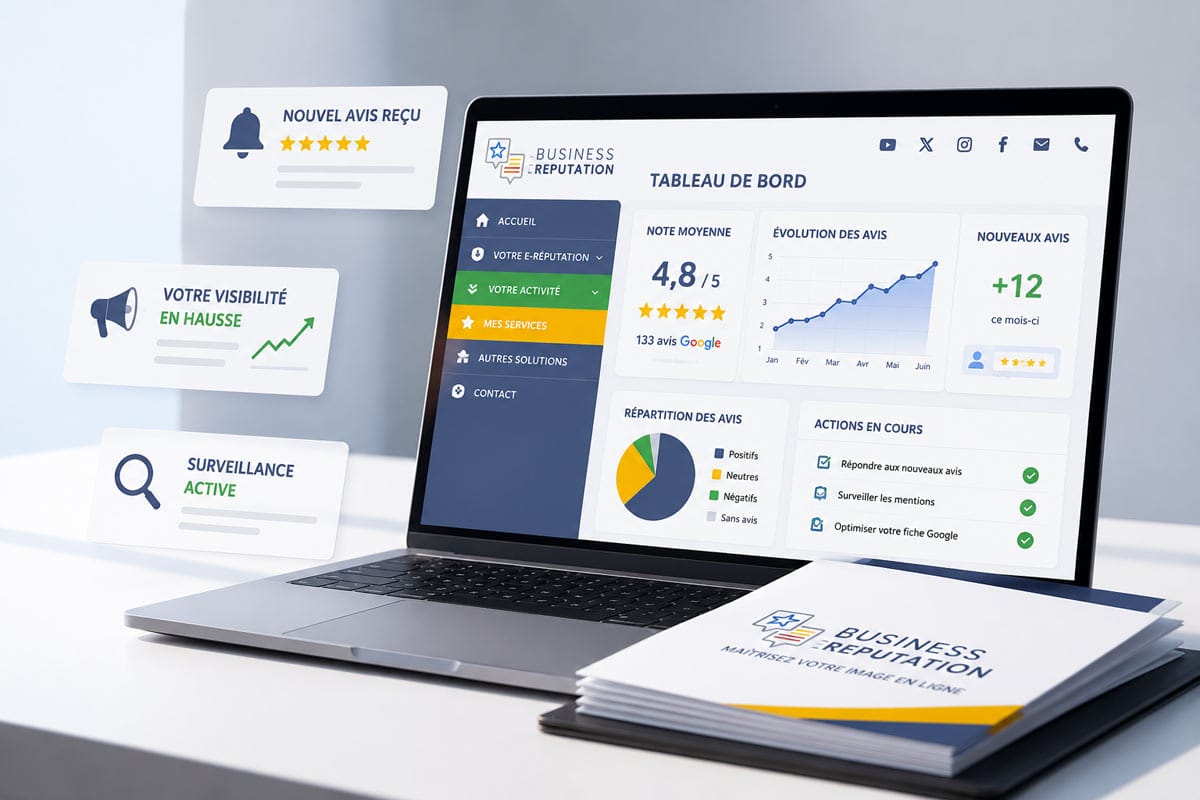
Setup takes just ten minutes using free tools. Google Alerts notifies you by email as soon as your company name appears anywhere. Google Business Profile notifications alert you to every new review. Now, Marc knows within a few hours when a customer has left a review.
Free Tools That Are All a Craftsman Needs
You don’t need to pay for an expensive subscription to get started. Three quick steps cover the essentials of effective market monitoring for a tradesperson or a very small business.
- Google Alerts: Free email alerts about your company name and services.
- Google Business Profile Notifications: Immediate alerts for every new review that needs to be addressed.
- Monthly local search audit: Type your name + city once a month and look at the first three results.
This simple routine, outlined in this monthly checklist that takes just thirty minutes to complete, helps you avoid unpleasant surprises. Half an hour a month to protect years of hard-earned reputation—the math clearly works in your favor.
The Impact of Generative AI on Artisans
Here’s what tomorrow is really about. When a customer asks an AI, “Who is the best plumber in Bordeaux?”, the assistant recommends the highest-rated professionals with the strongest online presence. Tradespeople who are unknown or poorly rated simply disappear from the conversation.
This shift benefits small business owners who have already established their online presence. AI systems rely on reliable sources: plenty of reviews, a complete business profile, and positive mentions. Building your online reputation today means ensuring you’ll be recommended by the algorithms that will guide tomorrow’s customers.
Developing a comprehensive , step-by-step crisis plan is the ideal way to round out your strategy. A wave of fake reviews or a disgruntled customer whose complaint goes viral could happen at any time. It’s better to have thought through your response before the storm hits. To take it a step further, resources like this comprehensive guide to online reputation explain the mechanisms in depth. You can put together your starter kit in two hours—while your competitors may still be waiting.