Training your team to collect reviews is by no means just a whim of a boss obsessed with stars. A 2024 BrightLocal survey shows that 87% of consumers read online reviews before choosing a local business, and that businesses ranked in the top three of the Local Pack capture the majority of clicks. In other words: every employee who forgets to ask for a review is handing a gift to your competitor. This protocol, based on simple role-playing exercises, transforms your salespeople, artisans, and servers into natural review collectors. You’ll walk away with a concrete, field-tested method that you can put into practice first thing tomorrow morning.
In short:
- Gathering feedback is managed as a team skill, not as a directive issued in a meeting.
- Role-playing remains the most effective tool for instilling good customer service habits.
- A brief, written, and consistent protocol helps avoid awkward requests that scare customers away.
- Generative AI now recommends businesses with high Google ratings and a credible volume of reviews.
- Without a structured online reputation management strategy, your competitors will be the ones to capture market share.
Why Training Your Team to Collect Feedback Makes All the Difference
Training your team to collect reviews is like instilling a collective habit: every customer interaction becomes an opportunity to strengthen your reputation. A single manager can’t ask for 200 reviews a month. A trained team can. That’s the real key.
Let’s take the example of a bakery in Lyon that we recently worked with. Before the training, the manager was getting three reviews a month—all thanks to her. After getting her two sales associates on board with a simple protocol, the number of reviews jumped to about twenty a month. The turning point wasn’t technical. It came down to the fact that the sales associates finally knew what to say and when to say it, without feeling awkward.
Shyness, in fact, remains the number one obstacle. Many employees think they’re bothering customers by asking for feedback. They imagine the customer getting annoyed, the line getting longer, and the customer looking away. This mental fear prevents more collections than any technical issue. The role of team training is to alleviate this apprehension.
The Direct Link Between a Motivated Team and Local Visibility
A team that understands what’s at stake collects reviews differently. Explain to them that every review boosts local SEO, and that Google considers the recency and volume of reviews when ranking your listing. A business with 150 recent reviews will automatically outrank one that’s stuck at 20 reviews dating back to 2021.
For a construction professional, the results are spectacular. A plumber in Bordeaux who was trained to systematically follow up with customers after a job was completed saw his incoming calls double in six months. His customers were finally finding him at the top of Google Maps. This isn’t just luck—it’s a method shared by the entire company.
To explore further the actual impact of the number of reviews, this analysis of Google ratings versus review volume sheds light on a debate that many business owners struggle to resolve.
What Field Experience Reveals About Team Resilience
In the field, one observation comes up repeatedly among nearly all the business owners we’ve worked with: employees accept the idea but forget to put it into practice. The motivation is there, but the habit isn’t. That’s why a single meeting is never enough. The brain retains a repeated action, not an instruction heard just once.
A restaurant owner in Marseille summed it up well: “My servers would say ‘yes’ during meetings, but then nothing would change on Friday nights when things got really busy.” The solution came from role-playing, which was repeated three times in a row until the request came out naturally, even under pressure.
The lesson can be summed up in one sentence: A trained team collects information; an informed team forgets it.
Develop a clear and actionable feedback collection protocol
A good data collection protocol fits on one page and answers three questions: when to ask, how to phrase the question, and how to follow up. Simplicity is its strength. A ten-page document will end up in a drawer, never to be used.
The timing of the request is everything. You have to choose the moment when the customer feels the most satisfied. For a hairstylist, that’s right after the customer steps in front of the mirror. For an auto mechanic, it’s when the customer picks up a repaired and clean vehicle. This emotional timing greatly increases the chances of getting positive feedback.
The Key Steps in an Effective Protocol
Here is a template that business owners can easily adapt to their own needs, depending on their industry:
| Step | Action | A concrete example |
|---|---|---|
| Finding the Right Moment | Identify the peak in satisfaction | Waiter after a complimentary dessert |
| Submit the request | A short and sincere sentence | “Your feedback is a huge help to us” |
| Making the action easier | QR code or direct link | Card placed with the check |
| To thank | Immediate recognition | A smile and a sincere thank you |
| Track Returns | Reply within 48 hours | Personalized response from the manager |
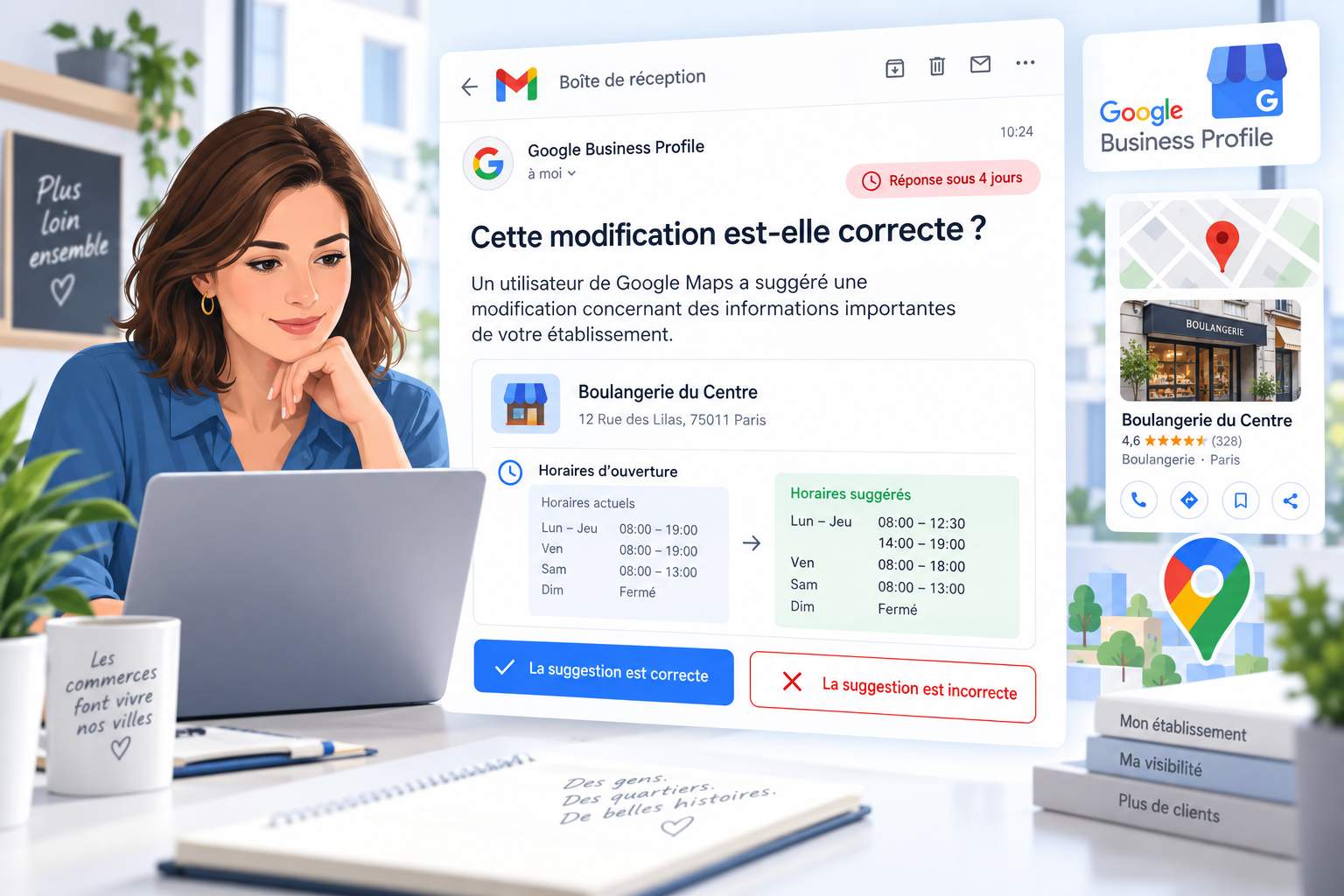
Beware of the trap of chasing volume. A rise that’s too sudden triggers Google’s filters and can be costly. This is an issue that warrants your attention, as explained in this report on the risks of an uncontrolled surge in reviews.
Adapt the protocol for artisans and merchants
A tradesperson’s workflow differs from that of a brick-and-mortar retailer. Craftsmen work at the customer’s location, often alone, without a cash register or counter. They receive requests via a text message sent that same evening, along with a link to their Google listing. The personal interaction on-site already builds trust; all that’s left is to turn that trust into a review.
Retail store owners, on the other hand, capitalize on in-person interactions. A florist, for example, can slip a small card into every bouquet sold. This gesture blends seamlessly into the purchasing process without feeling intrusive. This subtle approach to customer feedback respects each person’s pace.
For chains with multiple locations, the challenge becomes even greater. Standardizing practices across stores requires a common framework—a topic covered in detail in this guide on the reputation of multi-location chains.
Keep this in mind: a protocol thrives if it adapts to your business; it fails if it remains theoretical.
Role-playing games to instill good waste collection habits
Role-playing remains the best tool for developing teamwork skills. It allows participants to practice without risk, receive immediate feedback, and accelerate skill development. An employee who has rehearsed a scenario ten times will be able to ask for feedback without hesitation when facing a real customer.
The strength of this approach lies in its practical nature. We’re no longer just talking in a vacuum; we’re simulating real-life interactions. Training experts confirm its effectiveness, in line with best practices in role-playing for training, which emphasize the realism of the scenarios being acted out.
A ready-to-use data collection scenario
Here is a scenario directly inspired by professional staging techniques. One team member plays themselves, while another plays the customer. The facilitator—often the manager—describes the situation in detail: where the scene takes place, when it happens, and what the objective is.
Let’s imagine a cashier at a convenience store. The instruction: ask a loyal customer who has just paid for her groceries for her opinion. First take, just like in a movie. The cashier stammers, the customer hesitates, and the request falls flat. That’s normal. We’ll keep going anyway until the end, without cutting to a break.
Next comes the group debrief—a crucial moment. First, we offer praise, highlight what went well, and then identify areas for improvement. Second take, with a new direction: “This time, look the client in the eye and smile before you speak.” The improvement is immediate and visible to the whole group.
Vary the exercises to strengthen team communication
A single scenario quickly becomes tedious. Vary the situations to cover all real-life scenarios: the customer in a hurry, the dissatisfied customer, the chatty customer. These variations enhance communication skills and adaptability. Resources on team communication exercises offer numerous scenarios that can be adapted for retail settings.
Also, be sure to combine your feedback-gathering games with traditional sales exercises. Role-playing exercises focused on sales techniques boost confidence and responsiveness—two qualities that directly support the request for feedback. A salesperson who is comfortable closing a sale will also be comfortable asking for feedback.
- Describe the situation accurately before playing.
- Assign roles while emphasizing kindness.
- Play the first take without stopping.
- Start the debrief by highlighting the successes.
- Replay the game with a specific goal for improvement.
- Help the employee envision what real life will be like tomorrow.
Team building also takes place outside of formal exercises. Fun team-building activities foster mutual support, which helps employees work more closely together toward the shared goal of fundraising.
There’s a lesson to be learned here: a movement practiced repeatedly in the workshop becomes second nature behind the counter.
Turning Collected Feedback into an Advantage Against Generative AI
Collecting reviews is no longer just about reassuring people. It now feeds generative AIs that recommend businesses. When a user asks an assistant, “What’s the best auto repair shop near me?” the algorithm draws on reputation signals to provide an answer. Your review volume and Google rating carry significant weight in this selection process.
This shift, known as GEO, is reshuffling the deck. Companies that are invisible to AI disappear from recommendations, even if their product is excellent. A craftsman with no reviews doesn’t exist in the eyes of a generative model. Digital silence is becoming a commercial penalty.
The signals that AI systems analyze before giving you a quote
The models don’t just count the stars. They read the content of the reviews, detect consistency, and identify repeated negative experiences. A pattern of feedback mentioning delivery delays will stand out, even if it’s buried within a good average. The AI’s transparency regarding companies’ weaknesses marks a turning point.
Understanding these criteria is becoming strategically important. This article on trust signals analyzed by AI details the factors to watch for. A team trained to collect rich and authentic reviews directly contributes to these positive signals.
Anticipating Crises with a Vigilant Team
A team that collects feedback also learns to pick up on subtle cues. A server who reports three similar comments about a dish being too salty provides valuable information before such criticism ends up online. The feedback collection process becomes a satisfaction radar.
This preventive approach is a game-changer. Identifying dissatisfaction before it turns into a public negative review can prevent a great deal of damage. The topic of predictive reputation and crisis anticipation delves deeper into this logic, which is invaluable for any business owner concerned about their image.
Not even the competitors are resting on their laurels. While one retailer hesitates, another is training its sales staff and climbing the rankings in AI-powered recommendations. Falling behind today will cost them customers tomorrow.
Steering and sustaining the fundraising momentum over time
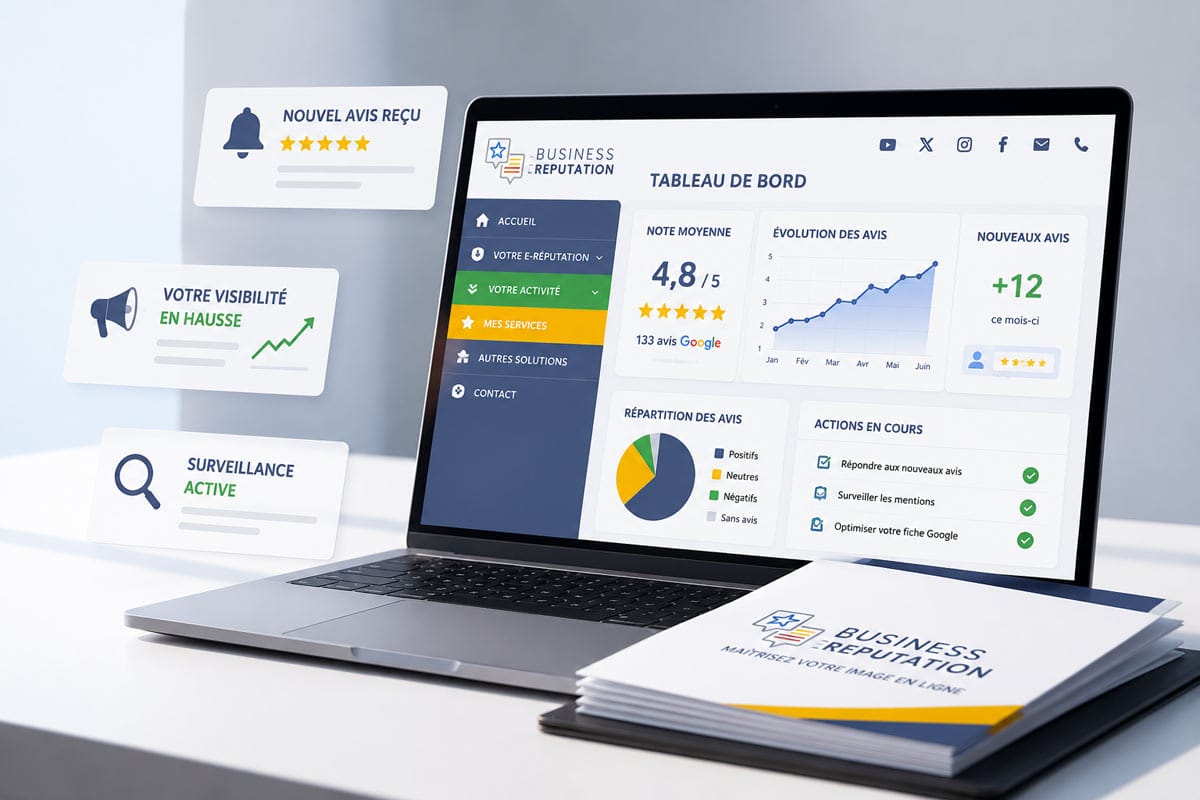
A one-time training session quickly loses its impact. To ensure that feedback continues to be collected over the long term, you need regular oversight, simple metrics, and recognition of the team’s efforts. Without follow-up, good habits fade within a few weeks.
The first step is to measure. How many reviews per month, per employee, per time slot? These figures turn a vague goal into a concrete challenge. A tailored calculator helps set realistic benchmarks, such as this review calculation tool designed for local businesses.
Keeping the team motivated over the long term
Recognition fuels motivation. Posting the number of reviews collected each week, congratulating the most active employee, and celebrating the achievement of a symbolic milestone—these rituals keep morale high. A butcher in Nantes treats the whole team to coffee every time his business page receives ten reviews. Minimal cost, lasting impact.
A manager’s leadership makes all the difference. A manager who seeks input sets an example; a manager who delegates without leading by example loses credibility. Team leadership activities offer ways to embody this coaching approach in everyday situations.
Cooperation also fosters consistency. A close-knit group reminds each other of the right actions to take. Cooperative games designed to build team spirit demonstrate how to instill this collaborative spirit, which is valuable far beyond the fundraising effort itself.
Analyze feedback to continuously improve
Collecting feedback isn’t enough—you have to make use of it. Each set of reviews tells a story about your customer relationships, your strengths, and your blind spots. Regularly reviewing the comments reveals trends that aren’t apparent on the sales floor. A recurring phrase, an unmet expectation, a quality that’s frequently mentioned.
This business is becoming more professional.Semantic analysis of customer reviews allows you to extract real value from your latest feedback. A restaurant owner may discover that their outdoor seating area is generating more buzz than their menu—valuable information for adjusting their marketing strategy.
Finally, get your colleagues on board with the initiative. Presenting a clear reputation management plan makes it easier to gain buy-in and secure funding. This guide to presenting an online reputation plan in ten minutes helps you make your case without using jargon. And to build your team’s long-term autonomy, customized training on Google Business Profile lays a solid foundation.
The bottom line of this project can be summed up in a few words: a team that consistently gathers data builds a reputation that neither a competitor nor AI can ignore.