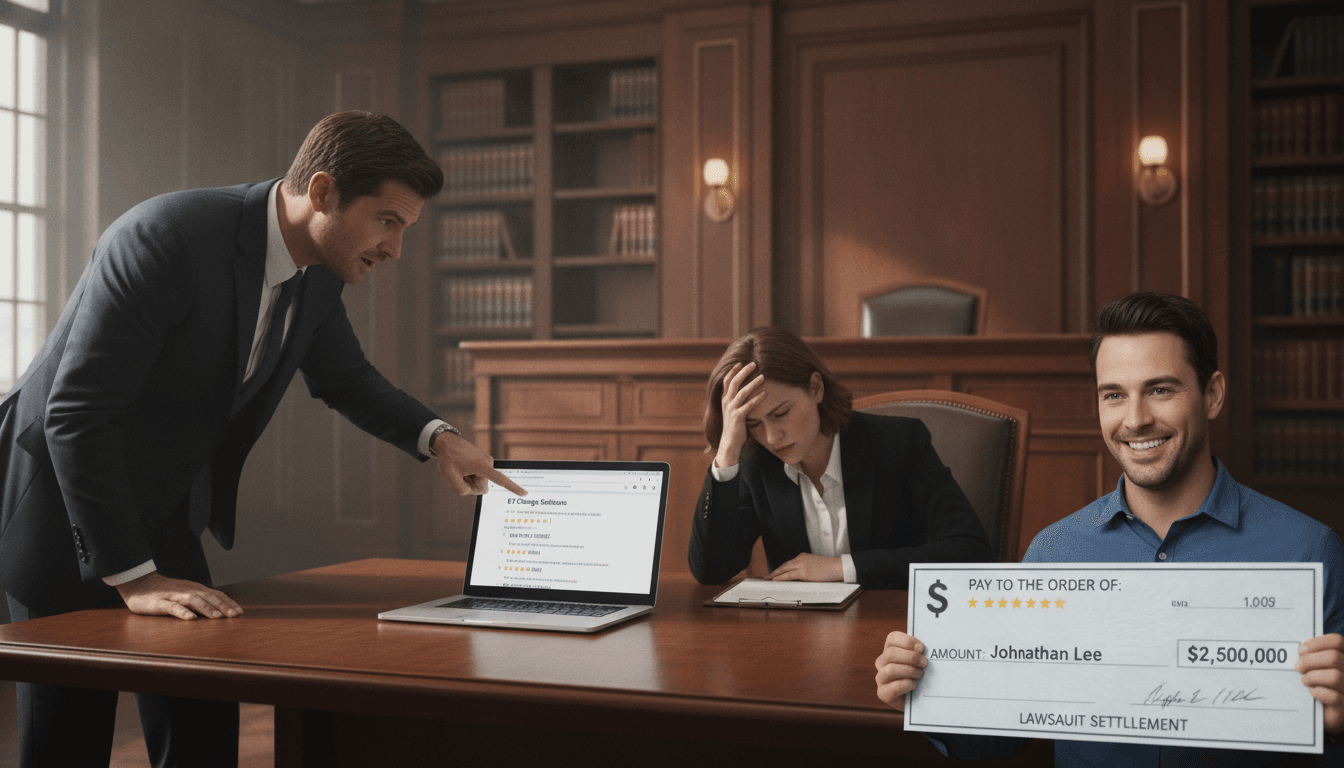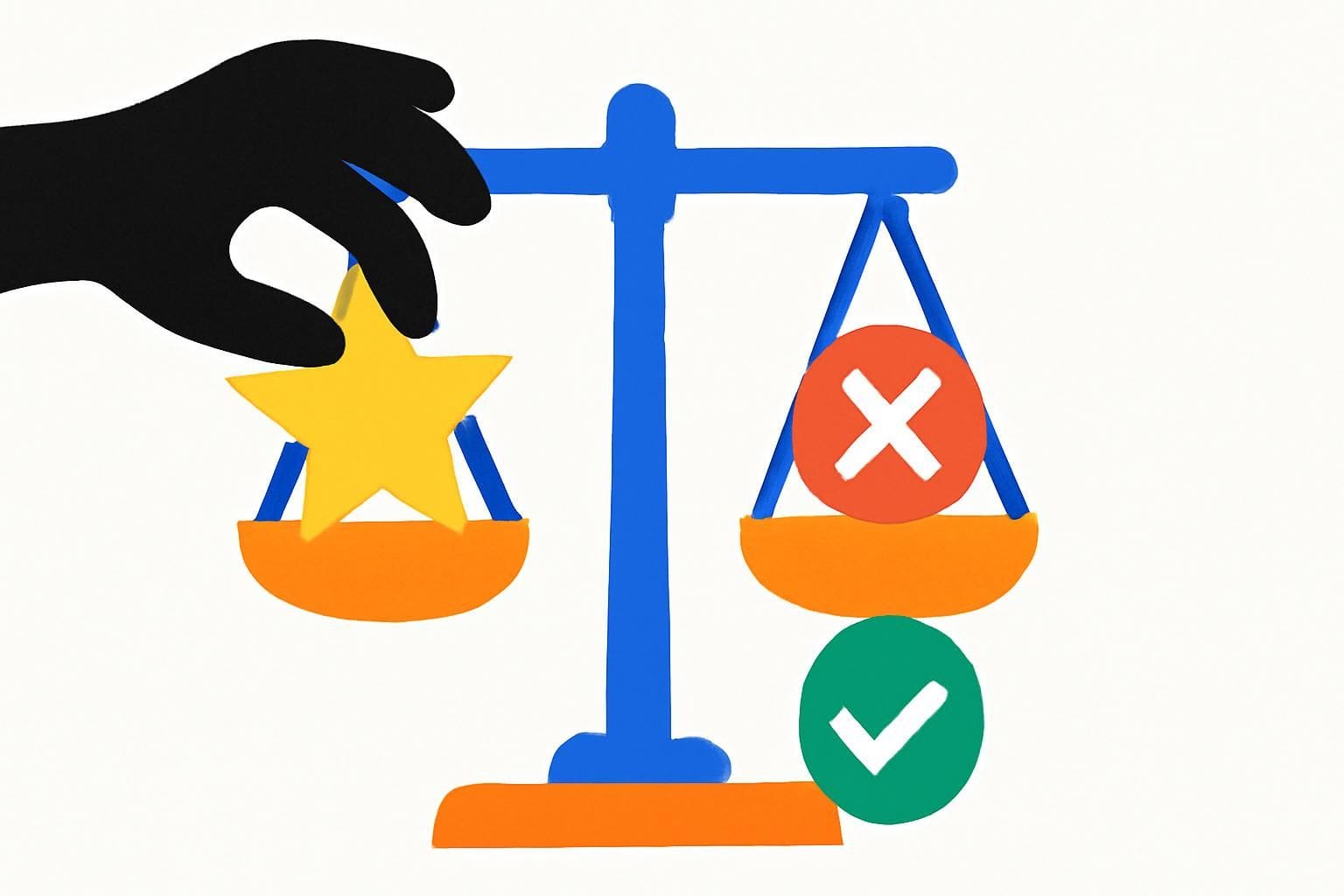
Extortion via Google reviews now affects thousands of French business owners every year. The scenario is all too familiar: a wave of one-star reviews floods your listing within a few hours, followed by a message: “Pay up, and it’ll all disappear.” ” Google officially acknowledges this scourge and has set up a dedicated form for reporting these scams. This article breaks down the mechanism, shares a compelling firsthand account, and details the legal steps you can take to defend yourself without paying a single cent to these digital extortionists.
In short:
- Google review extortion can be recognized by a sudden drop in the rating followed by a demand for money.
- Never pay: Google strongly advises against any transactions with scammers.
- There is an official form for reporting abuse available to merchants who are victims of extortion.
- French legal proceedings are based on the LCEN, defamation, and slander.
- A solid online reputation strategy remains your best defense against fake reviews.
How to Spot an Attempted Extortion via Google Reviews
An extortion attempt can be identified by two combined signs: a sudden surge in negative reviews on your business listing, followed by a demand for money or services in exchange for their removal. Google considers these practices a serious violation of its policies and is committed to protecting the businesses that are targeted.
The modus operandi follows an almost theatrical pattern. First, complete calm. Your business profile displays a fair rating, the result of months of work. Then, overnight, ten, twenty, sometimes thirty one- and two-star reviews pile up. No detailed comments, just scathing ratings. The next morning, a message arrives on WhatsApp or via email.
The Unmistakable Signs
Take the case of Karim, the manager of a Lebanese restaurant in Marseille. In three days, his rating dropped from 4.7 to 3.9. The reviewers’ profiles have no photos, no history, and generic names. Then an anonymous account offers to “clean up” his listing for 400 euros. This scenario has become so common that Google has published a specific help article on scams involving negative reviews.
Here are the signs of an organized attack:
- Several negative reviews were posted within a few hours.
- Empty author profiles that were created recently and have no other contributions.
- Notes with no text, or with identical copy-and-paste sentences.
- A message from an outside source demanding payment to make the whole thing go away.
- Inconsistent geolocation data for the authors, who are sometimes on the other side of the world.
Why Your Profile Becomes a Target
Fake reviews never appear by chance. Businesses with a good reputation have the most to lose, which makes them prime targets. A plumber in Nantes recently told me he was targeted right before the peak season—the time when every star carries significant weight in the order book. Understanding this mechanism helps you anticipate problems, andanticipating a crisis becomes a vital reflex in this context. The lesson learned in the field: the better your listing looks, the more closely you need to monitor its “heart rate.”
Firsthand Account: When Online Harassment Hits a Neighborhood Business
Online harassment through third-party reviews can destroy a business’s reputation in a matter of days. The following account provides a concrete example of the damage caused and a possible response. It is based on a real case we handled, and has been anonymized to protect the confidentiality of the business owner involved.
Sophie has been running an artisanal bakery in Lyon for eight years. Her listing proudly displayed a 4.8-star rating based on more than 300 reviews. One Monday in March, she discovered a flood of one-star ratings—fifteen in a single morning. That evening, she received an anonymous email: “Nice place. Too bad about your rating. 600 euros and we’ll wipe the slate clean.”
The Psychological Cycle of the Victim
Sophie’s first reaction was panic. Paying seemed like the quickest way to stop the bleeding. That’s exactly the trap. Google is adamant: never interact with the criminals, never send them money. Every payment encourages new attempts and offers absolutely no guarantee that the reviews will be removed.
Sophie held her ground. She gathered evidence right from the start, which proved to be crucial for what followed. The stress of a targeted attack is like a fire breaking out in the back room: the temptation to act quickly without thinking is immense, but that is precisely what the extortionists are counting on.
Reconstruction after the attack
Once the fraudulent reviews had been reported and gradually removed, Sophie relaunched a campaign to collect genuine reviews from her loyal customers. Within six weeks, her rating had risen to 4.6.Implementing a structuredonline reputation crisis plan allowed her to stay the course when everything seemed to be falling apart.
According to data shared by BrightLocal in its study on local reviews, nearly 9 out of 10 consumers check reviews before choosing a business. A drop in ratings therefore directly translates into a loss of revenue. To track these changes, monitoring a monthly reputation dashboard is a game-changer. The phrase Sophie keeps repeating today: “I almost paid for my fear, but in the end, I paid for my vigilance.”
Reporting Review Extortion to Google: A Step-by-Step Guide
To report extortion, you must use an official form designed for merchants and provide solid evidence. Google then investigates the claim and informs the victim of the results. This channel is reserved for cases in which someone demands money or favors in exchange for removing a review.
Speed makes all the difference. The sooner you gather the necessary documentation, the stronger your case will be. Here are the items you need to gather before submitting your application.
| Type of proof | Details to be provided |
|---|---|
| Communication Interceptions | Emails, WhatsApp or Telegram messages showing the request for money, including the date, time, and sender’s contact information |
| Links to Suspicious Reviews | Direct links to each fraudulent review identified as part of the attack |
| Identity of the Authors | Names, usernames, email addresses, phone numbers, or social media profiles of the people who submitted the requests |
| Timeline | Date of the peak in negative reviews and date of the first extortion demand |
Fill out the Google report form
Google provides a form for merchants to report extortion, which should be filled out carefully. Include your contact information, a link to the relevant profile, details about the reviews, and information on the malicious third party’s methods. Be sure to attach screenshots. A comprehensive report helps speed up the investigation.
Specialized platforms, such as guides on reporting review extortion, also detail the pitfalls to avoid. The classic mistake: trying to resolve the issue on your own by responding to the scammer. This direct contact weakens your position and encourages the harasser.
What Happens After a Report Is Filed
Once the report is submitted, the Google team reviews the claim. For privacy reasons, no specific details about the investigation are disclosed, but the platform is committed to preserving the integrity of business profiles. Moderation systems detect a large portion of suspicious activity, though they do not catch everything, which is why it’s important for you to remain vigilant.
Also keep in mind the importance of prevention. A well-established crisis prevention policy reduces the impact of a future attack. The key takeaway: Google processes your report, but it’s your body of evidence that turns it into concrete action.
What Legal Remedies Are Available Against False and Defamatory Reviews?
Legal action against fake reviews is supported by a solid body of French law, provided that it is invoked. The Law on Confidence in the Digital Economy of June 21, 2004, known as the LCEN, establishes the liability of hosting providers such as Google and requires the removal of manifestly illegal content.
Digital law offers several avenues of defense depending on the nature of the attack. The legal classification of each word matters: a statement may constitute disparagement, defamation, or unfair competition. This distinction shapes the entire defense strategy.
Identify the perpetrator before taking action
Without identifying the author, action remains limited. Legal proceedings allow for a request to be made to the hosting provider for the disclosure of identifying information, based on Articles 6 and 8 of the LCEN. Cross-referencing data and analyzing digital behavior round out the investigation. Several law firms, such as in this case involving filing a complaint over a fake Google review, assist companies in this area.
Once the author has been identified, a formal notice often has an immediate effect. The prospect of costly legal proceedings frequently prompts the voluntary removal of the review. A furniture manufacturer in Brittany, for example, succeeded in having twelve fraudulent reviews removed after sending a single, well-reasoned letter from a lawyer.
Procedures for Requesting Removal
When an out-of-court settlement fails, an application for preliminary relief can be used to obtain the immediate removal of the content. The expedited proceedings on the merits, introduced by the 2020 reform, offer an alternative when the situation does not meet the criteria for absolute urgency but a swift decision is necessary.A practical guide on fake Google reviews details these options for non-lawyers.
Google almost always invokes its status as a hosting provider and pursues legal proceedings to the end. Victims often have to obtain a court ruling to prevail. Analyses of legal proceedings following the reforms and of the legal removal of a negative Google review shed light on the timeframes and available remedies.
It’s important to prepare for the legal protection of your online reputation before an attack occurs. Compiling a file of evidence, knowing your rights, and finding a specialized attorney: these steps save valuable time. The key takeaway: the law is there, but you must act quickly and methodically to take advantage of it.
Protecting Your Reputation in the Age of GEO and AI-Powered Recommendations
At a time when generative artificial intelligence systems are recommending businesses, a reputation tarnished by fake reviews costs far more than just a few stars. AI systems rely on brand recognition and customer satisfaction signals to guide their suggestions. A weakened listing risks becoming invisible to algorithms.
GEO—optimization for generative engines—is a game-changer. When a consumer asks an AI assistant for “the best bakery in the neighborhood,” the answer is based on aggregated online reputation. Brands with the strongest signals rise to the top, while the others fall off the radar.
Extortion Is Becoming a Weapon of Algorithmic Downgrading
Anextortion attack no longer just damages your immediate reputation. It taints the data that AI systems use to make recommendations about you. A hairstylist whose rating drops sharply sees their online standing deteriorate permanently, even after the fake reviews are removed. The digital footprint lingers for some time in caches and indexes.
This is where well-prepared competitors gain the upper hand. While you’re busy putting out the fire of false criticism, those who have built a strong reputation are capturing your market share. The strategic question is no longer whether an attack will come, but how your reputation will weather it.
Building a Reputation That Can Withstand Attacks
The best defense is still a reputation so solid that a wave of fake reviews gets lost in the sea of real ones. A business with 800 genuine reviews can weather thirty fake reviews without batting an eye. A business with 40 reviews starts to waver. Volume creates a statistical shield.
The balance between ratings and volume is worth considering, as explored in this analysis of Google ratings versus the volume of reviews. Emerging technologies also offer solutions: blockchain technology applied to customer reviews promises to verify the authenticity of feedback and make it harder for scammers to operate.
Building an online reputation is no longer optional for local businesses. Between extortion, online harassment, and AI-driven recommendations, those who plan ahead stay in control. The lesson learned from real-world experience: your reputation is an asset that must be nurtured before the storm hits—never during it. And Sophie’s story proves it: vigilance beats fear every time.