In a nutshell: predictive reputation is a game-changer for retailers, franchises and multi-establishment groups. Thanks to sentiment analysis, online monitoring and Big Data, it’s now possible to spot a customer review crisis several days before it explodes into public view. A BrightLocal 2024 study shows that 87% of consumers consult reviews before making a purchase, and that a score that drops from 4.5 to 3.8 stars can result in a loss of up to 30% of local sales. Here’s what you’ll find out.
- Weak signals that herald a crisis of opinion 7 to 15 days before the media firestorm
- Opinion monitoring tools available without costly subscriptions
- The contribution of artificial intelligence to preventing reputational crises
- An operational protocol to transform a threat into a lever of trust
- Why generative AIs will soon sort out reliable brands from unreliable ones
Predictive reputation: the new weapon for brands that dominate their local market
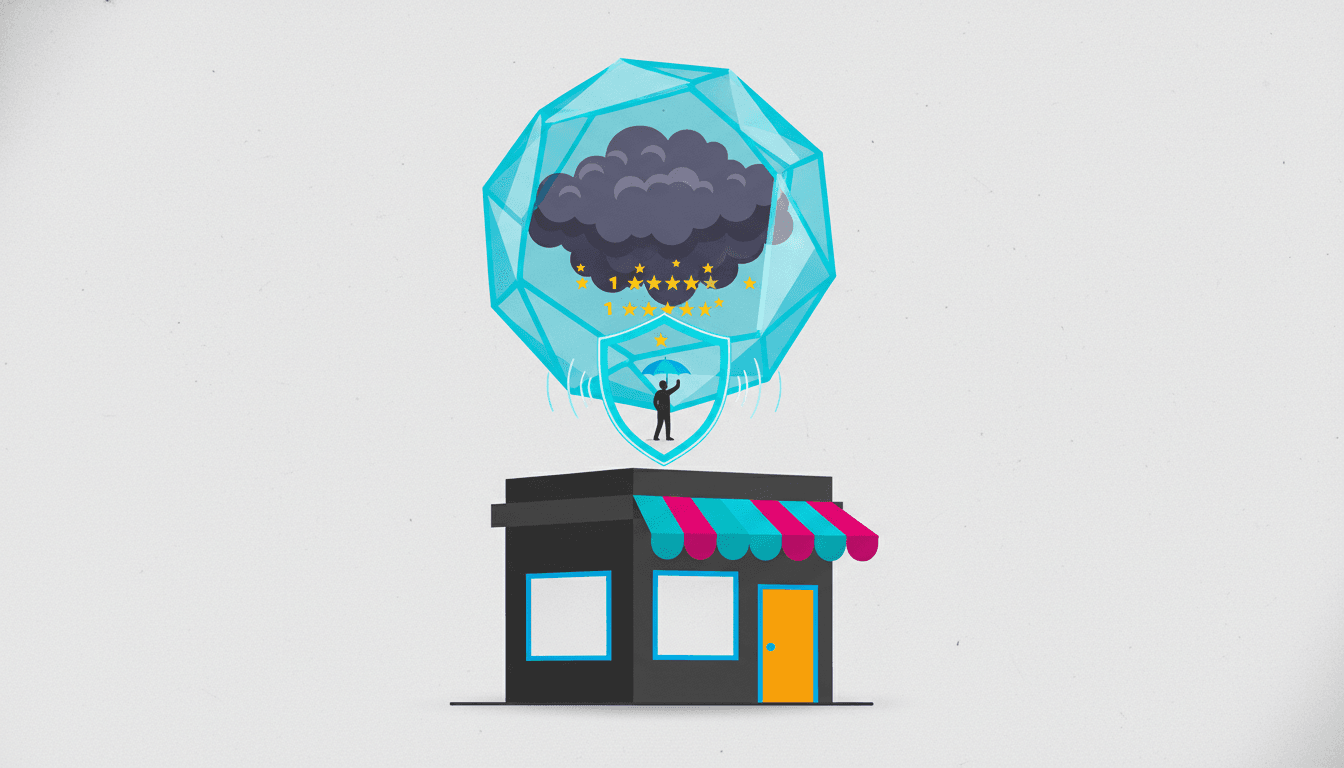
Predictive reputation involves using statistical models and artificial intelligence algorithms to detect, before anyone else, the warning signs of a customer review crisis. Instead of putting out the fire, we turn off the gas. This approach is based on three pillars: big data from review platforms, real-time sentiment analysis and correlation between micro-events in the field and digital reactions.
Let’s take a real-life example. At the beginning of 2025, a network of 42 independent garages observes a 0.2 point drop in the average rating of 6 pilot establishments. Nothing alarming on the surface. However, the predictive models detect an abnormal concentration of words like “waiting”, “unclear estimate”, “callback not honored” in the neutral comments. Three weeks later, two of these garages received a volley of coordinated 1-star reviews on Google. Those who had been alerted had already called back their disgruntled customers. The others saw their Google Business Profile stall for months. To find out more about this sector-specific subject, take a look at our guide to e-reputation for garages.
The stakes go far beyond the rating displayed. Search engines now weight local rankings according to review velocity, freshness and the positive/negative ratio over a rolling 30-day period. A listing that was rated 4.7 stars can fall to 4.1 in two weeks if ten negative reviews are posted simultaneously. The consequences are immediate: disappearance of the Local Pack, drop in store traffic, loss of sales. Brands that have understood this mechanism now invest in opinion monitoring as they would invest in fire insurance.
Another element is changing the game in 2026: conversational AIs like ChatGPT, Perplexity or Gemini are increasingly quoting companies in response to local queries. These models favor brands with stable, verifiable and well-rated reputations. A merchant invisible to AI disappears from the customer journey before the first click. A more detailed analysis of this mutation is available in this article on local search and artificial intelligence.
How to detect the weak signals of a customer review crisis
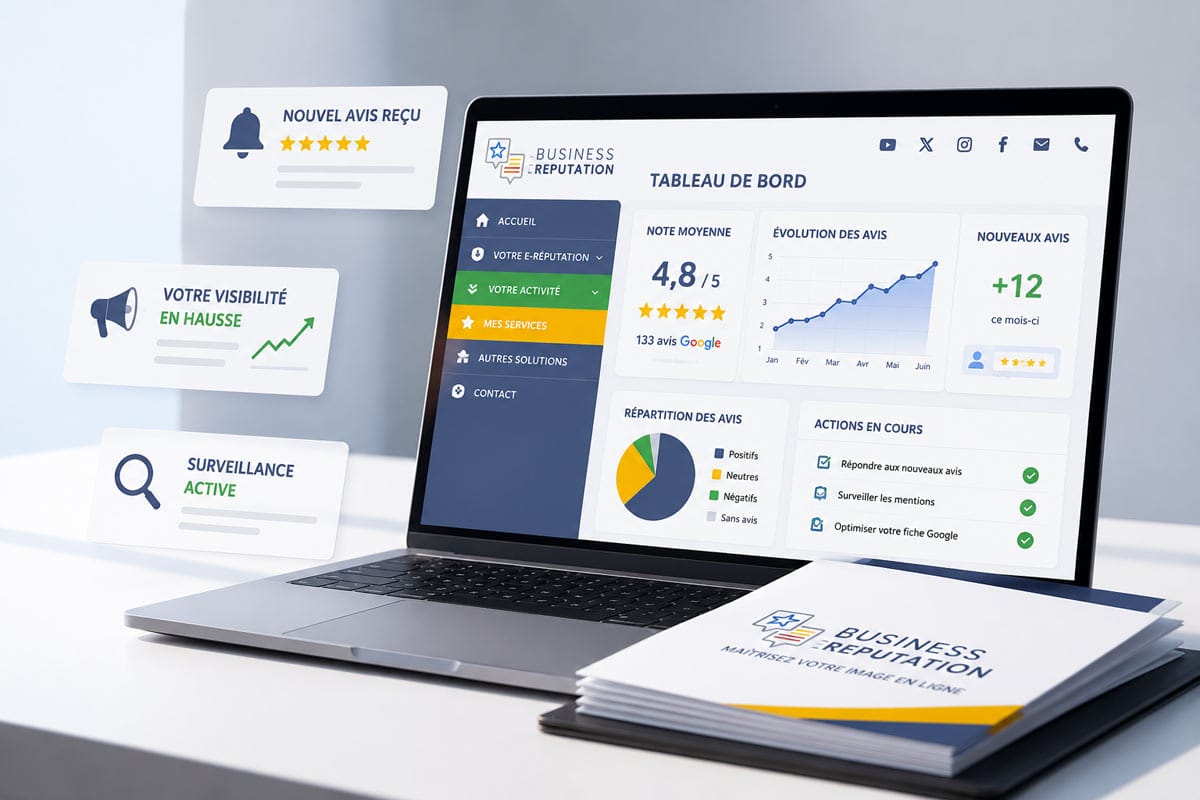
A customer review crisis never falls from the sky. It is announced by a series of weak signals, which can be spotted if you know where to look. The first reliable indicator is the sudden change in the volume of neutral comments (3-star ratings), well before the arrival of low ratings. When a customer leaves a median rating, he’s expressing restrained frustration. If more than one appears within a 7-day window, the ground becomes flammable.
Here are the early warning indicators that an online monitoring system must constantly follow:
- Vélocité des avis neutres: un pic d’avis 3 étoiles sur 7 jours glissants
- Emotional lexicon: recurrent use of words such as “too bad”, “disappointed”, “expected better”.
- Falling response rate: less than 60% of reviews answered within 48 hours
- Off-platform mentions: Facebook discussions, local forums, neighborhood WhatsApp groups
- Peak in negative searches: “brand name + problem” or “+ scam” on Google Trends
- Competitor behavior: a direct competitor who collects a large number of positive reviews
In the field, the brands that anticipate the best have set up a simple routine: a weekly glance at the dashboard, a 15-minute Monday morning meeting with the team, and an alert protocol if two indicators tip simultaneously. A bakery in Lyon with three sales outlets tried this out in 2024: early detection of a change in the tone of reviews (linked to a new flour supplier) prevented a lasting drop in its average score. The supplier was replaced within four days, before the subject went viral on local social networks.
Organizations specializing in risk management confirm that detecting five warning signs of a reputational crisis enables action to be taken in the critical window when the situation remains reversible. After 72 hours without reaction, the cost of recovery is multiplied by five.
Artificial intelligence and big data: tools that change anticipation
Artificial intelligence has turned opinion polling from a craft into an industrial discipline. In just a few years, natural language processing models have become capable of understanding sarcasm, irony and innuendo. A comment that says “really top service, especially the one-hour wait” will be correctly classified as negative by a modern model, whereas a classic lexical tool would have rated it positive because of the word “top”.
In concrete terms, several families of tools will coexist in 2026:
| Tool type | Main function | Relevance to a local business |
|---|---|---|
| Monitoring platforms (Talkwalker, Brandwatch) | Multi-source intelligence, sentiment analysis | Suitable for multi-site groups |
| Google Alerts and Keyword Alerts | Free notifications on mentions | Basic solution, accessible to all |
| Predictive models (machine learning) | Anticipating crisis peaks | Ideal for franchises and chains |
| Native Google Business Profile suites | Follow-up on form, questions, photos | Indispensable for every retailer |
| Free social listening tools (Google Trends, Reddit) | Detection of external weak signals | Free, useful supplement |
Machine learning models applied to reputation now analyze thousands of variables: tone, frequency, geolocation, author profile, correlation with weather, local news, competing promotions. This approach, detailed in a specialized analysis of machine learning applied to reputation, enables predictive accuracy of over 80% on the occurrence of a crisis within 14 days.
Beware of the trap: piling up SaaS tools is useless without regular human reading. The most successful merchants combine an affordable platform, an in-house spreadsheet-based dashboard, and half an hour of qualitative reading per week. Technology increases the radar, it doesn’t replace the pilot.
Crisis prevention: the 7-step operational protocol
Notice crisis prevention is based on a simple, reproducible protocol that can be adapted to any size of business. An independent retailer can set it up in a day. A 200-store franchise can do it in a few weeks, with gradual deployment. The key: document each step so that the team knows what to do at 5pm on a Friday evening when the storm arrives.
Mapping vulnerabilities
First step: list known friction points. Delivery times, variable employee quality, after-sales service management, cleanliness, parking, telephone reception. Each sensitive point becomes a variable to be monitored. A Parisian restaurateur identified 14 risk areas in his establishment. Six months later, his Google rating had risen from 4.2 to 4.7, thanks to work focused on these points alone.
Define alert thresholds
Each indicator must have a trigger threshold. For example: 3 negative reviews in 7 days, a drop of 0.15 points over 30 days, or the appearance of a sensitive keyword in a comment. Beyond the threshold, action is mandatory. No “we’ll see tomorrow”.
Preparing model answers
Having 5 to 7 response templates adapted to the most frequent cases saves precious time. These templates are never published as they stand: they serve as a customizable skeleton. Defending against false notices and extortion attempts requires specific, more legal templates, which are best prepared in advance.
Team building
All staff need to know how to recognize a weak signal and pass it on. A waiter, a sales assistant or a delivery person often pick up the information before the manager does. A laminated A4 sheet in the storeroom is all it takes to teach the right reflexes.
Activate proactive collection
The best antidote to bad buzz is a steady stream of genuine positive reviews. A satisfied customer solicited at the right time leaves a review in 30% of cases. Without solicitation, the rate drops to 4%. It doesn’t take long to do the math.
Monitor, adjust, repeat
An unreviewed protocol becomes obsolete in six months. A quarterly review is essential to integrate new signals, new platforms and changes in the Google algorithm. Reference resources on reputation crisis management remind us that a crisis can be won in less than 24 hours, or lost over years.
Document each alert
Keeping a log of incidents (date, cause, action, result) creates an invaluable capital of knowledge. After two years, the team has seen so many cases that it acts reflexively.
Predictive reputation and GEO: why AIs will soon be sorting brands
The most underestimated topic in 2026 is this: generative artificial intelligences are becoming the main filter between a consumer and a business. When an Internet user asks ChatGPT “the best florist in Bordeaux Caudéran”, the model doesn’t draw a name at random. It cross-references public opinions, the freshness of data, the consistency of information, the presence of negative signals and overall brand awareness. Poorly rated or inconsistent brands are discarded before the user is even aware they exist.
This new reality, dubbed GEO (Generative Engine Optimization), redefines what is at stake when it comes to reputation. A rating of 4.8 out of 350 reviews becomes a strategic asset. A rating of 3.9 out of 80 reviews becomes a silent handicap. And unlike traditional SEO, there is no page 2: the AI only quotes 3 to 5 brands per response. The others don’t exist.
Some observations from field cases confirm this mutation:
- An independent optician saw his phone calls triple after raising his rating from 4.2 to 4.7, simply because conversational AIs started recommending him.
- A restaurant franchise lost 18% of traffic in 4 establishments after a 3-week wave of unmanaged 1-star reviews
- A plumber in the Lyon region saw his sales drop by 22% over one quarter following a single false review spread by a competitor.
Competitive advantage is being built today, before AI consolidates its knowledge base. Tomorrow, it will be too late to catch up. Merchants who invest now in predictive reputation take an option on market share in 2027 and 2028. Those who wait will see their competitors recommended in their place, without even knowing why the phone is ringing less.
The resources available on anticipating reputational crises and mitigating reputational risks all converge on the same observation: reputation is built by capillary action, slowly, and lost brutally. Anticipating costs ten times less than repairing. And in a world where algorithms decide who deserves to be seen, crisis prevention is no longer a comfort option. It’s the bedrock of commercial survival.
What you remember
- Predictive reputation detects crises 7 to 15 days before they explode in public
- Weak signals (neutral opinions, negative lexicon, drop in response rate) are the best early indicators
- Artificial intelligence and big data make opinion monitoring accessible to all businesses
- A 7-step protocol is all it takes to turn a threat into a competitive advantage
- Generative AIs will soon be sorting out reliable brands from unreliable ones: act now or disappear later