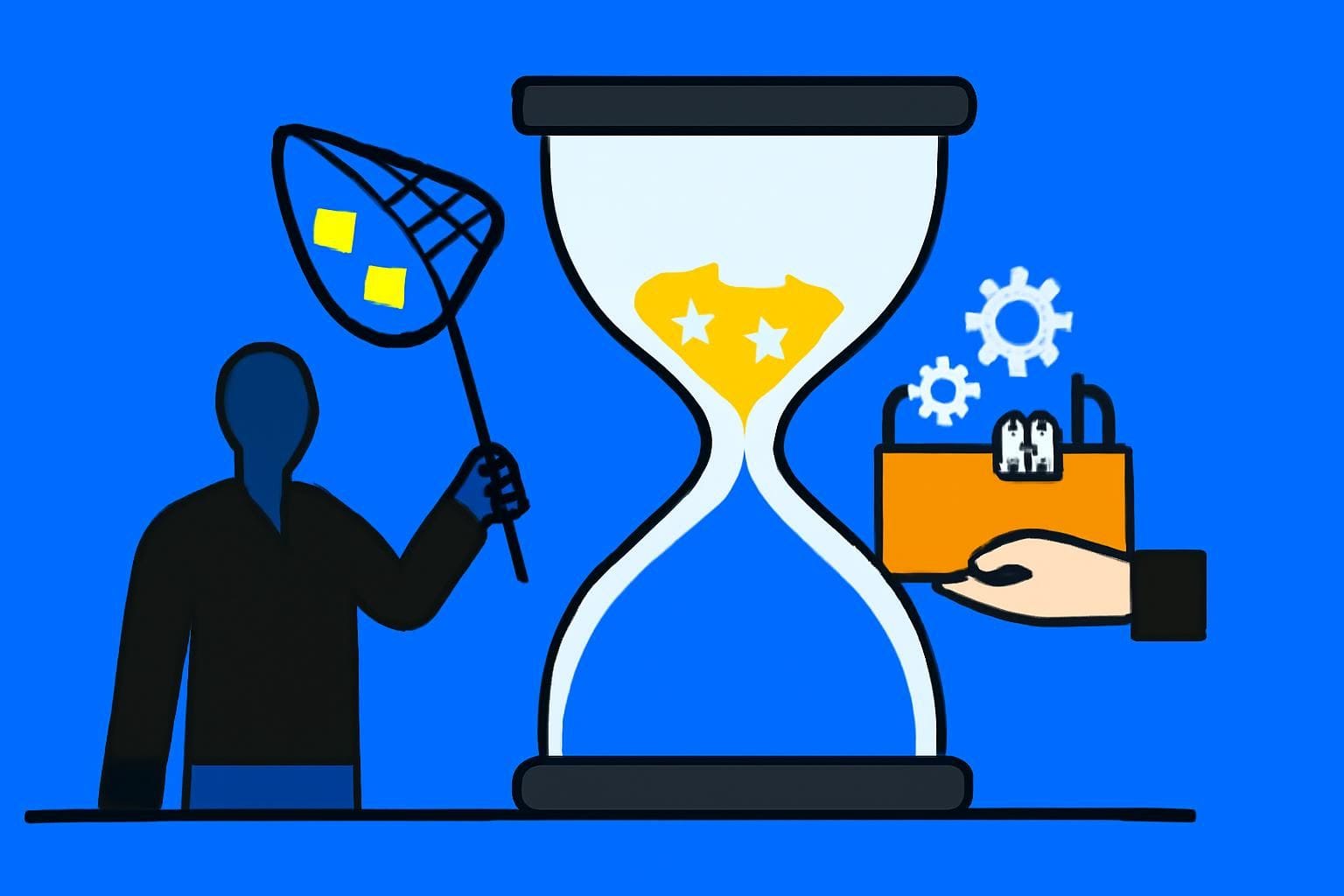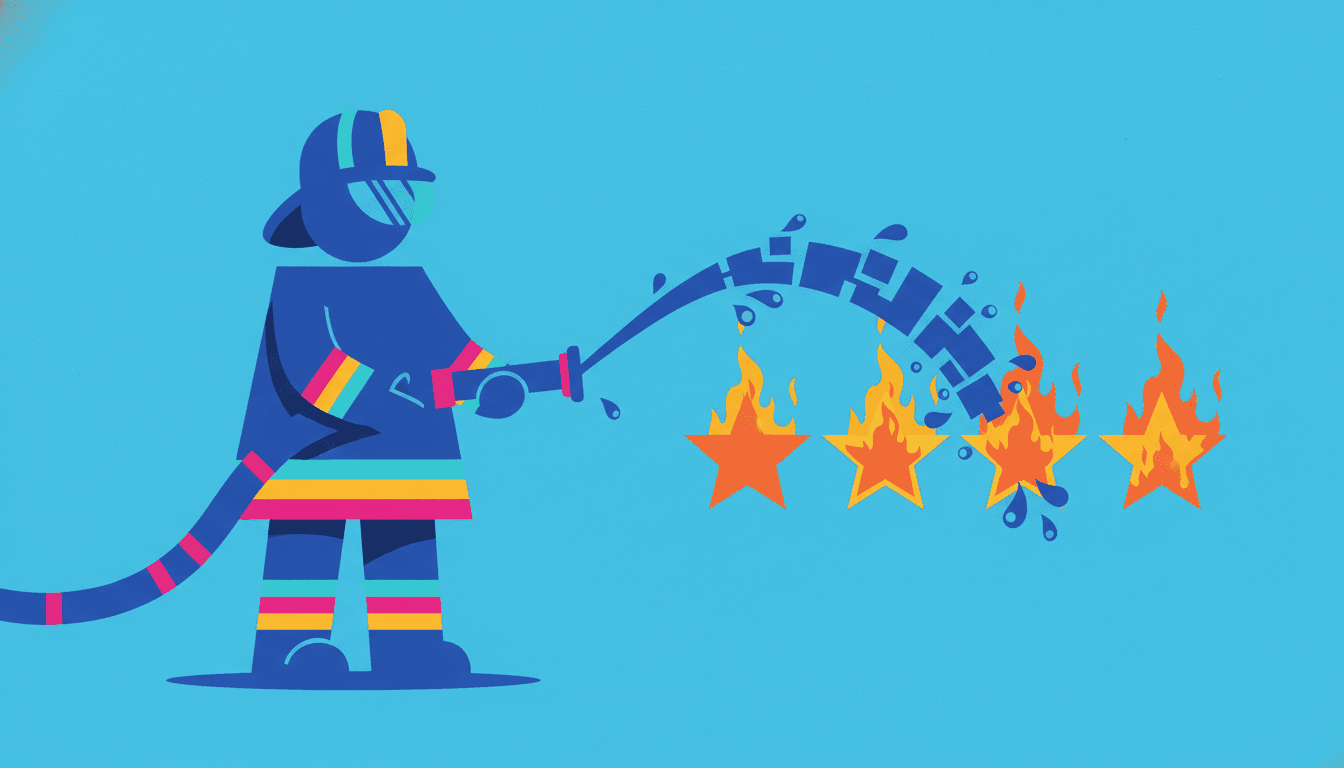
When a Google Business Profile goes from 4.7 to 3.2 stars in forty-eight hours, the sales of a local business can drop by 30-70%, according to BrightLocal 2025 studies. A structured e-reputation crisis plan radically changes the outcome of a digital uproar. Here’s the step-by-step procedure used by field teams when a bad buzz ignites social networks, Google reviews and specialized forums. The aim: to extinguish the fire, protect online reputation and prepare the response before competitors recover lost market share.
In brief
- An e-reputation crisis occurs in the first 72 hours, after which the damage becomes entrenched in search results.
- The crisis unit must be set up BEFORE the incident, never during it.
- Real-time monitoring detects weak signals 6 to 12 hours before public explosion
- A poorly calibrated rapid response does more damage than a few hours of controlled silence.
- Generative AI in 2026 will reference brands with the highest ratings AND flag negative feedback. Crisis prevention becomes a strategic asset
Detecting an e-reputation crisis before it explodes: weak signals
An e-reputation crisis is rarely detected in its final explosion. It can be spotted in the tremors that precede it: a negative Google review shared on X, an Instagram story that gets 2,000 views in two hours, a comment on a Google listing that receives ten reactions in thirty minutes. Real-time monitoring is the only serious way of anticipating the explosion.
Indicators that never deceive
A restaurant owner in Lyon saw his Google rating drop from 4.5 to 3.8 in three days after a controversial TV report on a shared supplier. The first signal: three negative reviews in two hours, an abnormal spike on his company profile. Without active monitoring of his digital reputation, he would have discovered the problem three days later, when sales would have dropped by 40%.
Weak signals to watch out for on a daily basis: abnormal volume of brand mentions, tonal variations in sentiment analysis, the appearance of critical hashtags, the rise of a topic on industry forums, suspicious changes on competitor listings (yes, some people take advantage of the chaos to promote themselves).
Building your monitoring dashboard
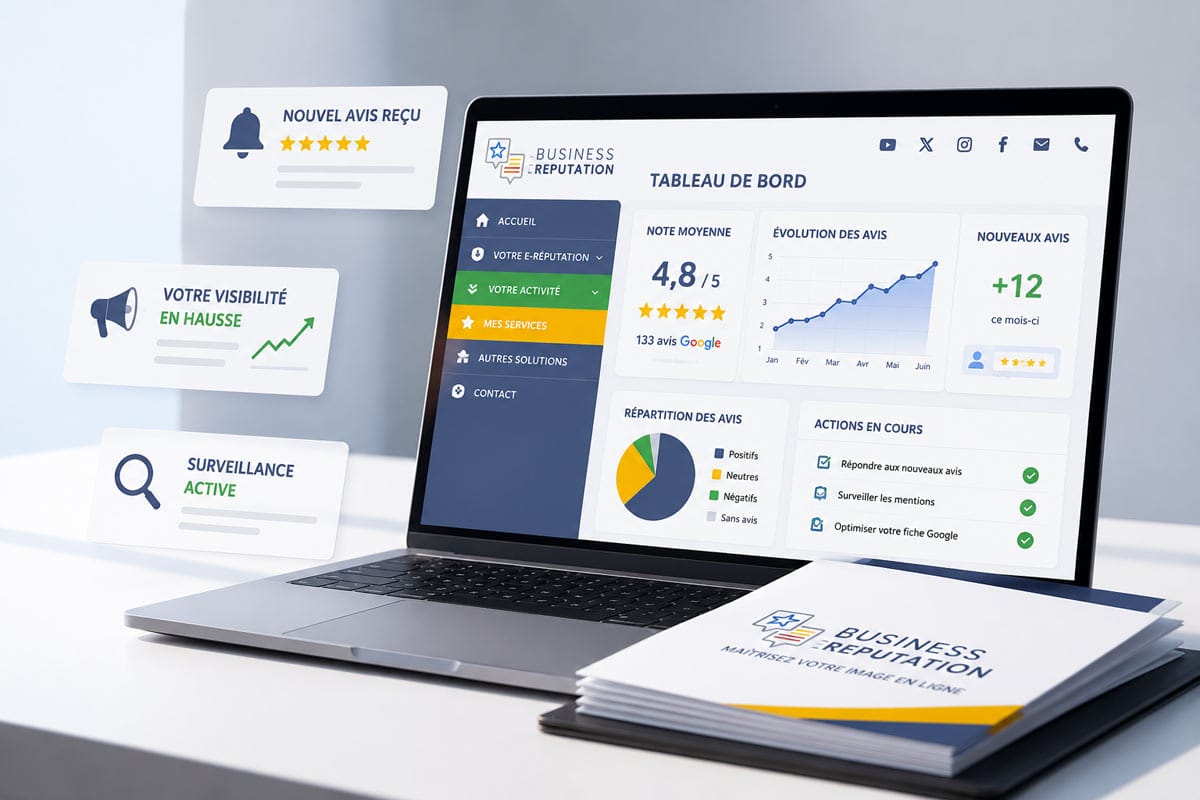
An effective alert system combines three layers. The first tracks brand queries on Google and variations in positioning. The second scans review platforms (Google, TripAdvisor, Trustpilot, Yelp). The third scans social networks and forums via tools such as Mention, Brand24 or Talkwalker. For those on a tight budget, Google Alerts coupled with weekly manual monitoring already offers a decent safety net.
The classic mistake: configuring alerts solely on the brand name. Spelling variations, management names, flagship products and even pejorative nicknames need to be taken into account. A Parisian artisan bakery belatedly discovered a crisis launched under a local nickname, having failed to set up this variant in its monitoring.
Activating the crisis unit: the decisive first hour
The crisis unit is set up before the incident, period. When the alert goes off, it’s too late to decide who should call whom. This small team of 4 to 6 people must be able to meet physically or by video within sixty minutes of the alert going out, including weekends and public holidays.
Typical composition of an efficient cell
The cell brings together a decision-maker (CEO or delegate with signing authority), a communications manager (in-house or partner agency), a legal expert (digital lawyer, available 24/7), an operational community manager, and depending on the case, a technical expert (CIO in the event of a data leak) or a media-trained spokesperson.
Each member has a written role, an on-call telephone and access to shared tools (Drive, Slack, notification platform). An accountancy firm in Bordeaux lost three institutional clients after a poorly managed crisis because the CEO was unreachable on vacation and no one had power of attorney to issue an official press release.
Protocol for the first 60 minutes
The table below summarizes the operational sequence to be carried out within one hour of the alert being triggered:
| Minute | Action | Manager |
|---|---|---|
| 0-10 | Alert verification and qualification | Community manager |
| 10-20 | Convocation of crisis unit + collection of facts | Communications Manager |
| 20-35 | Analysis of origin, extent, propagation | Complete team |
| 35-50 | Strategic decision: silence, response, legal action | Decision-maker + legal |
| 50-60 | Preparation of official message and field briefing | Communication + CM |
This protocol avoids panic and hot-headed declarations, which aggravate the situation. The 72-hour action plan then structures the next steps until the crisis is resolved.
Responding publicly: tone, channels and timing of emergency communication
Emergency communication obeys three rules: recognize, contextualize, act. No brand is better off in denial when the evidence is out there. Prolonged silence beyond 4 to 6 hours on social networks is tantamount to a tacit admission of guilt in the eyes of the public.
Adapting the message to each channel
A single press release copied and pasted across all media is a typical beginner’s mistake. Each channel has its own grammar. On X, conciseness and transparency are paramount. On LinkedIn, a corporate tone and responsibility work best. On Instagram, a live story from the executive humanizes the brand. On Google Business Profile, responses to reviews must be personalized, never robotized.
A fast-food franchisee in Marseilles turned a health crisis into a demonstration of seriousness by publishing within 6 hours: a video of the manager explaining the measures taken, a technical communiqué on LinkedIn, individual responses to each negative Google review and an Instagram story tracking compliance in real time. Google rating returned to 4.4 in three weeks.
Legal pitfalls to avoid
Some crises tip over into extortion or organized defamation. The misuse of the RGPD as a blackmail tool has been multiplying since 2024. Before any public statement, the legal side checks: do the published remarks fall under defamation, insult, commercial denigration or simple legitimate criticism? Qualification changes the whole strategy.
Pre-prepared defensive content (dedicated pages, generic press releases, videos from in-house experts) saves considerable time. These resources, stored in draft mode, can be published in a matter of minutes instead of hours of pressurized writing.
Rebuilding online reputation: the post-crisis phase
The end of the crisis begins on the day when the peak of negative mentions falls below the usual threshold. This phase lasts between 4 weeks and 6 months, depending on the scale of the disaster. The aim is no longer to react, but to regain lost ground in search results and customer perception.
The 90-day recovery plan
Here are the priorities for a return to normality, prioritized by impact:
- Massive collection of recent positive reviews: 30 to 50 new reviews in 60 days statistically dilute negative feedback
- Production of branded content on the site and third-party media to push negative content beyond the first Google page
- Positive press relations: interviews, expert panels, local sponsoring to rebuild goodwill
- Optimized Google Business Profile with recent photos, weekly posts and enhanced FAQ
- Reinforced monitoring for 6 months to detect any resurgence or opportunistic attack
The GEO challenge: why generative AI is a game-changer
By 2026, ChatGPT, Perplexity and Gemini had become major entry points for local search. These models rely on indexed content and aggregated online sentiment to recommend one brand over another. An unresolved crisis leaves traces that AIs can pick up on for months or even years.
In concrete terms, when a consumer asks an AI “Which plumber do you recommend in Toulouse?”, the model favors companies with a strong reputation AND no persistent negative signals. Competitors who have never suffered a visible crisis automatically receive recommendations. Without a serious post-crisis e-reputation project, market share will be permanently lost.
Preventing the next crisis: turning incidents into strategic assets
A well-managed crisis paradoxically strengthens the brand if the organization learns the right lessons. Crisis prevention through anticipation costs 5 to 10 times less than reactive management. This economic equation alone justifies investment in a permanent system.
Structured feedback
Within 15 days of resolution, the crisis team documents three angles: what worked, what failed, what was missing. This internal report feeds into the updating of procedures, team training and monitoring tools. Without this step, organizations repeat the same mistakes at the next crisis.
A fast-food franchise network has cut its crisis response time by 80% after formalizing its post-health incident feedback. Each franchisee now has a 40-page manual with decision trees, sample messages and emergency contacts. The methodology, inspired by the Brand24 crisis management guide, structures their quarterly simulations.
Crisis simulations: training that changes everything
Once a quarter, the organization simulates a plausible crisis scenario with the entire team. These exercises reveal the blind spots: a spokesperson not trained in TV media, a community manager with no access to accounts outside office hours, a lawyer on vacation with no designated deputy. Simulation is uncomfortable, but it avoids the humiliation of the real thing.
Scenarios to be tested as a priority: leakage of customer data, employees filmed at fault, media coverage of a faulty supplier, a coordinated attack of false reviews, a manager cited in a personal affair, a product malfunction going viral. Each sector has its own specific risks, which are mapped out in advance.
Investment that pays off: permanent monitoring and defensive content
An annual budget dedicated to prevention represents between 0.5 and 2% of sales, depending on size and media exposure. This investment covers monitoring tools, team training, production of defensive content, specialized press subscriptions and legal fees. The return on investment is measured on the day the crisis hits: prepared organizations lose 10 to 20% of sales temporarily, while improvised organizations suffer a 40 to 70% drop, and some never recover.
Online reputation is no longer a peripheral soft asset, it’s brand equity that directly impacts a company’s valuation. Listed groups now include the digital sentiment indicator in their extra-financial reporting. Local craftsmen and retailers, on the other hand, simply measure it against their cash drawer at the end of the month.