Every year, Whitespark’s excellent Local Search Ranking Factors study serves as a compass for local SEO. Here’s a summary and a “between the lines” reading, to turn this data into concrete action for your local visibility in 2026.
1. Why the Whitespark 2026 study has become the compass for local SEO
In November 2025, Darren Shaw (Whitespark) published the new edition of Local Search Ranking Factors 2026, based on responses from 47 experts who rated 187 ranking signals for Local Pack/Maps, local organic results and, new, AI search visibility.
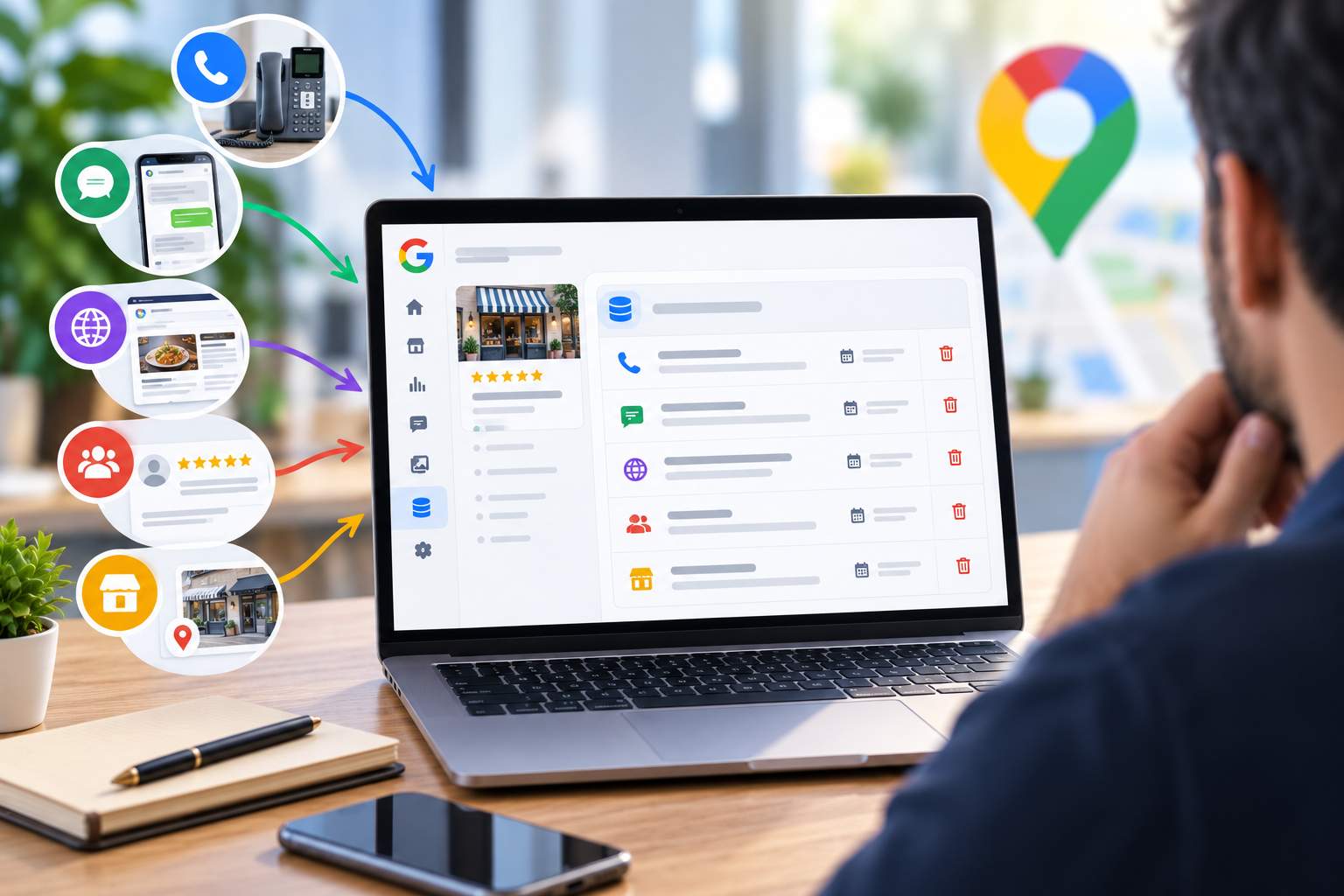
Several independent analyses (Advice Local, Passion Référencement, Leadtap, etc.) converge: in 2026, local visibility will rest on three pillars.
- Google Business Profile (GBP) for immediate visibility in Google Maps.
- Localized on-page content for sustainable organic anchoring.
- Online reputation (reviews, quotes, links), which is as much a part of Google as it is of AI engines.
Meanwhile, Phil Rozek (Local Visibility System) has selected 10 key comments from the 2026 report, providing a very operational reading: the importance of behavioral signals (“signs of life”), the role of opening hours, the power of detailed reviews, the fragility of a suspended GBP account, the rise of “unstructured” quotations in AI responses, etc.
The challenge for 2026 is simple: orchestrate these signals to respond both to classic local search intentions (“Versailles plumber”) and to new paths in conversational AI mode.
2. Local Pack / Google Maps: the Google Business Profile remains the main engine
The results of the study are self-explanatory: for Local Pack / Google Maps, signals are weighted as follows:
- 32%: Google Business Profile signals (GBP)
- 20%: customer reviews
- 15%: on-page signals
- 9%: behavioral signals (clicks, itineraries, calls, etc.)
- 8%: links
- 6%: quotations
- 6%: customization
- 4%: social signals
Clearly, your GBP listing is more important than your site in the local pack. But your site, links, behavior and reputation can make or break this visibility.
2.1. New GBP signals to the fore in 2026
A number of specific signals make strong progress in the report, including :
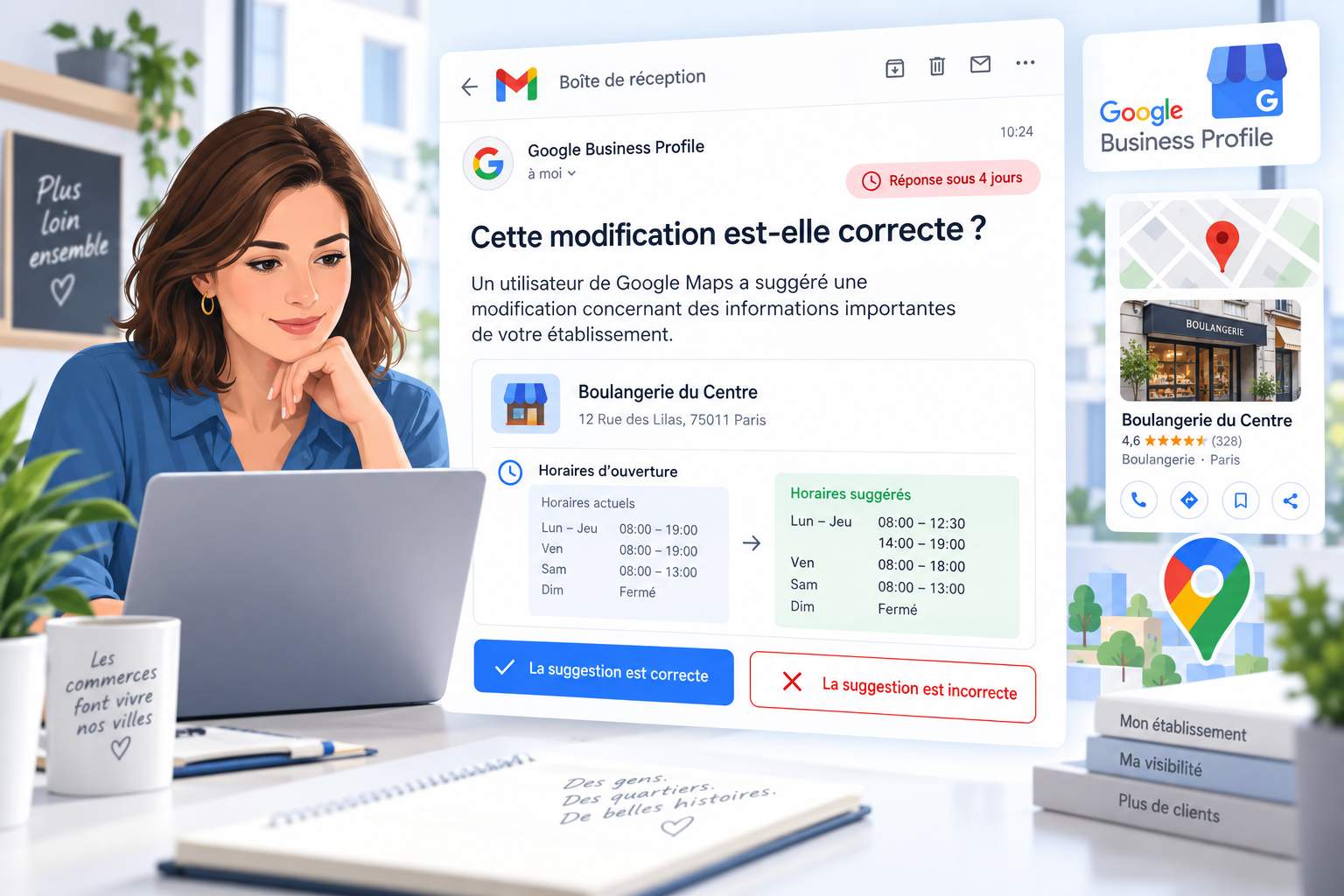
- Being open at the time of search is now a top GBP factor.
- Displaying the address on the card (as much as possible) is cited as a notable factor.
- Predefined services, popularized by the work of Joy Hawkins, are mentioned as a growing factor.
Practical consequences for 2026:
- Check opening times (daily and public holidays) to match actual opening hours.
- Exploit categories and services with precision, aligning them with the reality of the offer.
- Enter theaddress as soon as the business model allows (offices, showroom, practice, agency).
2.2. Signs of life”: Google measures actual usage
One of the most striking comments in Phil Rozek’s post comes from an experience shared by Andrew Shotland: getting people to search for a business, click on the listing and use Google Maps directions repeatedly coincided with strong growth in the local pack. Phil sums this up with the notion of “signs of life”: Google places importance on concrete user actions (brand searches, clicks, route requests, reviews).
What you can get out of it without manipulating the signals:
- Encourage your repeat customers to use Google Maps to find you.
- Multiply local entry points (events, partnerships, local press) that naturally generate brand searches.
- Track “calls“, “routes” and “website visits” statistics in GBP and link them to your marketing actions.
3. Local organic SEO: on-page becomes the centerpiece again
For “classic” local organic results (excluding packs), Whitespark 2026 places signals as follows:
- 33%: on-page signals
- 24%: links
- 10%: behavioral signals
- 8%: customization
- 7% : GBP
- 7%: quotations
- 6%: opinion
- 5%: social signals
On-page content therefore takes first place. In practice, this means :
- Solid local pages, each dedicated to a local area or service (city, neighborhood, type of intervention) with dense, factual content, anchored in the reality on the ground.
- An internal mesh linking these pages to each other, to the home page and to “social proof” pages (customer cases, reviews, references).
- Title tags that work the click by integrating “FOMO words” (“best”, “free quote”, “24/7”, “emergency”, etc.) as Colan Nielsen suggests in his comments on title tags.
The intention for 2026 is clear: users no longer expect a simple presentation page, but a complete answer to their problem (context, costs, deadlines, proof, next steps). A local page contented with 200 generic words becomes insufficient.
4. AI and generative research: a third playground to integrate into your strategy
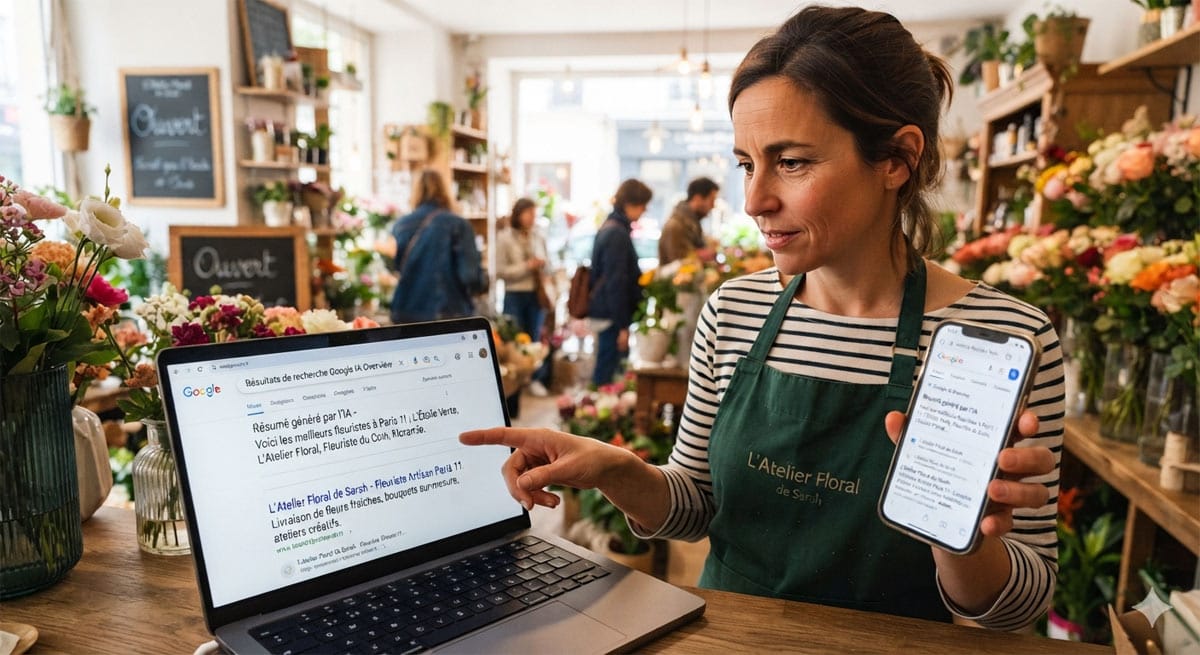
The major new feature of the 2026 edition is the introduction of AI Search Visibility Factors, i.e. the signals that influence a company’s presence in generative responses (SGE, Gemini, ChatGPT, other AI engines).
The weightings for Whitespark 2026, used in several analyses, are as follows:
- 24%: on-page
- 16%: opinion
- 13%: quotations
- 13%: links
- 12% : GBP
- 9%: customization
- 9%: social signals
- 4%: behavioral
Another comment by Andrew Shotland, relayed by Phil Rozek, is structuring: he believes that “AI Mode will become the dominant interface for searches”, with paths entirely guided by successive questions/answers (“full funnelled queries”).
In concrete terms, for 2026 :
- Your content should follow the entire process: problem diagnosis, options, comparisons, choice of local service provider, preparation for making contact.
- The most strategic pages must be readable by an AI: clean Hn structure, integrated Q&A, concrete examples, absence of unnecessary jargon.
- Reviews, quotes and links become cross-evidence that AI engines can reuse to support their answers.
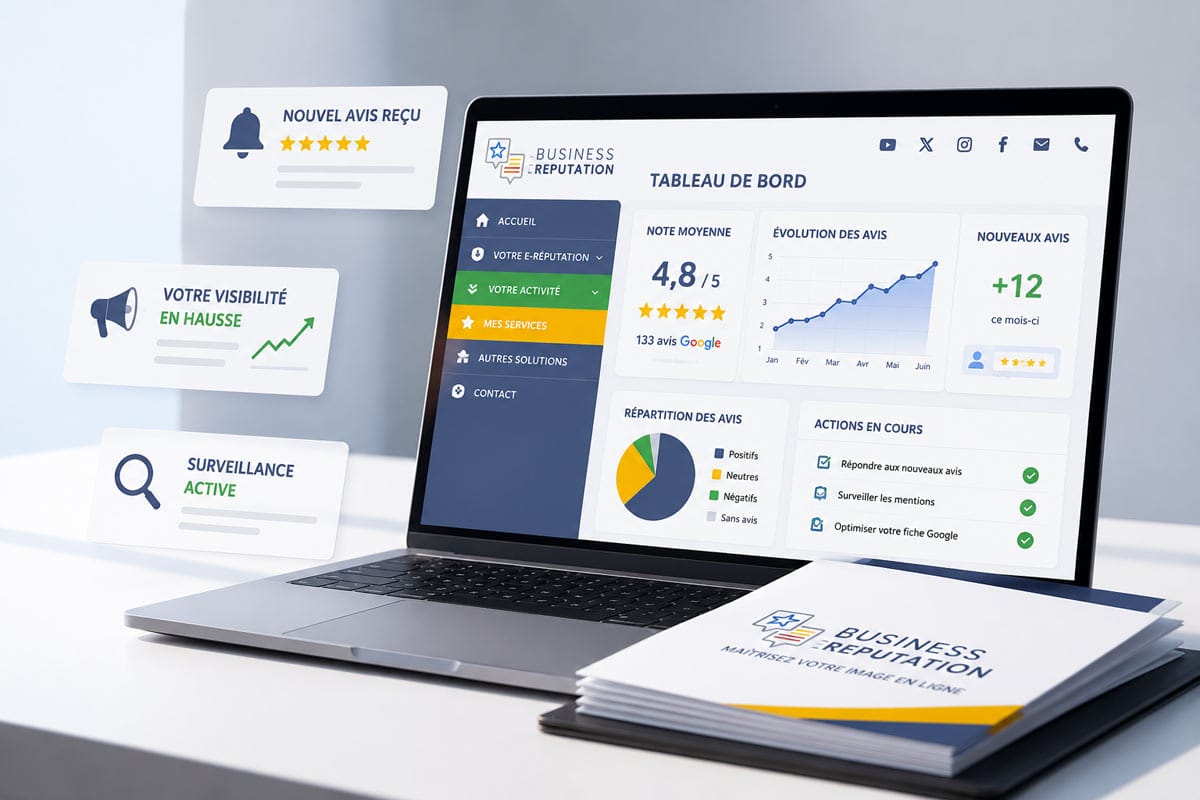
5. Customer reviews: review text becomes a key signal (AI + conversion)
The Whitespark 2026 report gives Review Signals 20% of the weight in the Local Pack, 6% in local organic and 16% in AI search.
Yan Gilbert, in comments highlighted by Phil Rozek, insists on a new point: the very text of reviews is becoming more important than ever, as AI systems are becoming increasingly adept at analyzing nuance, intent and sentiment. Queries such as “best value for money”, “responsive service” or “honest diagnosis” can be linked to specific passages in reviews.
This changes the way reviews are collected:
- Ask for detailed reviews, mentioning the type of service, the context, the location, the result and what made the difference.
- Encourage customers to use their own words, even if the text seems long.
- Respond to reviews in a personalized way, reusing the terms that matter to your future customers (rapid response, transparency, follow-up, etc.).
Example of wording to include in your post-sales emails or SMS messages:
“Can you explain in a few sentences what we’ve done for you, what you liked, and what type of need you’d recommend us for?
”
This approach fuels both ranking (via text leveraged by Google and AI) and conversion (concrete proof for the user).
Risk, resilience and off-Google signals: what the experts have to say
Two comments in Phil Rozek’s article deserve particular attention.
- Vulnerability in the event of GBP suspension.
Tricia Clements reminds us that a “hard” suspension of a Google Business Profile can cut off both local organic visibility and access to Local Services Ads, with recovery times sometimes long in the absence of up-to-date documents (proof of address, administrative registrations, etc.). In concrete terms, this means storing in a shared folder Kbis, proof of address, photos of the facade, screenshots of the website, etc., so as to be able to respond rapidly in the event of a request from Google. - The “brand fortress” built by customer relations.
Miriam Ellis insists that local SEO must remain at the service of a wider strategy: building a loyal customer base that ensures word-of-mouth, recurrence and referrals. Whatever the acquisition channel (AI, local pack, social networks, podcast, etc.), the real differentiator remains the way you treat people once they’ve walked through your door.
In other words, “offline” brand signals (community, local awareness, lived experience) are increasingly reflected in “online” signals (reviews, unstructured quotes, user-generated content).
7. Local SEO action plan 2026: aligning Maps, organic and AI
Based on the data in the Whitespark 2026 report and the comments analyzed, here is a summary action plan for an SME or multi-site network:
- Audit your Google Business Profile: categories, description, services, photos, hours, attributes, URL, UTM tracking.
- Systematically update opening hours and check that the company appears as “open” when it really is.
- Structure your local pages: one page per city or zone, with long-form content, anchored in concrete cases, integrated FAQ.
- Rework title and H1 tags to combine local queries + urgency or value signals (“free quote”, “24/7”, “emergency”, depending on the reality of your service).
- Formalize a review strategy: post-sale email/SMS scenario, response tracking, integration of review excerpts on the site with Schema.org markup.
- Reinforce your citations on indexed and visible directories, while maintaining a strictly consistent NAP.
- Get local links: regional press, associations, events, partners, local “best-of”.
- Produce “AI-ready” content: complete practical guides, comparison pages, checklists that can be used by AI engines for their answers.
- Prepare a GBP crisis management plan: documents, procedures, contacts, alternative visibility (organic SEO, social networks, email lists).
- Measure behavioral signals: CTR in Search Console, actions on GBP, conversion rate on local pages, to adjust your priorities.
8. My expert opinion
Studies and analyses published at the end of 2025 converge: in 2026, winning local visibility is no longer about optimizing a single lever, but about synchronizing GBP, site and reputation to meet user expectations in three environments: Maps, organic results and AI search.
The figures in the Whitespark 2026 report, the summaries from Advice Local, Passion Référencement, Leadtap, and the comments compiled by Phil Rozek all point in the same direction: commitment, credibility, data consistency and content quality are the real determinants of local SEO performance by 2026.