Can you imagine getting several times as many Google reviews without harassing your customers? The key is not only in the message… but in the moment you ask for it. It’s in the optimum context that you get the best reviews, and that’s what I present in the 17 review-gathering scenarios in my guide. Here are a few facts to get you thinking about the best time to ask for a review.
And it’s confirmed! Recent research on online reviews shows that simply adjusting the timing of the request can boost your response rates from “near-zero” to “strategically interesting”.
Below is a Business-ereputation oriented article, with :
- a timing framework for each type of offer,
- a “too early / right time / too late” comparison chart,
- a ready-to-use email template to request a Google review.
1. Why the timing of the advice request changes everything
Intuitively, many companies say to themselves:
“We’ve just delivered/finished the service, let’s ask for the feedback right away.”
The work of Miyeon Jung, Sunghan Ryu, Sang Pil Han and Daegon Cho, published in the Journal of Marketing and popularized by the American Marketing Association (“When to Ask Customers for Feedback”, January 10, 2023), however, shows that “faster” is not “better”.
Their double experiment involving over 300,000 consumers (online travel + textile marketplace) shows that :
- A too-rapid reminder arrives before the customer has really lived the experience.
- The customer has nothing concrete to say → he ignores the message or feels “forced”.
- Reminders sent after a short delay but aligned with the moment when customers spontaneously write reviews generate more responses.
Meanwhile, PowerReviews, which analyzes hundreds of thousands of post-purchase e-mails, observes that 77% of customers who leave a review do so within a week of receiving the product, and only 8% on the same day.
- Asking too early = the customer has no formed opinion.
- Asking too late = the experience is no longer fresh, the e-mail is lost.
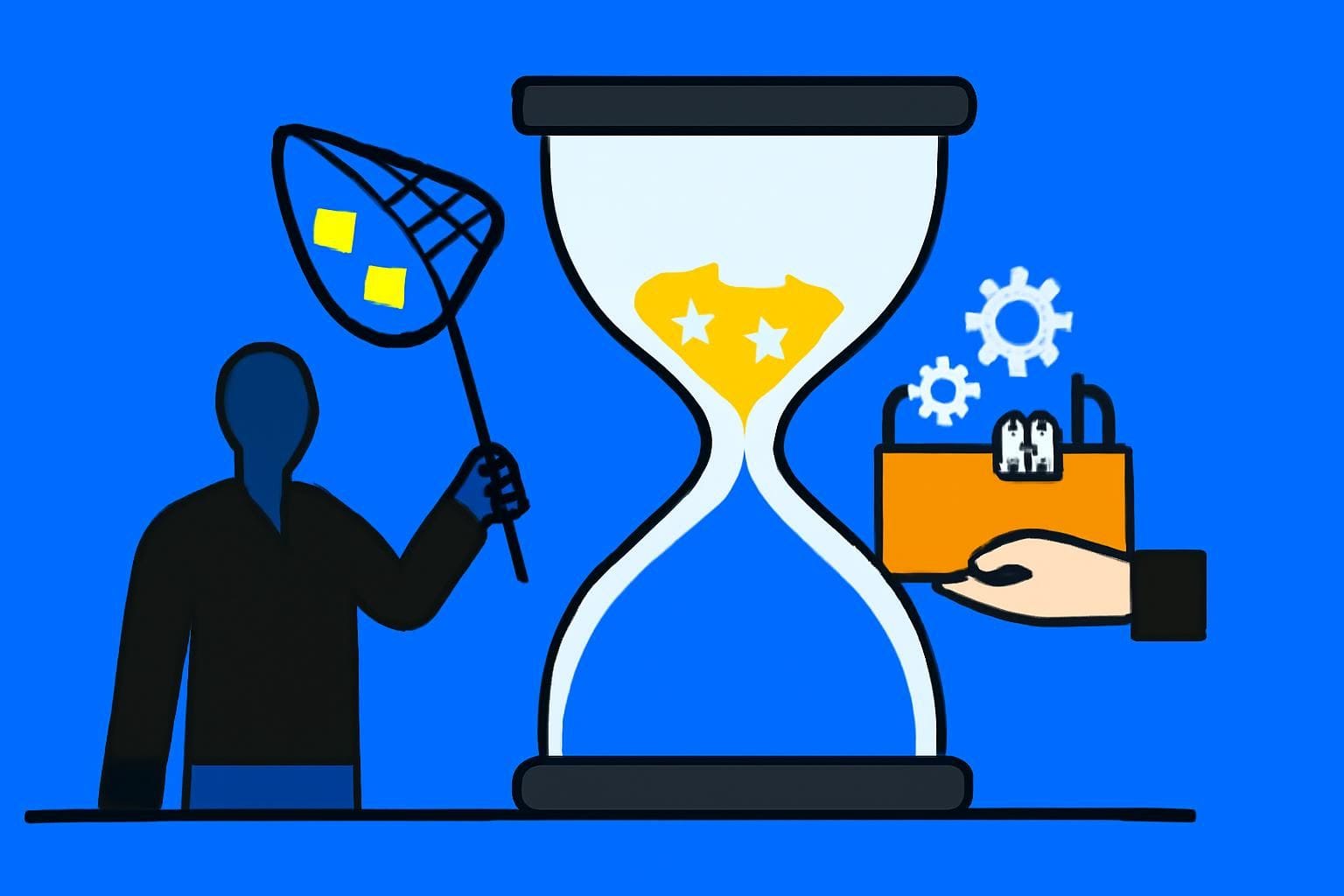
- Between the two, there’s an optimal time slot, to be adapted to your activity.
2. Recommended timing frame for your activity
Academic sources (Jung et al.) and professional guides (AMA, PowerReviews, Reviews.io, etc.) converge on one point:
The right moment depends on the speed at which value is perceived (usage, results, satisfaction).
Physical products (e-commerce, retail, D2C)
PowerReviews data indicates an optimum interval of 7 to 21 days after receipt, depending on the nature of the product.
For a Business-ereputation use, we can structure as follows:
- Fast-moving consumables (food, everyday cosmetics, everyday products)
Customers test almost immediately. A window between 3 and 7 days after delivery gives time to try, while keeping the experience fresh. - Standard products (clothing, home decoration, home equipment, “simple” electronics)
Most customers will have used the product several times within 1 to 2 weeks. Aim for 7 to 14 days after delivery. - Durable/complex products (furniture, household appliances, expensive high-tech)
Here, PowerReviews recommendations go up to 21 days to allow time to check for proper functioning. A range of 14 to 21 days, or even up to 30 days for highly technical equipment, remains consistent. (source PowerReviews)
These ranges are not “exact laws”, but working ranges derived from aggregated data. They should be adjusted by observing your own response rates.
B2C services (catering, beauty, everyday services)
For services, results are less standardized, but the principle remains the same: feedback should be sought after the experience, but before the memory fades.
- Single-visit service (restaurant, beauty salon, carwash, breakdown service)
Industry players are seeing good results with demand within 24 to 48 hours of the visit: the customer remembers the details, and hasn’t moved on yet. - Multi-stage service (work, one-off support, installation)
It makes sense to wait 3 to 7 days after completion of the assignment (or commissioning), until the customer can see the results in concrete terms.
B2B, consulting, long-term services (your core target)
To my knowledge, there is no massive quantitative study as precise for long-term B2B as there is for B2C e-commerce. So I can’t quote reliable figures. I rely here on the logic of previous studies and the practices of consulting firms:
- Ask for feedback when a clear value milestone is reached
For example: end of phase, audit feedback, launch of a site factory, achievement of a KPI (increase in SEO traffic, higher Google Business Profile score, etc.). - A second key moment
Between 60 and 90 days after launch, when results become visible (SEO stabilization, increase in the number of reviews, business indicators).
3. Comparison chart: too early, at the right time, too late
This table summarizes the effects observed in studies (AMA, HBR, PowerReviews) and best practices in the field (source: Harvard Business Review).
| Timing of request | Customer experience | Effect on response rate (trend) | Main e-reputation risks |
|---|---|---|---|
| Too early (day D or D+1, before actual use) | The customer hasn’t used the product/service, or hardly at all. He doesn’t feel legitimate to give an opinion. | Often weaker: the email is ignored, or the customer puts it off “until later”. | Pressing” corporate image, risk of superficial opinions. |
| At the right time (after actual use, within the above ranges) | The customer has had time to try, to see a result, to compare with expectations. | Generally the highest: studies show a clear increase when recall coincides with the moment when customers spontaneously write reviews. | Richer, more authentic reviews, better signals for Google and future customers. |
| Too late (several weeks or even months without contact) | The experience is no longer fresh, the customer has forgotten details, other experiences have been added. | Gradual drop in response rate: the e-mail gets lost in the flow, perceived effort increases. | Few opinions, risk of feedback biased by subsequent irritants unrelated to the initial service. |
The work of Jung et al. clearly shows that “later” ≠ “better”: reminders sent too long after the experience see the probability of response decrease as the memory becomes fuzzy (source American Marketing Association).
4. Sample email to request a Google review at the right time
Here’s an email template you can use for your customers (B2B or B2C premium), adapting the fields in square brackets.
Possible objects (to be A/B tested)
- “Your opinion is important to us
- “[First name], any feedback from you?”
- “Do you have 30 seconds to help us?”
Email body – Business-ereputation template
Hello [First name],
A few days ago, we [reminder of the service or product delivered: “put your new Google Business Profile online”, “deployed your new WordPress site factory”, “carried out your … service”].
As you know, online reviews play a key role in a company’s trust and visibility. They reassure your future customers… and ours.
If you have a few moments, could you share your experience by leaving a review on our Google page?
👉 [Direct link to Google listing / review form]
You can simply indicate:
– what we have set up together,
– what this has changed for you or your company,
– whether you would recommend our services to a colleague.It usually only takes a minute, but it helps us enormously to continue supporting companies like yours.
Thanks in advance for your help, and of course, if there’s anything that needs improving, you can get back to me directly by return e-mail.
Yours sincerely,[Name] [Position] – [Company name] [Signature / contact details]
Very short SMS variant
Hello [First name], this is [Last name] from [Company].
Following [brief reminder of the service], your opinion would be very useful for us to continue to progress.
You can leave a review here: [short Google Review link].
Thank you very much 🙏
This template respects the key points highlighted by the studies: reminder of the context, highlighting the value of the review, direct link and simplicity of the action. (source American Marketing Association)
5. How to industrialize this timing in a Business-ereputation strategy
To transform this theoretical framework into a concrete advantage for your customers, the challenge is to integrate it into their notification factory (e-mail, SMS, automation, CRM, Business-ereputation tools).
A possible operational approach :
- Mapping
For each type of offer (e-commerce, service, B2B), identify :- time of delivery/end of service,
- the point at which value is actually perceived (usage, results, milestone).
- Set up sending scenarios
Configure scenarios such as :- “J+5 after delivery” for fast-moving products,
- “D+10” for standard products,
- “D+20” for complex products,
- “D+2 after end of service” for single-visit services, etc.
These times are subject to adjustment according to feedback, but are consistent with the 7-21 day ranges observed by PowerReviews for most products. (source PowerReviews)
- Measure and optimize
Track, by scenario :- email/SMS open rate,
- click-through rate,
- number of notices generated,
- positive/neutral/negative distribution (to detect whether we’re asking too early or too late).
- Segment by audience
Studies show that different generations have different time expectations (for example, younger people prefer a trial period before leaving a review). (source PowerReviews)
You can therefore create distinct timings by segment, as long as you have data (age, account type, purchase frequency). - Integrate into your Business-ereputation offer
In concrete terms, this work can become a standard deliverable for your assignments:- “Notice collection plan with optimized dispatch scenarios”,
- “Email / SMS templates + A/B tests”,
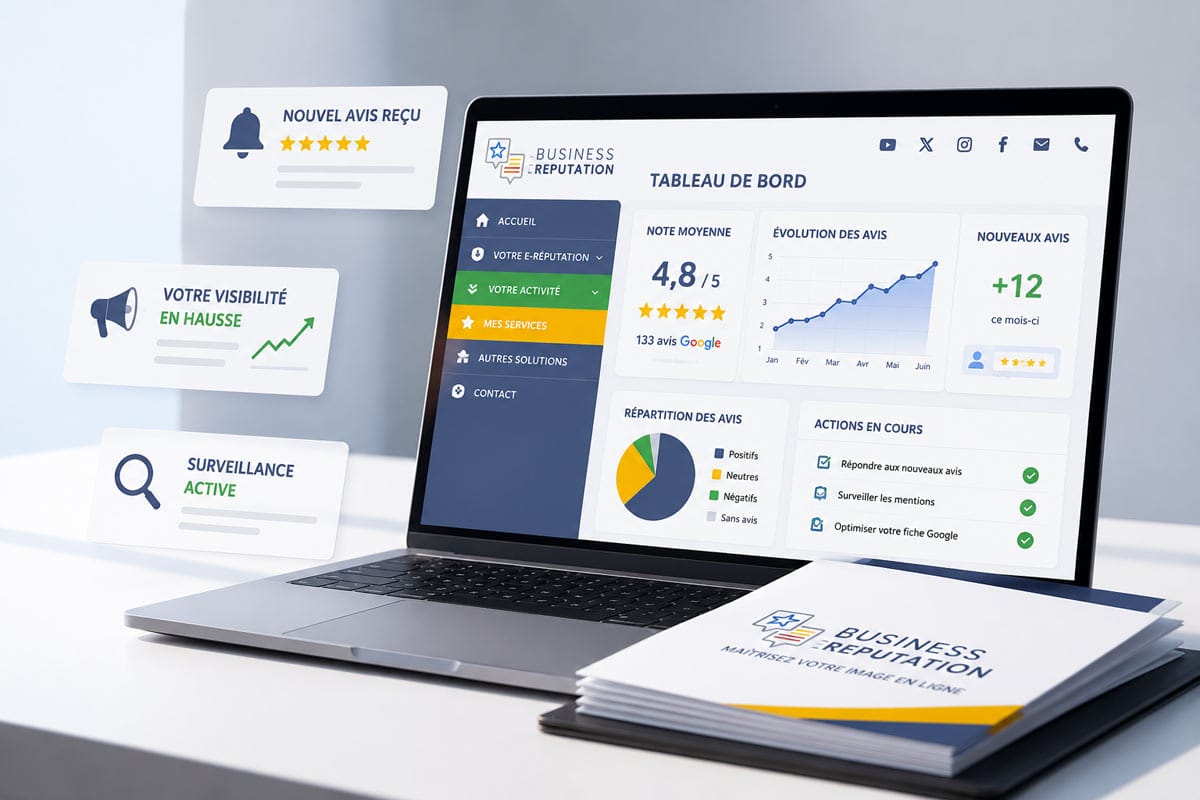
- “Dashboard for tracking reviews (volume, recency, rating, keywords)”.
6. In a nutshell
I can’t claim, on the basis of published studies, that a company will systematically get “10× more reviews” just by adjusting the timing. However, my case studies clearly show that :
- asking for advice immediately after purchase is often suboptimal,
- letting too much time pass reduces the probability of response,
- Timing aligned with the moment when the customer has actually experienced the value significantly increases the volume and quality of reviews.
- Analyzing and testing the customer lifecycle is key: for example, if a customer comes back it’s because they’re happy, so they’re more likely to leave a review, and often with a better rating than the first time.
By applying this logic, your customers can multiply their Google reviews without increasing the number of reminders, while improving their local visibility and perceived trust.