In a nutshell: the Trustpilot vs. Google Business Profile battle has been dividing French SME managers for years. Yet the question is no longer really about choosing sides, but about understanding what each platform brings to the commercial visibility and credibility of a local brand. Here are the salient points to bear in mind before making a decision.
- Google Business Profile dominates local search, with over 90% market share of geolocated queries in France (source: StatCounter, 2025).
- Trustpilot remains the benchmark for e-tailers and B2B services, with an international reputation.
- A lost star on Google can cost up to 9% of sales, according to a Harvard Business School study.
- Generative AIs now draw their recommendations from review platforms. AI reputation becomes a strategic asset.
- Diversifying your sources of advice protects you from suspended listings and competitive attacks.
Trustpilot or Google Business Profile: understanding the fundamental difference
The distinction between Trustpilot and Google Business Profile lies in their DNA. Google serves local search, capturing the immediate intent of a consumer typing “restaurant near me” or “plumber Lyon 3e”. Trustpilot, on the other hand, plays the transactional trust card: an online buyer who checks out a merchant site before pulling out his credit card.
For a French SME in 2026, this difference changes everything. An artisan plumber in Bordeaux has virtually no interest in investing time on Trustpilot. His customers aren’t looking for his business on this platform. They open Google Maps, type in “urgent leak Bordeaux”, and scroll through the first three listings in the Local Pack. It’s that simple.
Conversely, an organic cosmetics online boutique based in Nantes, which sells throughout the French-speaking world, will benefit enormously from displaying an apple-green Trustpilot badge on its home page. The badge is reassuring, especially for buyers who don’t yet know the brand. Digital reputation is built where customers have doubts.
Figures speak louder than opinions
A BrightLocal survey published at the end of 2024 shows that 87% of French consumers consult Google reviews before buying locally. Trustpilot, on the same perimeter, caps at 12% for local purchases. The reason? Trustpilot is still perceived as an international B2C platform, linked more to marketplaces and online services.
On the cost side, Google Business Profile remains free. Trustpilot offers a limited free version and a business subscription starting at around €250 per month. For an SME counting its pennies, budgetary considerations often weigh in the balance. But beware: relying on Google alone is like putting all your eggs in one basket, and Google baskets have a nasty habit of toppling over without warning (listing suspensions, algorithmic changes, massive false reviews).
The trap of exclusive choice
Many entrepreneurs think in terms of “either/or”. A strategic error. Brands that dominate their markets accumulate presence. They know that diversifying their opinion platforms protects them from hard knocks and boosts their overall credibility.
Why Google Business Profile is still essential for local visibility
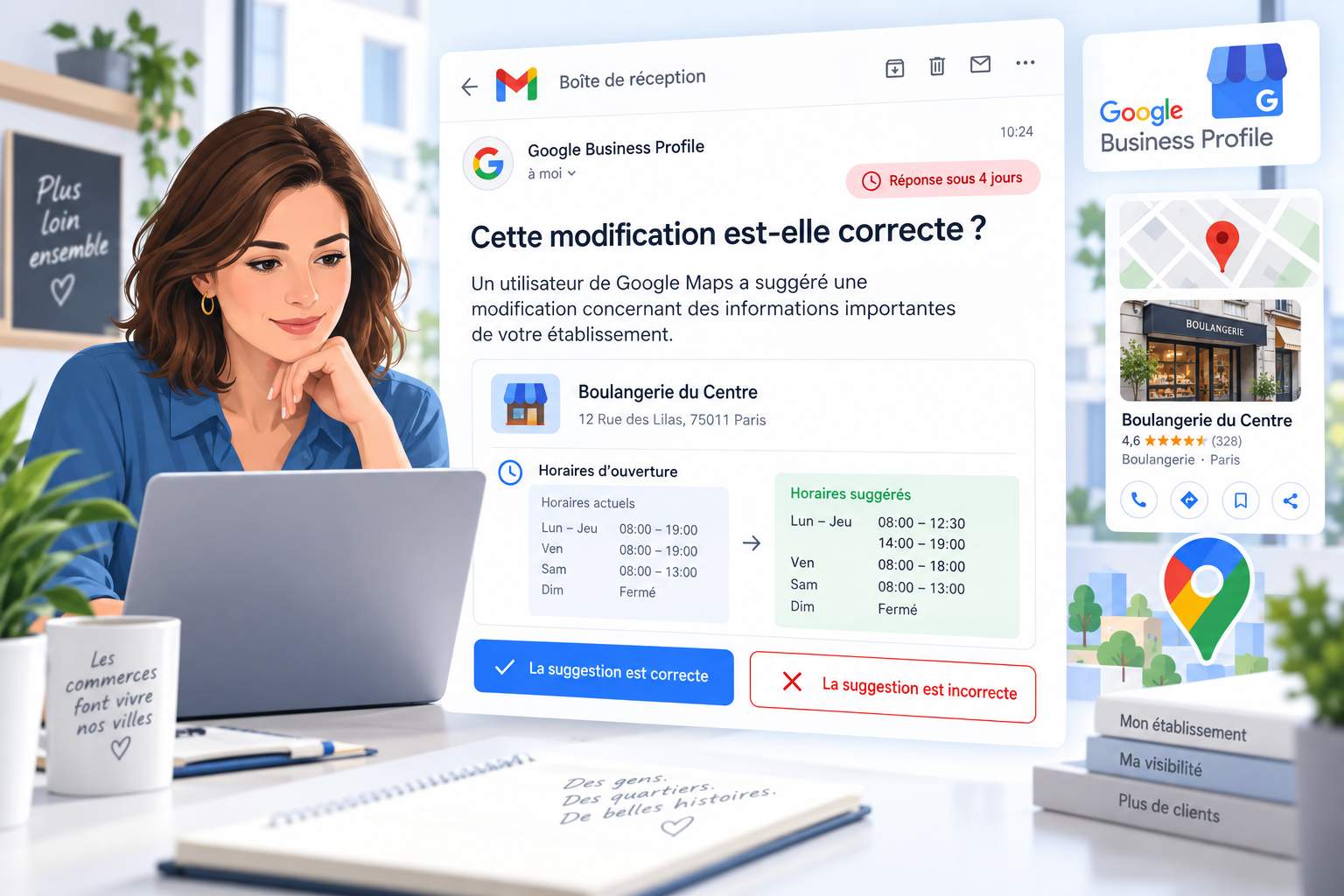
Google Business Profile (formerly Google My Business) is no longer just a business listing. It has become the main showcase for any French SME serving a physical or semi-physical clientele. The GMB listing drives ranking in the Local Pack, the three framed results that appear just below the search bar.
In concrete terms, a merchant who optimizes his Google listing benefits from free visibility equivalent to several thousand euros of monthly advertising spend. A Paris bakery in the 11th arrondissement, tracked since 2023, went from 80 to 340 daily visits to its listing after optimizing categories, photos and reviews. The result: +28% in sales over six months, without spending a cent on Google Ads.
The leverage of customer reviews on local SEO
Google reviews weigh heavily in the Local Pack algorithm. Three criteria dominate: the quantity of reviews, their freshness, and the average rating. A listing with 250 recent reviews and a rating of 4.7 will almost always outperform a competing listing stuck at 4.9 but with only 30 reviews dating back to 2022.
Timing also plays a decisive role. Asking for a review right after the customer experience triples the response rate. On this precise point, consulting an analysis of the ideal moment to request a Google review can help you avoid many timing errors.
The dark side: suspensions and false opinions
Google has absolute power over its platform. A listing can be suspended without notice, often on vague grounds (incorrect category, unverifiable address, abusive listing). Merchants who have paid the price still talk about it years later. And what about fake reviews posted by an unscrupulous competitor? The phenomenon is on the rise, to the point where legal recourse against such attacks is becoming a frequent topic of discussion in professional federations.
Trustpilot: what’s in it for French SMEs?
Trustpilot has long suffered from an “Anglo-Saxon” platform image. In 2026, the situation is changing. French e-tailers exporting to Belgium, French-speaking Switzerland or Quebec see a direct return on investment when they post a solid Trustpilot score. The badge functions as a visual seal of quality, immediately identifiable by the international buyer.
Trustpilot’s main advantage lies in its perceived independence. Unlike Google reviews, which are sometimes perceived as “manipulable” by merchants themselves, Trustpilot imposes strict moderation rules and a more rigorous purchase verification system. For a merchant selling technical products or services costing several hundred euros, this guarantee is reassuring.
The business model that holds VSEs back
The catch is the price. Trustpilot’s free version drastically limits functionality: no centralized personalized response, no review export, no product integration. The paid version starts at €250 per month and quickly climbs to €800 for advanced functions. A baker or hairdresser would not benefit from paying this amount. A DNVB (Digital Native Vertical Brand) that generates 80% of its sales online does.
Trustpilot and the “social proof” effect on the conversion tunnel
On an e-commerce site, integrating the Trustpilot widget just before the “add to cart” button increases the conversion rate by 15 to 25%, according to internal studies published by the platform. The figure is worth what it’s worth, but observation in the field confirms the trend. Social proof acts as a powerful purchase trigger, especially for first-time orders.
To assess the financial potential involved, a detour through the analysis of the real cost of one star less on sales sets the record straight.
Technical and strategic comparison: Trustpilot vs Google Business Profile
To help you decide between the two platforms, a comparison table helps you visualize their respective strengths. The table below summarizes the criteria that really count for a French SME.
| Criteria | Google Business Profile | Trustpilot |
|---|---|---|
| Cost | Completely free of charge | Limited free / €250 to €800 per month |
| Local SEO impact | Very strong (Local Pack, Maps) | Low on geolocalized queries |
| E-commerce credibility | Average | Very strong international presence |
| Checking notices | Weak, prone to false reviews | Forte with proof of purchase |
| Visibility in generative AI | Main source cited | Frequent secondary source |
| Ideal target | Local shops and services | E-commerce, SaaS, B2B services |
The invisible stake: AI reputation
In 2026, a new parameter is reshuffling the deck: conversational AI. When an Internet user asks ChatGPT, Perplexity or Gemini “what’s the best Italian restaurant in Toulouse”, the AI draws on several sources of opinions to formulate its recommendation. The best-rated brands with the highest presence on Google Business Profile come out on top. Those with a strong Trustpilot presence boost their overall authority.
Field observation confirms that AIs are more likely to cite companies with a Google rating above 4.5 and more than 100 recent reviews. Those with ratings below 3.8 are sometimes explicitly flagged as “to be avoided” by certain models. It’s a paradigm shift: reputation becomes an algorithmic asset, not just a marketing one.
Hybrid strategy: the royal road
The best approach in 2026 is to prioritize platforms according to the SME’s profile. Here’s a handy list to help you decide:
- 100% local business (bakery, restaurant, hairdresser): Google Business Profile as absolute priority, no need for Trustpilot.
- Home services (plumbers, electricians): Google Business Profile + Yellow Pages-type industry platforms.
- E-commerce pure player: Trustpilot priority, Google secondary (except in-store pickup).
- Omnichannel brand (boutique + e-commerce site): definitely both.
- B2B and professional services: Trustpilot or Avis Vérifiés, complemented by LinkedIn.
How to build a sustainable advice strategy in 2026
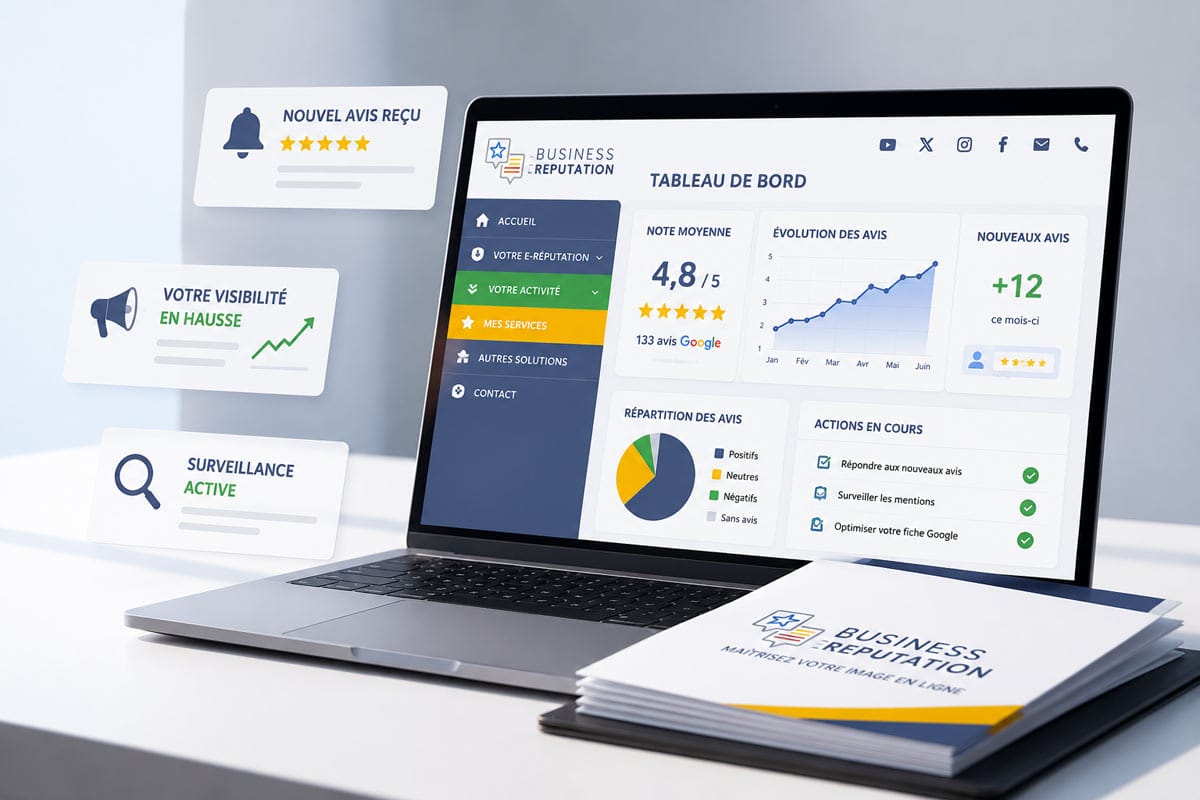
Building a solid opinion strategy in 2026 means thinking beyond the choice of platform. The real issue is regular collection, systematic response and monitoring of weak signals. A brand that collects 5 reviews a week on Google and 2 on Trustpilot beats a brand that collects 50 reviews in one go and then collects none for six months.
The Google algorithm values regularity. So does Trustpilot, to a lesser extent. The freshness of reviews carries as much weight as their absolute quantity. A listing frozen at 4.8 with reviews dating back to 2023 inspires less confidence than a listing at 4.6 with reviews from last week.
Automated collection
QR code and direct link generation tools make solicitation much simpler. Printing a QR code leading directly to the Google review form on receipts, invoices or placemats multiplies the volume of returns. A restaurant owner in Lille who was recently monitored saw his monthly volume of reviews rise from 8 to 47 simply by integrating this QR code on the bill.
On the legal front, be careful never to offer financial consideration in exchange for advice. The DGCCRF is on the lookout, and sanctions are being applied. The French government has even published an official guide to these practices. A detour via the article oneconomie.gouv.fr ‘s positionon reviews and reputation will help you frame things properly.
Predictive intelligence: anticipate before you suffer
The most advanced brands in 2026 no longer simply respond to reviews. They monitor weak signals: a rise in lukewarm reviews, repeated complaints about the same service, a gradual drop in the average rating. This predictive approach makes it possible to act before a crisis erupts publicly. Predictive reputation tools are beginning to be democratized, and offer a real competitive advantage.
One final piece of advice: never ignore a negative review. Responding in a professional, non-aggressive manner often turns a detractor into a loyal customer. Other readers judge the quality of the response as much as the nature of the original complaint. This is the real battle of digital reputation.