Your store posts beautiful photos on Instagram, yet new customers walk past the window without coming in. This analysis compares Instagram and Google Business Profile for a local business: in-store traffic, customer reviews, local search rankings, time required, and their weight in AI recommendations. The stakes add up quickly. According to BrightLocal’s Local Consumer Review Survey, 87% of consumers used Google to evaluate a local business in 2023, and this habit determines who makes the sale.
In short
- The Google listing attracts customers in a hurry: those searching for “near me” and looking to make a purchase within the hour.
- Instagram builds desire and loyalty over time, but it requires consistent content creation.
- Customer reviews thrive on Google: Instagram doesn’t offer ratings, but it amplifies disappointment.
- AI assistants read your rating and summarize your reviews—good or bad—for your future customers.
- The right balance: prioritize your Google listing, use Instagram as a follow-up, and maintain a short, consistent weekly routine.
Instagram or Google Business Profile: Which Platform Really Drives Traffic to Your Store?
To attract a customer who wants to buy right now, the Google Business Profile stays one step ahead. Instagram comes into play earlier in the customer journey: it creates a visual impression, sparks desire, and maintains the connection with regulars. The two channels complement each other, provided you assign the right role to each one.
Let’s take Camille, for example. She runs a neighborhood cheese shop in Nantes, near Chantenay. The business is fictional, but her numbers mirror those of real shop owners exactly. Her Instagram account has 1,400 followers, and her videos of melted raclette cheese are enough to melt hearts (and January’s New Year’s resolutions).
Search Intent and Passive Discovery: Two Customer Journeys
On Google, a user types “cheese shop open on Sundays in Nantes.” They want some Comté cheese right away, within a ten-minute walk. The listing that appears at that moment captures the visit.
On Instagram, the scenario is different. The user scrolls through their feed on the tram, comes across a truffle-stuffed Brie, records a video, and then forgets about it until the following weekend. The desire takes root, and the visit awaits. Instagram plants the seed; Google Maps reaps the reward.
With Camille, the difference is striking. Her Google listing gets about 3,200 views per month and 150 directions requests. Over the same period, Instagram generates a lot of “likes,” about 30 profile visits, and a few messages asking, “Do you deliver?” Both matter, but they have very different effects on revenue.
Measuring Customer Acquisition with the Right Metrics
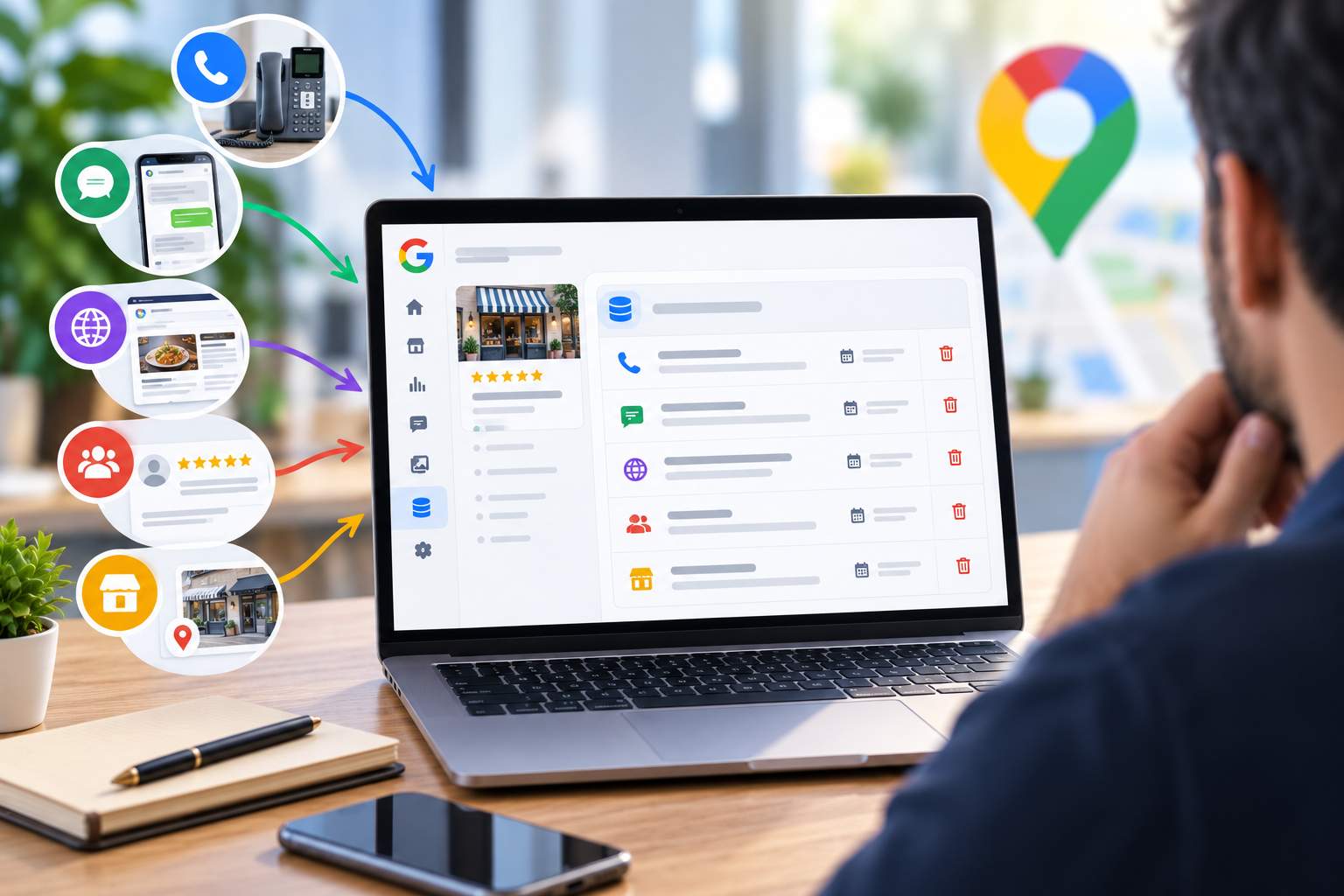
The Google Business Profile provides sales-related statistics: calls, clicks to the website, directions requests, and reservations. A call made from the listing almost always indicates an intention to purchase. Instagram provides reach and engagement data, which is valuable for gauging brand loyalty but less relevant for immediatecustomer acquisition.
One simple habit can make all the difference: for one month, ask every new customer, “How did you find us?” Write down the answers in a notebook near the register. This DIY survey costs nothing and reveals the true breakdown of your marketing channels in just a few weeks.
The question then becomes one of prioritization. And when it comes to maps and location-based searches, your Google Business Profile deserves top priority.
Local SEO: The Power of the Google Business Profile on Maps and in the Local Pack
The Google business listing determines access to the Local Pack—the block of three businesses displayed with a map at the top of local search results. Google ranks these listings based on three criteria it publicly states: relevance, distance, and reputation. Social media platforms do not appear on this official list, and their influence on local search rankings remains, at best, indirect.
Brand awareness is worth a closer look. Google takes into account the number of reviews, the average rating, articles and links that mention the business, and the consistency of the information published online. Instagram can contribute to this last criterion by generating mentions in local media or on blogs. This interpretation is subjective: the search engine never specifies the exact weight of each signal.
Hours, address, phone number: consistency that reassures Google
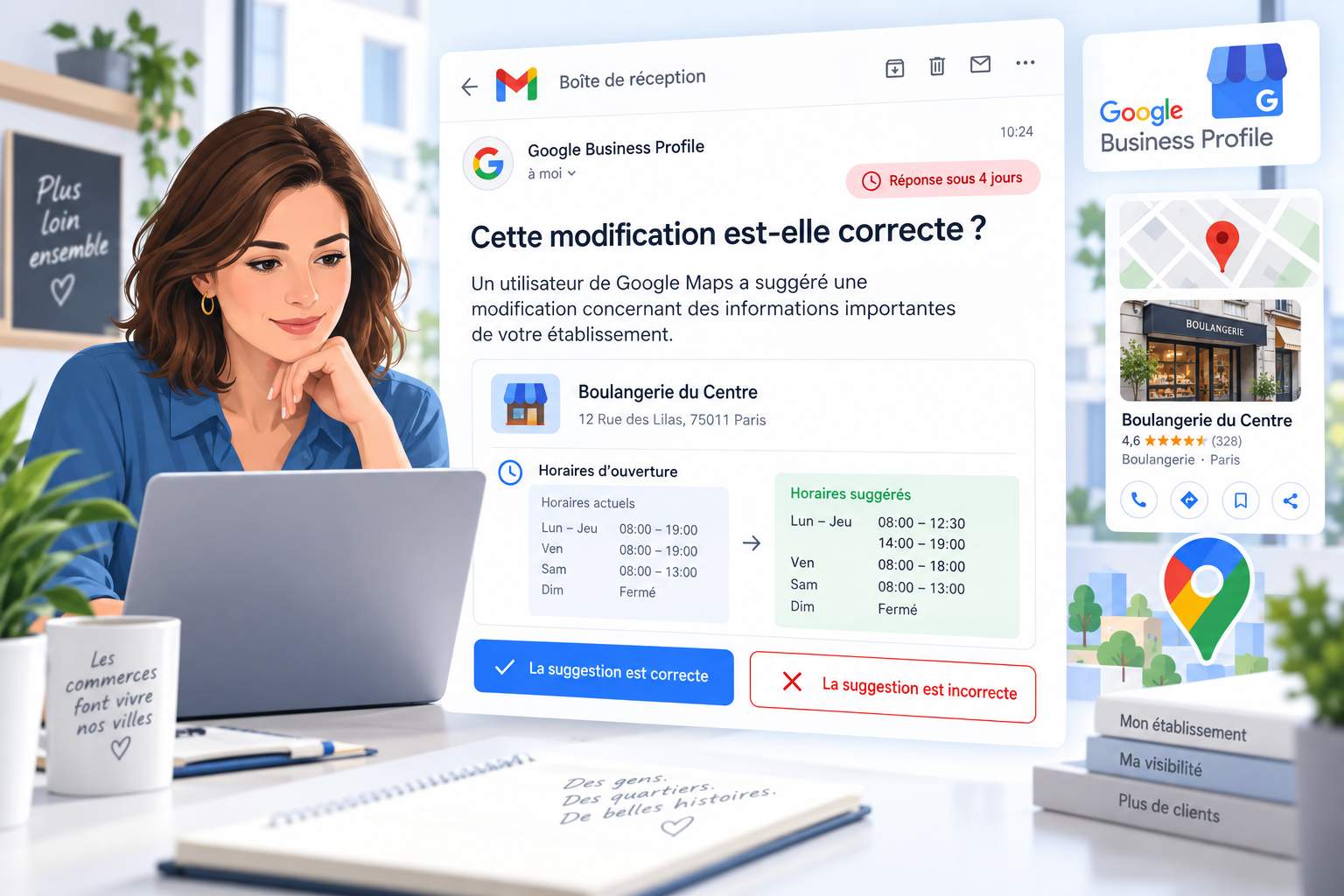
A business lists its hours on Google, Yellow Pages, TripAdvisor, its website, and Facebook. If even one of these listings differs, the search engine becomes suspicious. And a suspicious search engine will promote the competitor with the most consistent information. This issue has a technical name—NAP consistency—which is explored in depth in this report on inconsistent information that undermines local visibility.
Customers, for their part, are even less forgiving. Imagine a flower shop on Rue Popincourt in Paris. A customer checks the sign: “Open until 7:30 p.m.” She arrives at 7:10 p.m. to find the shutters down and a small sign announcing that the shop is closed for the day. She leaves annoyed, and the florist will never know that she’s just lost a sale—or even a regular customer.
The Paris-based platform APIC describes this scenario in its analysis of the limitations of Google Business Profile listings for independent professionals. The hidden cost of outdated hours far exceeds the cost of a missed appointment: a frustrated customer quickly turns into a one-star review.
The Keys to a Google Business Profile That Drives Conversions
Google claims that a complete profile makes internet users 70% more likely to visit the business and 50% more likely to consider a purchase, according to its own Google Business Profile documentation. This figure comes from the vendor itself and should be interpreted with caution. In practice, however, the trend holds true month after month.
- A specific main category: “cheese shop” rather than “grocery store,” since this category carries significant weight in terms of relevance.
- Recent photos of the storefront, the shelves, and the staff. A well-framed shot of the storefront helps customers recognize the shop from the sidewalk.
- Special hours entered before every holiday and every unexpected closure.
- One Google post per week: new arrivals, promotions, and featured products.
- Respond to reviews within 48 hours, including compliments.
For merchants starting from scratch, the Desura blog offers a practical guide to turning your store page into a customer acquisition channel. The video below shows you the basic settings in just a few minutes.
A well-maintained Google listing works at night, on Sundays, and while you’re on vacation. Instagram, on the other hand, demands constant attention.
Instagram for Local Businesses: Brand Awareness, Community Engagement, and Limitations
Instagram excels at showcasing expertise, offering behind-the-scenes glimpses, and building customer loyalty. It’s particularly well-suited for visual businesses: florists, pastry chefs, hairstylists, wine shops, and designer boutiques. However, when it comes to making initial contact with a stranger looking for a place to go within the hour, its effectiveness is limited.
Meta claims that 90% of Instagram users follow at least one business account. The Live Commerce guide, for its part, cites 68% of shoppers who discover a local business on Instagram before visiting it—a figure attributed to a Meta Business study, the original version of which remains unavailable to the public. These data points paint a picture of a receptive audience. They do not measure actual in-store visits.
Businesses that make the most of local social media
Every Friday, a Bordeaux wine shop owner films the week’s tasting. His followers keep coming back, tag friends, and repost the videos to their Stories.Community engagement grows with each event, and the wine shop becomes a vibrant hub in the neighborhood.
Hair salons also fare well: a well-composed “before-and-after” photo is worth more than any slogan. A locksmith has little to gain from posting photos of locks (unless he has a rare comedic talent). For him, the Google listing and reviews carry the bulk of the marketing load.
These spontaneous shares fall under the category ofearned media—visibility gained without paying. It inspires more trust than an ad because a customer creates it for you.
The hidden cost of Instagram: time
Maintaining an account takes two to three hours a week to keep up a steady pace: photos, captions, Stories, and replying to messages. For a baker who kneads dough at 4 a.m., those hours take a heavy toll. And the algorithm rewards consistency: three weeks of inactivity, and reach drops significantly.
A recent development is worth noting. Since July 2025, Meta has allowed search engines to index public photos and videos from business accounts. Its impact on local rankings remains unknown at this time, and there’s no reason to believe that a Reel would outrank a highly rated Maps listing.
Askoptimize’s guide to social media for local businesses details best practices by platform. Here’s the bottom line: Instagram excels at engaging customers who already know you.
There’s one area Instagram completely overlooks—and it carries significant weight in purchasing decisions: star ratings.
Customer Reviews and Google Ratings: The Key to Building Trust
Customer reviews are concentrated on Google, and Instagram doesn’t offer any public ratings. An enthusiastic comment under a video gets lost in the feed, whereas a five-star review remains visible on the business’s profile for years. For a local business, the Google rating carries much more weight than the number of followers.
Studies point to the same conclusion. BrightLocal found that between 2022 and 2023, the percentage of consumers using Google to evaluate a local business rose from 81% to 87%. Web Factory even reports that 97% of consumers check reviews before choosing a business. While methodologies vary, the practical conclusion remains the same: without recent reviews, a business’s online presence rings hollow.
What Motivates a Customer to Leave a Positive Review
Psychologist Daniel Kahneman, winner of the 2002 Nobel Prize in Economics, describes the “peak-and-end rule.” We judge an experience primarily based on its most intense moment and its final seconds. Major luxury brands have known this for a long time: elegant packaging, being escorted to the door, an unexpected note.
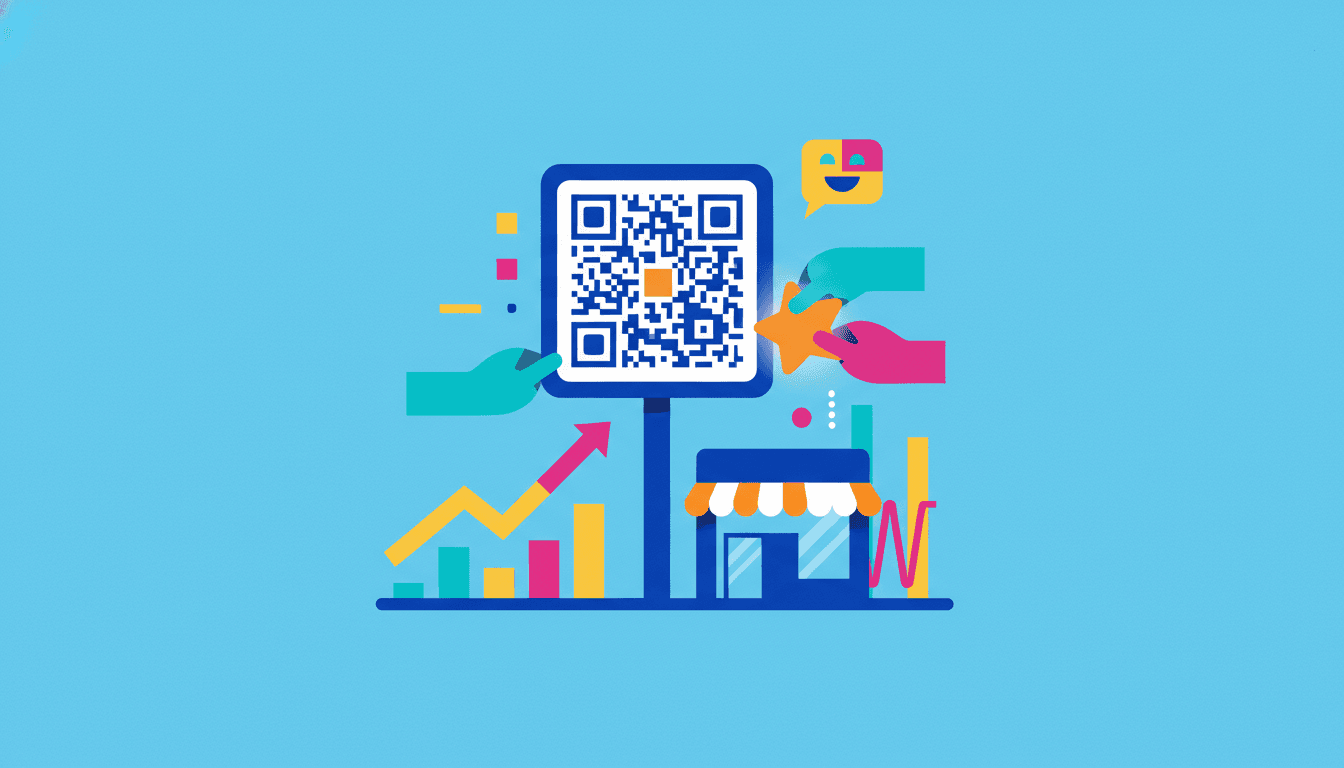
Camille adapts the recipe to her own scale. When it’s time to ring up the sale, she slips in a sliver of tomme cheese for the customer to taste, then hands them a QR code linking to her listing. The customer leaves with a pleasant memory, just before pulling out their phone. The result: a warm and detailed review arrives that very evening.
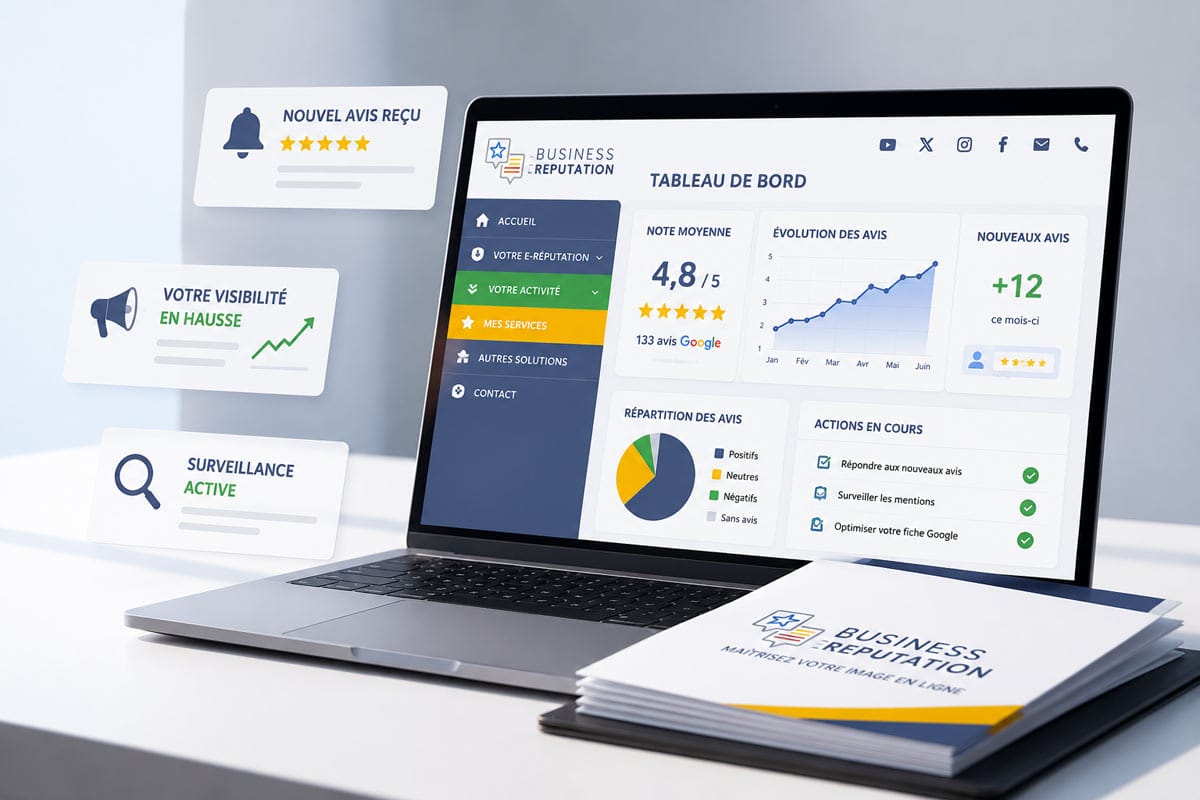
In the consultations conducted by Business E-reputation, one observation stands out with striking regularity: businesses that ask for feedback in person, at the counter, collect significantly more feedback than those that rely on a small sign. A restaurant owner in Lyon—whose name remains confidential—whom we recently worked with saw his rating rise from 4.1 to 4.6 in five months. The only change he made was to train his staff to ask for feedback when serving coffee.
Instagram: A Megaphone for Bad Experiences
In the absence of a rating system, Instagram serves another purpose: it amplifies. A disappointed customer posts a “never again” Story tagged with the store’s location, and her 2,000 followers see it within 24 hours. The business can neither respond publicly nor ask Google to remove it.
It’s better to address customer dissatisfaction on the spot, before it turns into a social media post. An immediate gesture of goodwill, a sincere apology, or a direct phone number for customers to call back: these quick responses defuse most tensions. Saphek details these best practices in its guide on online reputation management for neighborhood stores.
Your Google review becomes your business resume, and your competitors check it too. Now, much faster “readers” scan it every day: artificial intelligence.
AI Reputation: What AI Assistants Recommend to Your Future Customers
AI assistants that suggest local businesses draw on map data, reviews, and editorial content. Google Business Profile is among the most structured sources available to them. A business with good ratings and a detailed description increases its chances of appearing in their responses, while a business with recurring negative reviews may have those reviews summarized in a single sentence.
Google is integrating its Gemini model into Maps to summarize reviews and answer questions about a location. Its AI-powered snippets already display local recommendations at the top of the page. However, the company does not provide any specific criteria for selecting the businesses featured.
Tests conducted on ChatGPT and Gemini using queries such as “best bakery in downtown Rennes” reveal a trend—one that should be taken as an observation: the locations mentioned tend to have high ratings, a substantial number of reviews, and mentions in the local press or guidebooks. Instagram accounts, on the other hand, rarely feature in the reasoning.
A bad reputation, now summarized by a machine
Two blocks from Camille’s, a competing cheese shop has a 4.0-star rating. Several reviews mention a “cold welcome.” Yesterday, a customer had to read ten reviews to find this complaint. Today, an AI sums it up in a single line: “Several customers mention an unwelcoming reception.”
This is the real game-changer. AI systems recommend the brands with the highest brand awareness and also highlight recurring shortcomings. A business that neglectsits online reputation allows its higher-rated competitor to scoop up recommendations—and thus market share—without even lifting a finger.
The criteria prioritized vary from country to country. This analysis of what search engines prioritize in France and the rest of Europe sheds light on the specific characteristics of the French market.
Instagram in the AI Equation
The indexing of professional publications starting in 2025 opens up a theoretical possibility. Meta’s policies do not specify whether this content feeds into third-party AI models. Relying on Instagram to gain a presence in ChatGPT is currently a gamble.
For tomorrow’s online visibility, your Google rating and the quality of your reviews form the foundation. Instagram then adds the finishing touches.
Platform Comparison: Finding the Right Balance for Your Local Digital Marketing
For most local businesses, the priority is the Google Business Profile, with Instagram serving as a tool for building customer loyalty. Allow 30 to 60 minutes per week for the listing and reviews, then two to three hours for Instagram if your business is a good fit for it. This combination caters to both customers in a hurry and loyal customers.
| Criterion | Google Business Profile | |
|---|---|---|
| Intent Detected | Immediate purchase, active search | Inspiration, discovery |
| Impact on local SEO | Direct: Local Pack and Google Maps | Indirect and unofficial |
| Customer reviews | Public star ratings | No ratings, temporary comments |
| Weekly time | 30 to 60 minutes | 2 to 3 hours |
| Useful Metrics | Calls, routes, clicks | Reach, interactions, messages |
| Weight in AI responses | Major structured source | Role still uncertain |
| Most Benefiting Industries | All, especially urgent troubleshooting | Visual and experiential industries |
| Cost | Free | Free, with additional advertising |
The Arturin agency advocates a specific order of digital strategies that prioritizes local visibility over social media. Postoria’s comparison of Google My Business listings versus social media arrives at the same conclusion regarding their complementary nature.
A realistic weekly routine for a busy business owner
- Monday, 10 minutes: Check the schedules and enter any planned closures for the week.
- Tuesday, 15 minutes: Respond to every review received—positive or negative—with a personalized message.
- Wednesday, 20 minutes: Post on Google, then repost the same photo on Instagram with a more detailed caption.
- Friday, 10 minutes: a behind-the-scenes story—new arrivals, the team, and preparations for Saturday.
- Every day at the counter: ask visibly delighted customers for a review, in person.
Camille has been following this schedule for three months. She posts less on Instagram than she used to, and her business listing now has about twenty more reviews. On Sunday mornings, the line spills out onto the sidewalk (which, for a cheese shop, is the best kind of problem).
To help structure the next steps, Hopla offers a marketing roadmap designed for small businesses, and *100 Days to Get Started* details how to digitize a store without sacrificing customer service. The principle remains the same: every minute spent online must bring a customer to the counter.
Key Takeaways
- The Google listing comes first: it captures local search queries and feeds into Maps, such as the Local Pack.
- Instagram builds loyalty among existing customers and is best suited for visual-based businesses.
- Customer reviews determine the rating, and that rating also influences AI assistant recommendations.
- Incorrect hours cost you sales and lead to negative reviews: check them every week.
- A one-hour routine each week is enough to manage both channels without sacrificing your evenings.