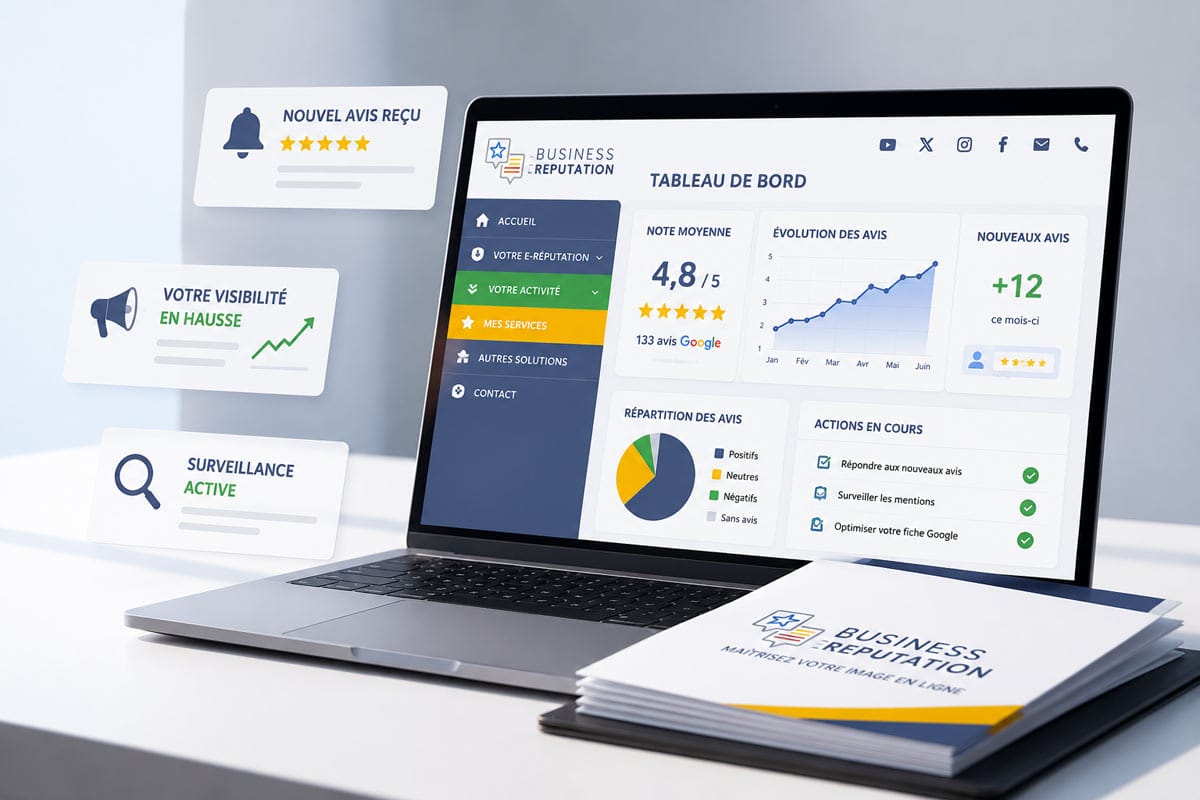
We invest in Google reviews, maintain our LinkedIn profile, and monitor what’s being said about our brand on social media. And meanwhile, a prospect who types in your company’s name stumbles upon—right on the first page of search results—an entry you never wrote: one from a business directory that displays your authorized capital, your address, your date of incorporation, and the status of your annual financial statements. This listing is part of your online reputation, and it has a significant advantage over your website: readers perceive it as neutral.
But this information doesn’t come out of thin air. It reflects decisions made in the early days of the company—often in a matter of minutes—at a time when people are thinking about everything except their public image. It is precisely for this reason that a growing number of entrepreneurs are taking the time to incorporate their business with a lawyer rather than filling out an online form: the choices made during incorporation go far beyond mere formalities.
A public profile that you do not control
Pappers, Societe.com, Infogreffe, Verif: These platforms aggregate data from the commercial registry and make it freely available. They perform particularly well for searches such as “company name + reviews,” “company name + SIRET,” or simply the company name, because they provide exactly what the user is looking for: verification of who they are dealing with.
This is a widespread reflex among B2B buyers. Before signing a five-figure quote, before agreeing to a payment term, before entrusting a project to an unknown service provider, they’ll check. And what appears then isn’t a marketing page—it’s raw data that you yourself have provided.
Four pieces of information that speak for you
Share Capital
The law allows for a symbolic one euro in both SAS and SARL companies. It’s legal, it’s common, and it’s also what your contact will see. A capital of one euro contrasted with a 40,000-euro service contract sends a signal that neither your website nor your references can fully compensate for. Capital isn’t just a formal requirement for incorporation—it’s a permanent demonstration of financial stability.
Headquarters Address
A registered address shared by several thousand companies appears immediately when you search for it. This isn’t a deal-breaker, and many perfectly reputable companies use such addresses for their registered offices. But it’s better to have chosen it with full knowledge of the facts than to find out about it the day a client brings it up.
Corporate Purpose
If it’s worded too narrowly, it restricts you and requires a bylaw amendment every time your business changes. If it’s worded too broadly, it gives the impression of an organization without a clear direction. In either case, it’s public and people will read it.
Annual Financial Statements
The absence of a filing is noticeable, and it is rarely interpreted in your favor. Conversely, some companies may, at the time of filing, request that all or part of their financial statements remain confidential, or opt for a simplified filing. The terms and conditions are detailed on the Entreprendre Service Public portal. However, you still need to be aware that these options exist and request them at the right time.
What Can Be Corrected, and What Leaves a Mark
Everything can be changed: you can increase capital, transfer the registered office, or expand the corporate purpose. But each change must be published in the BODACC, where it remains available for public viewing. The history of these changes, in turn, becomes public information.
A company that has changed its address three times and its CEO twice in eighteen months says a lot, even if each of those decisions was perfectly justified. And that kind of history—unlike a customer review—can’t be erased.
Treat Legal Affairs as a Reputational Asset
The natural tendency is to dismiss the process of starting a company as just another “administrative” task: a burden to be dealt with quickly and at the lowest possible cost, before moving on to more important matters.
This is a matter of perspective. These documents generate public data that is permanently archived and specifically accessed by the very people whose trust you seek. As such, they follow the same logic as your website, your reviews, or your editorial content.
A company whose legal foundations are consistent with its marketing message inspires trust without needing to make a big deal of it. This is probably the most cost-effective form of online reputation management there is.