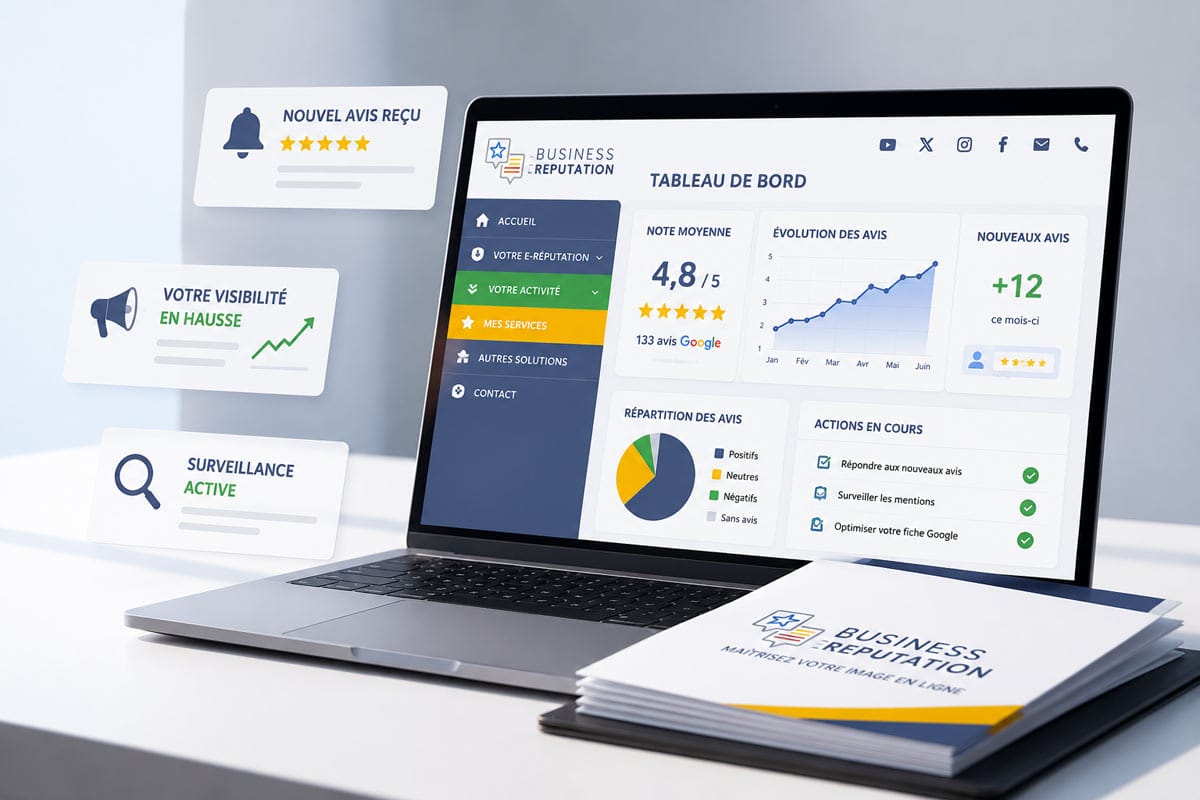
Building your online reputation isn’t just about monitoring Google reviews or responding to negative comments. For an e-commerce business, reputation is also built through the shopping experience itself: speed, transparency in order tracking, and direct customer support channels. In this regard, a well-designed mobile app becomes a full-fledged online reputation management tool in its own right.
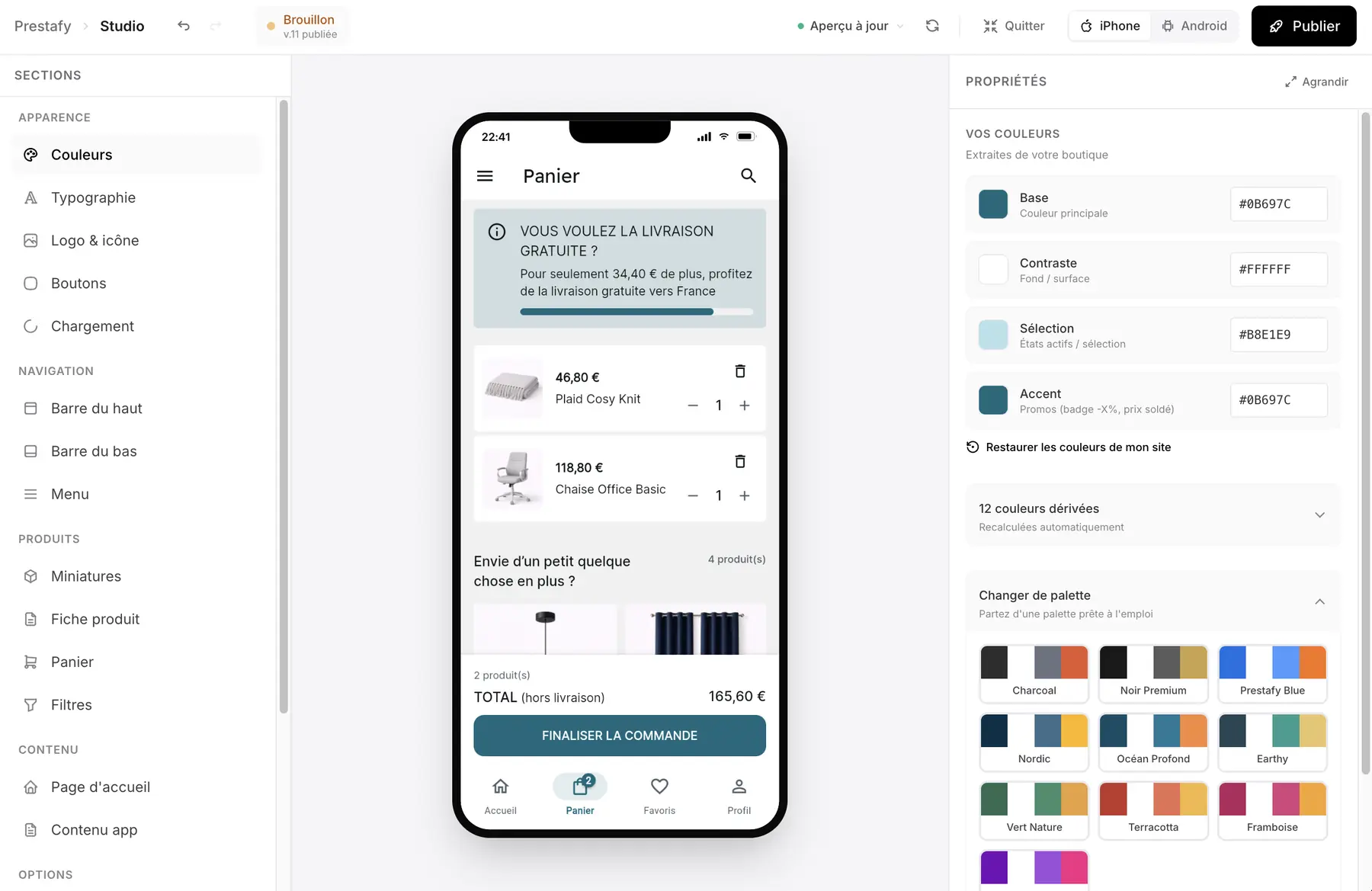
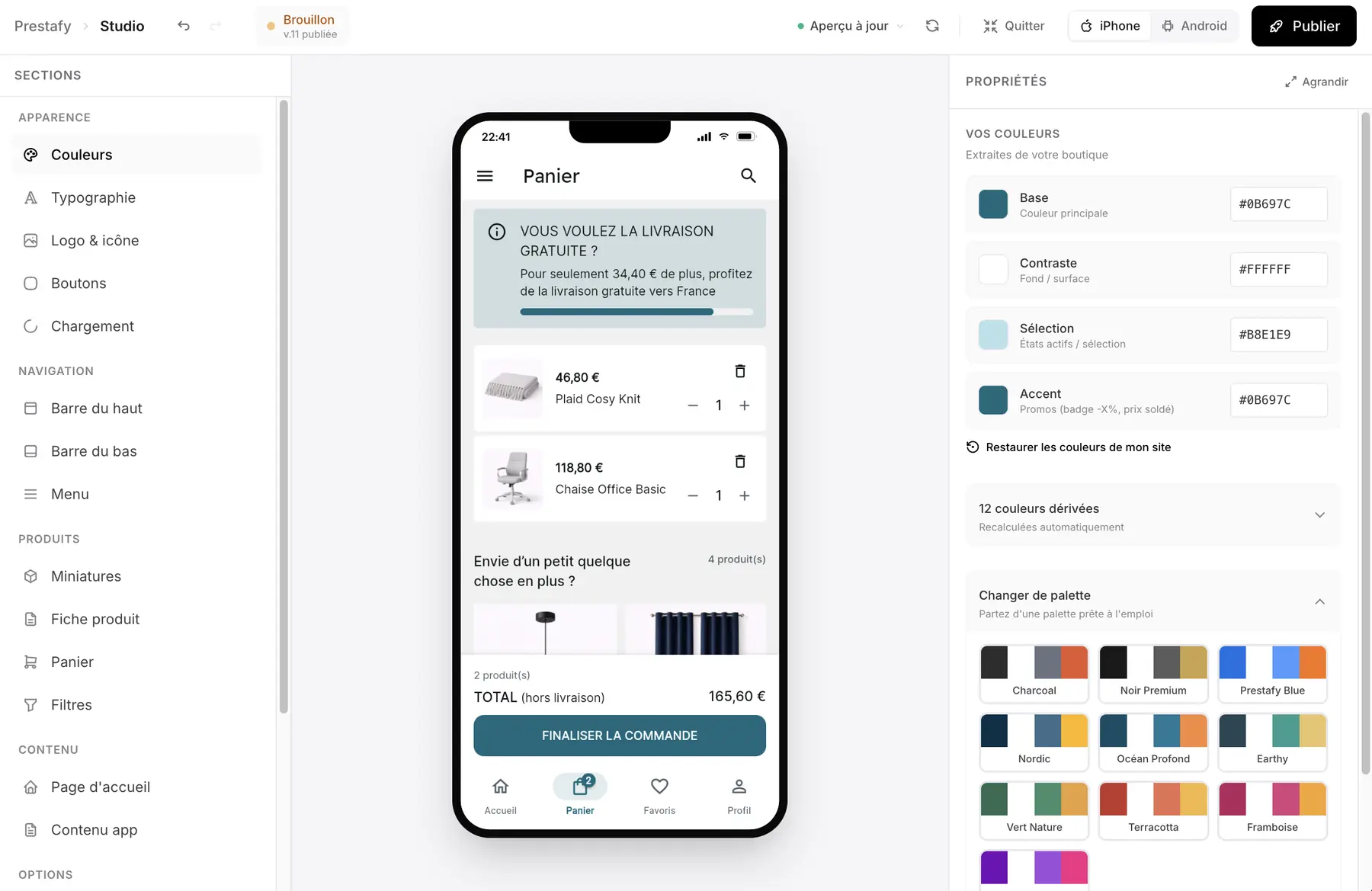
Prestafy Studio – Customization of the mobile app connected to the store, available for PrestaShop stores.
The Post-Purchase Experience: A Blind Spot in Online Reputation Management
Most reputation management efforts focus on the pre-purchase phase: customer reviews, ratings, testimonials, and managing comments on social media. But the post-purchase experience—order tracking, returns management, and responsiveness when issues arise—plays just as big a role in a customer’s perception of a brand and in their likelihood of leaving a positive review or making another purchase. A mobile app connected in real time to the store allows you to send push notifications for each stage of an order (confirmed, being prepared, shipped, delivered) directly to the customer, without them having to log in to a customer portal or search through their emails.
This level of proactive transparency is one of the factors most strongly correlated with customer satisfaction in e-commerce: a customer who knows the status of their order contacts customer service less often and is statistically more likely to leave a positive review.
E-commerce mobile app: a direct channel that reduces reliance on third-party platforms
When it comes to online reputation, reliance on third-party platforms (social media, search engines, review marketplaces) poses a structural risk: a change in an algorithm or moderation policy can undermine a brand’s visibility overnight. A mobile app, on the other hand, belongs to the brand: it’s a proprietary channel, installed on the customer’s home screen, that’s immune to algorithmic fluctuations. That’s the promise behind Prestafy, a mobile app to build customer trust by connecting a PrestaShop store to a native iOS and Android app in just a few weeks, without extensive development.
Integrating Customer Reviews into the Mobile Shopping Journey
For brands that invest in collecting reviews via Trustpilot or Verified Reviews, native integration within the app allows these reviews to be displayed directly within the mobile shopping journey, reinforcing social proof at the decisive moment—just before adding to the cart or confirming the order. Contextual pop-up mechanisms can also invite satisfied customers to rate the app itself on app stores, providing an additional signal of trust visible right on the App Store or Google Play listing, even before the prospect reaches the website.
Technical reliability: the foundation of any trust strategy
One point that is often overlooked in discussions about reputation: the technical reliability of a tool directly affects the brand image of the company using it. An unstable connection to PrestaShop, out-of-sync inventory or orders that don’t arrive at the right location immediately result in negative reviews and complaints on social media. Prestafy’s PrestaShop connector is now deployed on live stores, with real-time synchronization of the catalog, prices, inventory, and orders—every order placed in the app is processed as a standard PrestaShop order, without duplicate management or the risk of errors. WooCommerce and Shopify connectors are planned for the fourth quarter of 2026.
Managing a Reputational Crisis: The Role of the Push
Notification
Channel
Beyond its common marketing uses, the push notification channel can also play a role in crisis management: product recalls, widespread shipping delays, or important service updates—the brand has an instant and direct communication channel to its existing customer base, without the delays and unpredictability of posting on social media or running an email campaign with an uncertain open rate.
A Strategic Investment Rather Than a Costly Gamble
Many brands shy away from mobile apps due to budget concerns: custom development typically costs tens of thousands of euros, a financial risk that’s hard to justify until the return on investment is proven. The SaaS model, with a free trial and subscriptions starting at €99 (excluding tax) per month, allows you to test the channel and its impact on customer loyalty and brand perception without committing to a disproportionate budget from the outset.
Measuring the Reputational Impact of a Mobile App
To objectively assess the impact of a mobile app on online reputation, several metrics can be tracked over time: changes in the average rating on review platforms following the app’s launch, the rate of customer complaints relative to order volume, the repeat purchase rate of customers who have installed the app compared to web-only customers, and the rating the app itself receives on the App Store and Google Play. This last indicator is particularly strategic: a highly rated app becomes a visible reputation asset as soon as it appears in store search results, even before a prospect visits the website.
Mistakes to Avoid When Connecting a Direct Communication Channel
Having a channel as powerful as push notifications also requires a certain level of discipline to maintain customer trust. Here are a few best practices to follow: don’t overwhelm users with overly frequent notifications, or you risk a mass uninstallation; segment your campaigns rather than sending the same messages to your entire user base; reserve certain channels (such as push campaigns and advanced in-app messages via OneSignal) for scenarios that are truly relevant to the recipient. Conversely, an app that is misused for communication purposes can damage the very reputation it is meant to strengthen—hence the value of a tool that enables intelligent segmentation and automation rather than mass distribution.
Mobile Apps and Transparency: A Positive Sign for New Prospects
Beyond existing customers, the mere existence of a well-rated app on app stores serves as a sign of credibility for new prospects who research the brand before making a purchase. An App Store or Google Play listing with positive reviews, a professional presence, and a seamless user experience contributes to the overall perception of a brand’s reliability, just as much as a well-designed website or a high Google Business Profile rating. For brands that are already investing in their presence on review platforms, the mobile app naturally complements this reassurance strategy.
FAQ: Online Reputation & Mobile Apps
Does a mobile app have a real impact on customer loyalty?
A push notification generates up to 7 times more clicks than an email, making it a particularly effective brand-reminder channel for maintaining connections with existing customers.
Can customer reviews be displayed in the app?
Yes, reviews synced from platforms such as Trustpilot or Avis Vérifiés can be integrated directly into the mobile shopping experience.
Does the app replace the website?
No, it complements the website by offering an additional channel that is more direct and helps build customer loyalty, without disrupting the store’s existing structure.
How does a mobile application help in case of stock shortages or logistical delays?
A back-in-stock alert or proactive notification in case of delay informs the customer before they complain, mechanically reducing the volume of complaints and their impact on online reputation.
Key Takeaway
For a brand that wants to build its reputation over the long term, a mobile app is more than just a technological gimmick: it’s a proprietary, measurable channel that builds trust and directly influences customer loyalty and perceptions of reliability—two central pillars of any serious online reputation strategy.