Good educational material is more than just a series of well-written pieces of information. Its structure is just as important as its content. A presentation that is too dense can hinder understanding and quickly cause the audience to lose focus. Conversely, a clear organization helps the audience follow the flow of ideas and better retain the key points. The choice of examples, visuals, and activities also plays an important role. How can these different elements be organized to facilitate understanding, maintain attention, and promote the retention of information?
Start by defining a specific educational objective
Before selecting texts, illustrations, or activities, the first step is to determine what the audience should understand or be able to do after reviewing the material. This objective provides direction for the content and helps avoid including information that is of little relevance to learning.
A document intended to explain a concept, for example, will not be structured like a resource designed to change behavior or teach a procedure. Age, prior knowledge, and the context of use also influence these choices. To create engaging learning materials, therefore, consideration must be given both to the message to be conveyed and to how the audience will absorb it.
This approach also makes it possible to distinguish essential information from information that merely supplements the topic. A key concept should be clearly highlighted. A secondary detail can be elaborated on later, without interrupting the main line of thought.
Building a Logical Sequence
Teaching materials are effective when concepts are presented in a logical order. A simple approach is to start with what is already familiar and gradually move toward new or more complex concepts.
Each section can address a specific question before moving on to the next one. This step-by-step approach prevents the reader from having to process multiple concepts at once without understanding the relationships between them. Headings and subheadings play an important role here: they provide reference points and allow the reader to quickly visualize the proposed path.
Facilitating understanding without oversimplifying the content
Making information accessible does not mean removing all complexity. Rather, the main challenge is to introduce concepts gradually and explain the terms necessary for understanding them.
Overly long sentences, densely packed paragraphs, or the repeated use of technical terms make reading more difficult for the reader. When the subject matter requires it, a specialized term may be retained, provided it is explained the first time it appears.
Concrete examples also help link an abstract concept to a recognizable situation. A rule, definition, or principle can thus be immediately accompanied by an example of its application. The reader then understands not only what the information means, but also under what circumstances it can be used.
Using Visual Elements to Convey Information
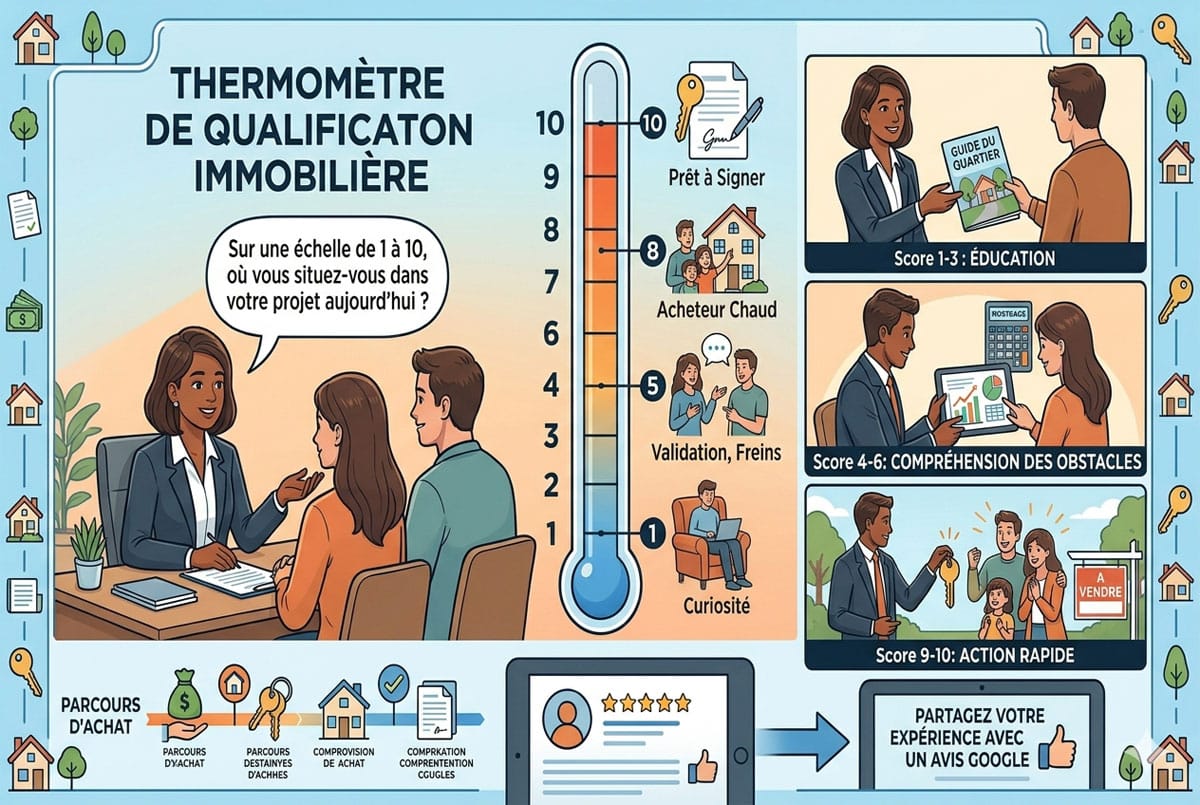
Illustrations, diagrams, photographs, or graphic representations can aid understanding when they serve a specific purpose. Their function should not be purely decorative. A diagram can show the different steps in a process, while an illustration can depict a situation that is difficult to explain using text alone.
The visual layout also helps organize the content into a hierarchy. Clearly separated sections, descriptive headings, and relatively short paragraphs make it easier to locate information. This structure helps prevent the document from feeling overwhelming, especially when it is very dense.
Maintaining Attention Throughout the Material
Attention is not constant. It can be disrupted when the amount of information becomes too great or when the reader is no longer sure exactly what to focus on. Educational resources on the mechanisms of attention highlight, in particular, the importance of making the objectives and tasks assigned to learners explicit. The Éduscol portal offers several resources on the mechanisms of attention and concentration.
Breaking content down into segments is therefore a useful approach. Each segment can introduce a concept, explain it, and then offer a brief practical exercise. This alternating structure avoids a succession of long explanations and regularly gives the reader the opportunity to apply what they’ve learned.
A question, a situation to analyze, an exercise, or a fun activity can serve this purpose. In particular, games can encourage learners to observe, test different solutions, and apply the knowledge they have previously learned. However, the activity must remain clearly linked to the learning objective so that it does not become merely a distraction.
Help the reader recall the information
Understanding a concept while reading does not guarantee that the reader will be able to recall it later. Educational materials should therefore provide opportunities to review and apply the knowledge gained.
A summary provided after a major section helps to restate the key points. Questions can then prompt the reader to recall a piece of information without immediately returning to the text. This approach encourages active recall rather than simply rereading the text.
Include application exercises
Putting what you’ve learned into practice is an important step when the goal is to master a method, a line of reasoning, or a behavior. After an explanation, the material can present a different scenario in which the reader must apply what they have just learned.
There are several possible formats depending on the audience: a problem to solve, a scenario, an open-ended question, organizing information, or choosing among several solutions. The goal is to verify that the concept can be applied outside the context of the example used to introduce it.
Test the material before distributing it
A document that seems perfectly clear to its author may not necessarily be clear to its audience. A testing phase helps identify ambiguous explanations, steps that lack sufficient detail, or elements that unnecessarily distract the reader.
A few users who represent the target audience can review the material and then explain what they took away from it. Their hesitations and mistakes provide valuable insights into the improvements needed. It may then be helpful to reorder a section, shorten an explanation, or add an example.
An effective educational resource thus results from a balance between content, progression, and reader engagement. A clear structure makes it easier to access information, while examples and activities help readers internalize it. By focusing on comprehension, engagement, and application from the very beginning of the design process, the material becomes a true learning tool rather than a mere informational document.