Customer reviews with photos convert about 26% better than a listing without social proof, compared to 18% for text-only reviews, according to metrics published in 2026 by stores tracked as they collected data. In other words, a photo from an ordinary customer carries more weight than a paragraph of praise. This page breaks down what truly triggers customer trust, format by format, with statistics, real-world examples, and a data collection method you can start using this week. Readers will find the information they need to strike a balance between review volume and visual quality—without spending their weekends on it.
In short
- 74% of French people read reviews before making a purchase, and 80% search online before stepping into a store (Consumer Survey Report 2024, Avis Vérifiés).
- Half of consumers say they do not fully trust online reviews (YouGov poll reported by Le Parisien).
- Reviews with photos address three concerns at once: the product exists, it looks like the images, and it actually arrives.
- Reviews with photos remain displayed longer in Google’s featured reviews, a duration effect that doubles their value.
- The channel used to solicit reviews makes all the difference: a mobile follow-up after delivery yields up to five times more feedback than a standard email.
- In a world of AI-generated recommendations, brands without visual proof become invisible before they become suspect.
Text-only reviews or reviews with photos: what a prospective customer is looking to verify
Straightforward answer: The text reassures the reader about the actual customer experience, while the photo proves that the experience actually took place. A written review tells a story; an illustrated review provides proof. When faced with two equivalent listings, the buyer almost always chooses the one that shows.
Let’s take Léa, an optician in Toulouse. Her listing has 87 reviews, all written, with an average rating of 4.6. Her competitor three blocks away has only 41 reviews, but 14 of them include photos: the storefront, frames on a customer’s face, and the exam room. Guess which one lands the appointment with a newcomer to the neighborhood.
Text addresses objections; images address doubts.
A factual review focuses on the argumentative aspect. It specifies response times, the courtesy of the staff, and value for money. This is useful information that addresses identifiable objections. The reader forms a rational conviction based on it.
Photographs operate on a different level: that of plausibility. No one takes the time to photograph a plate of food, a completed construction project, or an unpacked package without having been there. This visual validation cuts off suspicion before it even arises. Research on the balance between relevance and information overload in reviews shows that text, images, and videos each contribute differently to perceived usefulness—provided they’re used in moderation.
The winning combination: three lines and a photo
The ideal review isn’t ten lines long. Three concrete sentences, a clear photo, and a coherent comment. Long-winded reviews give the impression that they were commissioned from a copywriter, especially when they use the company’s marketing jargon. Consumers pick up on this disconnect much more easily than we think.
A restaurant owner in Bordeaux, who was working with an audit firm, had received twenty superbly written reviews in two weeks—all without photos, all five-star ratings. The result: his rating went up, but his reservations remained flat. After switching to a review system that encouraged customers to post photos of their dishes, his lunch-time traffic picked up within three weeks. Credibility isn’t measured by the number of stars, but by the quality of the evidence.
Intermediate formats matter too
Between a rating alone and a video, there are several levels. The typology of online reviews distinguishes between simple ratings, free-form comments, structured questionnaires, and content produced by the customers themselves. Each serves a different stage of the purchasing journey, and combining them creates a more natural business profile than a collection of uniform reviews.
The Impact of Photos in Customer Reviews on Google Visibility
Short answer: Reviews with photos remain visible longer in the featured comments carousel on a Google Business Profile page. A photo extends the visibility of a customer review, which increases the number of times it’s read without any extra effort.
Analyses published on the impact of photos in customer reviews support this: comments accompanied by an image remain displayed longer among a business’s “featured” reviews. A text-only review gets pushed out by the next one within a few days. A review with a photo sticks around.
A sign of freshness for local search rankings
Google interprets the photo activity on a listing as an indicator of real-world activity. A business whose customers regularly post photos sends a signal of freshness that’s hard to fake. In competitive Local Pack searches, this signal makes a marginal difference—and that margin often determines the ranking among three comparable businesses.
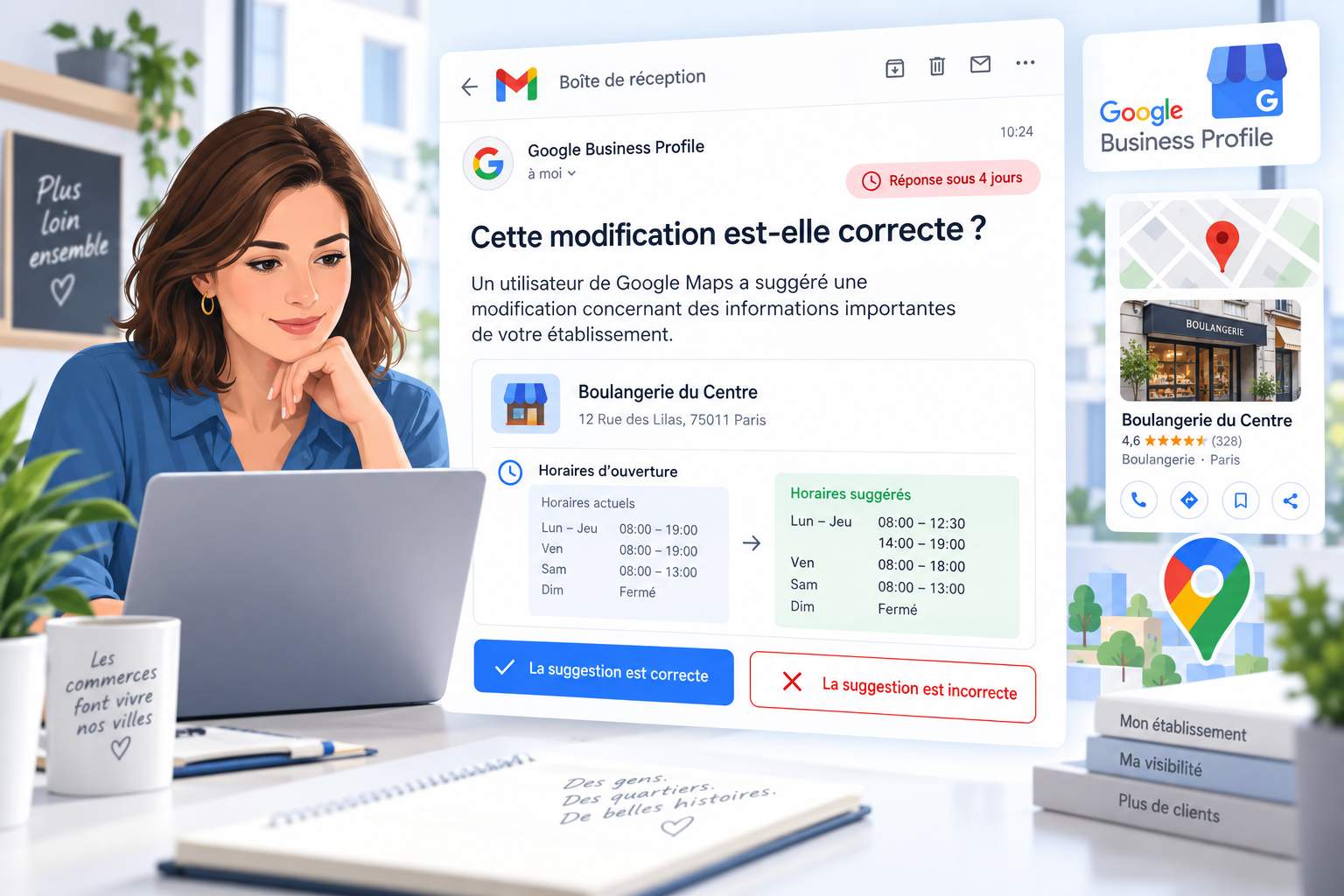
Watch out for the downside: an inaccurately filled-out listing cancels out the benefit. Incorrect hours lead to annoyed customers, and negative reviews triggered by inaccurate hours carry a lot of weight—especially when accompanied by a photo of a closed curtain. The image amplifies both the positive and the negative.
When reviews disappear, photos become a rare asset
Google’s spam filters regularly remove legitimate comments. Many business owners discover that their customers’ reviews suddenly stop appearing overnight. Reviews accompanied by an authentic, geotagged photo and posted from an active account are better able to withstand this automatic filtering.
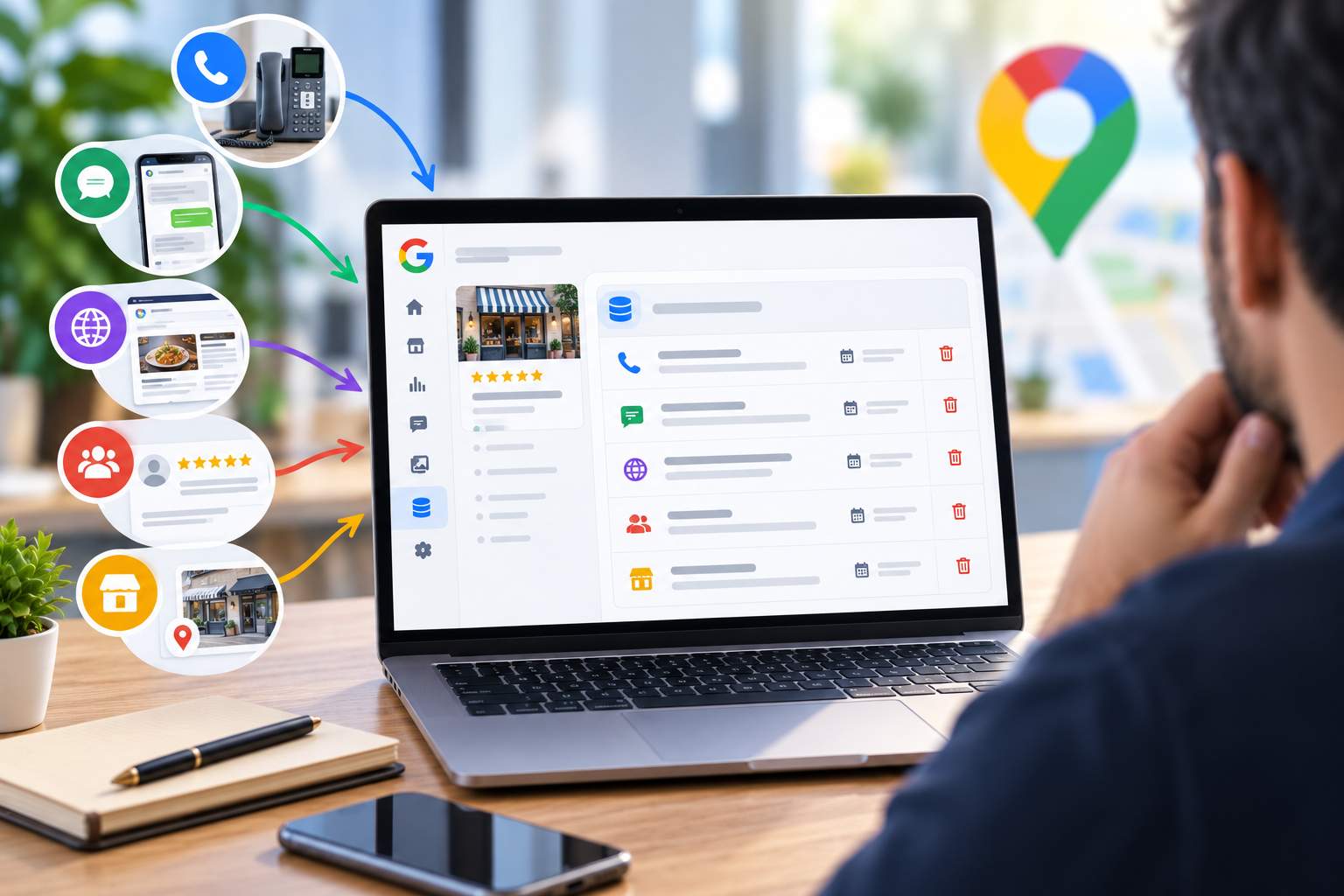
This vulnerability makes it essential to follow basic best practices: keep a copy of your history. Exporting your Google reviews regularly prevents you from having to start from scratch after a display glitch and provides reusable content for your website, quotes, and storefronts.
Customer photos are worth more than those taken by the professional
A listing filled with flawless professional visuals triggers a predictable reaction: “That’s just advertising.” Imperfect customer photos—crooked, lit by neon lights—have the opposite effect. In fact, visual content experts recommend prioritizing customer reviews with photos on local listings, precisely for this reason. Authenticity comes through in the grain.
Social proof and conversion: the real hierarchy of review formats
Straight answer: each level of social proof yields a measurable gain, and the gap between no reviews and illustrated reviews exceeds 25 conversion points. The increase isn’t linear; it accelerates as soon as visuals come into play.
Measurements conducted in 2026 on online stores targeting young people provide a clear scale. The case study published on social proof in e-commerce in Dakar quantifies each level.
| Level of Social Proof | Effect on Conversion | Perceived Trust | Collection Effort |
|---|---|---|---|
| No reviews | Base 100 | Low | None |
| Rating only (stars) | +9% | Average | Low |
| Text reviews | +18% | Good | Medium |
| Reviews with photos | +26% | Very good | High |
| Video reviews and customer content | +29% | Maximum | High |
Business Insights from These Discrepancies
Let’s look at another example with specific numbers. Awa runs a fashion boutique and converts 1.8% of her visitors without any reviews. After a mobile messaging campaign, 62 out of 200 customers who received deliveries left a review, 24 of which included a photo. Her rating rises to 4.4 out of 5, and her conversion rate climbs to 2.27%. With 5,000 monthly visitors and an average order value of 28,000 FCFA, this represents 24 additional sales per month.
An unexpected bonus: she reuses her clients’ photos in her ads, lowering her customer acquisition cost by 22%. A single visual collection feeds two channels at once—the profile page and the ad. Few marketing campaigns offer this two-for-one benefit.
The credibility threshold is around 4.2
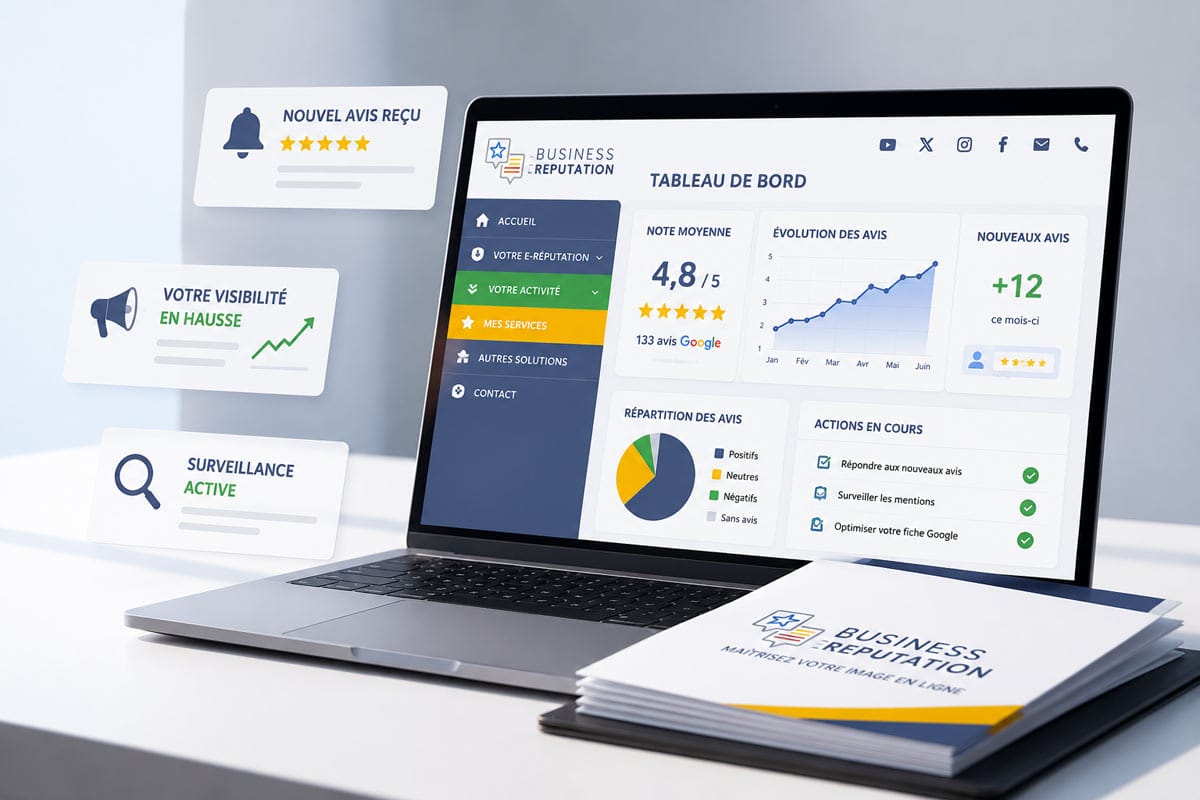
A rating that’s too perfect raises red flags. A profile with a 5.0 out of twelve reviews triggers a reflex of suspicion, whereas an average of 4.4 with a few well-handled mixed reviews inspires confidence. The organized collection of customer reviews instills a sense of factual assurance in hesitant prospects, provided that nuances are allowed to shine through.
How Layout Makes a Difference
The same review displayed in two different ways does not produce the same effect. Presentation tests show that a visually appealing, graphically enhanced version outperforms a simple list of quotes. Visitors want clear, immediately digestible evidence—including the name, photo, and date. Fifteen seconds of attention—no more.
Getting Reviews with Photos: Collection Methods and Best Practices
Straight answer: A customer will only post a photo if explicitly asked to do so, at the right time, on the channel they already use. Asking right away—within 24 to 48 hours after the experience—significantly increases the number of photo-based reviews.
The table below summarizes the collection rates observed in 2026 by channel used.
| Channel and Time | Collection Rate | Cost | Ideal timeframe |
|---|---|---|---|
| Post-purchase email | 6% | Low | D+3 |
| SMS after delivery | 14% | Medium | Day 1 |
| WhatsApp message after delivery | 31% | Low | Day 1 to Day 2 |
| WhatsApp message with a small gesture of goodwill | 38% | Medium | Day 2 |
| Second reminder | +7 points | Low | Day 5 |
The phrase that triggers the photo
Asking “Leave us a review” generates text. Asking “show us the result” generates an image. The difference comes down to just a few words. A landscape designer in Rennes doubled the number of photos he received by replacing his generic phrase with: “A photo of your finished patio would really help our future clients visualize the project.”
Timing matters just as much as the words you choose. This topic deserves further exploration, and detailed guidelines on the best time to ask your customers for a Google review can help you avoid requests that fall flat. No one takes a picture of their renovated kitchen three months after the project is finished.
Six Tips for Effective Visual Review Collection
- Reach out right away, within 48 hours, while the sensory memory is still fresh.
- Use a direct link to the page or form—one click, no searching.
- Explicitly mention the photo in your request, without forcing it on them.
- Make it easier for them to frame their response by suggesting what interests potential customers: the result, the location, or the product received.
- Follow up once—never twice—no later than day 5.
- Respond to every photo-based response, referencing what the image shows. The customer feels seen, and they’ll do it again.
A verification framework reinforces the entire process
Data collection overseen by a certified independent third party adds an extra layer of assurance. Platforms listed by Activateur France Num solicit reviews only from customers who have actually made a purchase, publish reviews without filtering, and moderate off-topic content without deleting critical reviews. The public portal dedicated to managing business reviews and reputation details the requirements of the NF ISO 20488 standard regarding collection, moderation, and publication.
For local businesses, the most effective approach combines a Google listing enriched with customer photos and verified reviews displayed on the website. The cross-platform influence is real: the mechanisms described in the analysis of how Trustpilot reviews influence purchasing decisions are replicated on Maps, with even greater impact at the local level.
Fake reviews and visual fraud: photos as a safeguard for credibility
Straight answer: An authentic photo is much harder to fabricate than a flattering paragraph, which makes it the best defense available against fake reviews. Since half of consumers already doubt the reviews they read, this technical barrier becomes a selling point.
Fake profiles, inflated ratings, and paid reviews damage the entire ecosystem, including honest businesses whose genuine reviews get buried. A roofing contractor in Clermont-Ferrand saw his rating drop after a wave of anonymous reviews posted by a competitor: none of these reviews included a photo, and it was precisely this clue that formed the basis of his complaint.
Spotting a fake review profile
Several red flags point to this. Dozens of reviews posted over a very short period, identical wording across reviews, accounts with no history, and no images. An analysis of the vocabulary used highlights these anomalies: the work described in the semantic analysis of your last fifty reviews shows just how irregular, imperfect, and personal authentic phrasing remains.
Certification technologies are advancing
Timestamping and traceability of contributions offer a promising avenue. The approaches being explored regarding blockchain technology applied to customer reviews aim to provide tamper-proof proof of purchase. Pending large-scale deployment, timestamped and geolocated photos serve this purpose in a rudimentary way, with remarkable effectiveness.
Key Terminology to Understand
Verified review, solicited review, unsolicited review, user-generated content: these terms do not carry the same obligations or legal risks. The customer review glossary provides useful definitions to consider before making any decisions. A company that confuses solicited collection with review selection risks penalties for deceptive business practices.
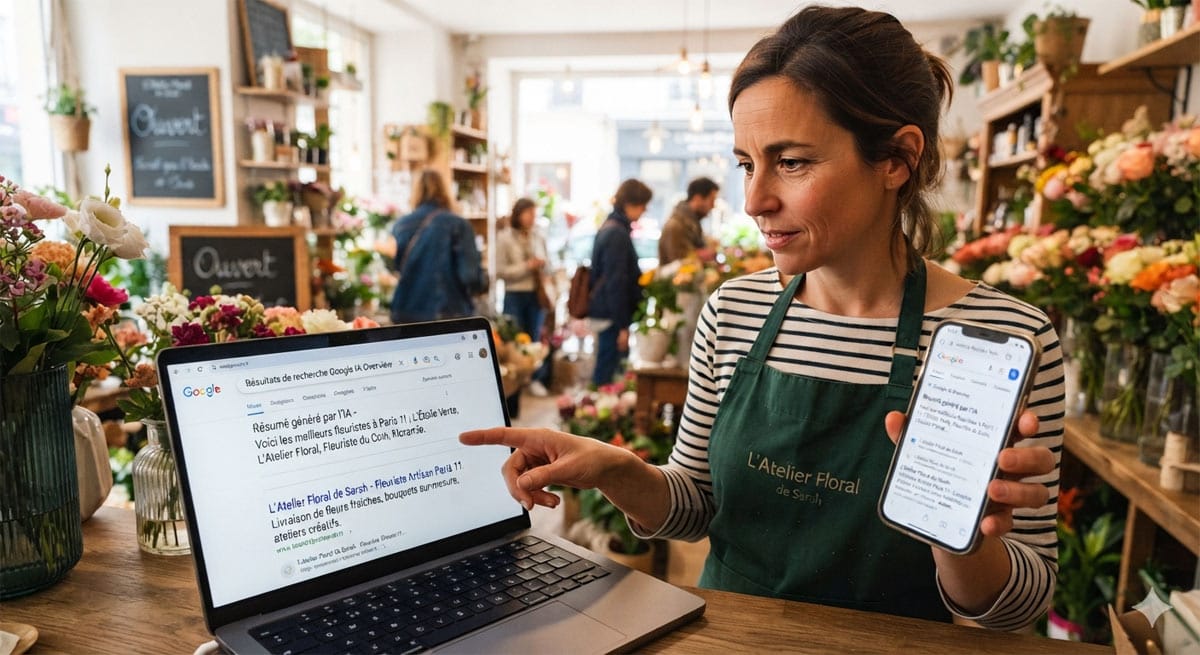
Reputation and AI: The Brands That Generative Models Will Choose to Recommend
Straight answer: AI assistants prioritize recommending companies with a strong, consistent reputation backed by a variety of content. A profile lacking visual evidence becomes invisible in these results and eventually raises suspicion when negative experiences are reported.
The change is structural. A consumer who used to search for “best plumber in Lyon 6” on a search engine would get a list. That same consumer now asks a conversational assistant the same question, which responds with two or three names. Moving from the first page to the second listing completely changes the volume of business.
What AI Actually Capitalizes On
The models aggregate the text of reviews, their frequency, consistency across platforms, and the presence of multimedia content. A business profile containing illustrated, dated reviews spread out over time provides useful data. A profile with twenty identical reviews posted in March sends a signal that these systems detect and then downweight.
There’s also a downside. These assistants can bring up recurring negative experiences, including those buried on page five of the results. A restaurant owner whose three customers reported a hygiene issue will see this information highlighted in a generated response, with a clarity that Google never displayed so directly before.
The work that needs to be done now
Businesses that systematically collect visual content today are building a body of evidence that their competitors won’t be able to catch up with in three months. A history of customer photos accumulates over time—it can’t be bought. Professional discussions about how to present reviews in a way that truly reassures visitors all point to the same conclusion: the clarity of the evidence matters just as much as its existence.
Emerging trends are accelerating this shift. Experiments with augmented reality applied to local reputation management paint a picture of a passerby pointing their phone at a storefront and instantly discovering photos posted by previous customers. In the near future, a storefront without images will be a silent storefront.
The Final Decision for a Business Leader
Should you choose between text volume and visual quality? The answer can be summed up in one sentence: aim for a steady stream of written reviews for search engine optimization and semantic content, enriched by a constant flow of photos forvisual impact andpurchasing influence. Detailed analyses of the various types of customer reviews and their strategic importance confirm this complementary relationship.
Key Takeaways
- A review with a photo converts better than a text-only review, with a measured difference of about 8 additional conversion points.
- Reviews with photos remain visible longer on Google listings, a duration effect that multiplies their reach.
- The outreach channel determines the volume: mobile messaging on Day 1, direct link, and a single follow-up.
- An average rating of around 4.4 with nuanced feedback inspires more trust than a flawless 5.0.
- AI-generated recommendations favor robust, well-documented reputations, with customer photos becoming an asset that is difficult to replicate.